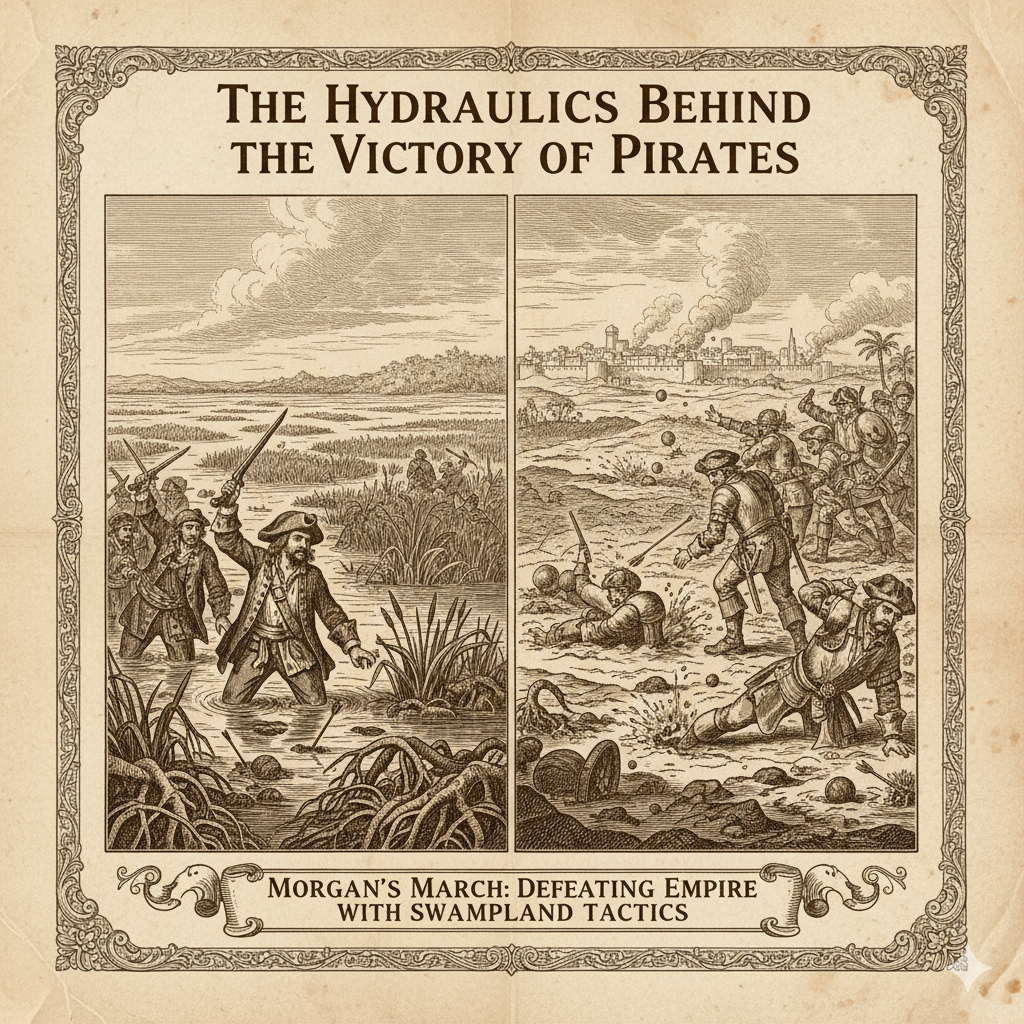
A City Too Proud to Fear Water
In the 1670s, Panama City stood on the edge of an empire like a golden promise.
It was Spain’s vault in the Americas — the gateway through which silver from Potosí and gold from Peru crossed oceans.
They guarded it with:
- a garrison of more than 1,200 soldiers
- coastal batteries
- stone walls
- and a fortress at San Lorenzo that watched the Caribbean like an iron sentinel
And between the city and the wild interior lay a weapon they thought no enemy could overcome:
a vast, choking marsh stretching miles inland —
a natural barrier so treacherous that even the Spanish engineers recorded it as “impassable to armies.”
The mistake was believing that pirates were an army.
The Pirate Host That Should Not Have Existed
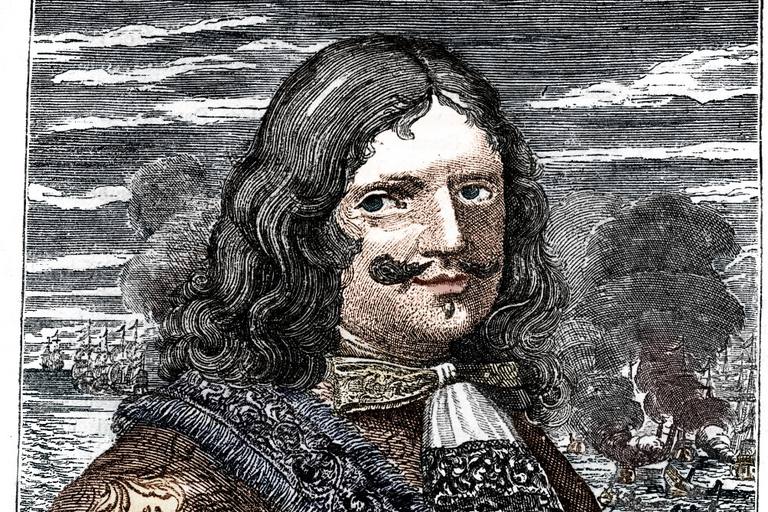
Henry Morgan gathered a force of around 1,200 men — English buccaneers, French freebooters, Dutch raiders, escaped slaves, indigenous guides.
They were not a uniformed force but a drifting nation of the desperate and the dangerous.
But they understood coasts the way masons understand stone.
They read water the way engineers read topography.
To them, the Caribbean was not a map — it was a classroom.
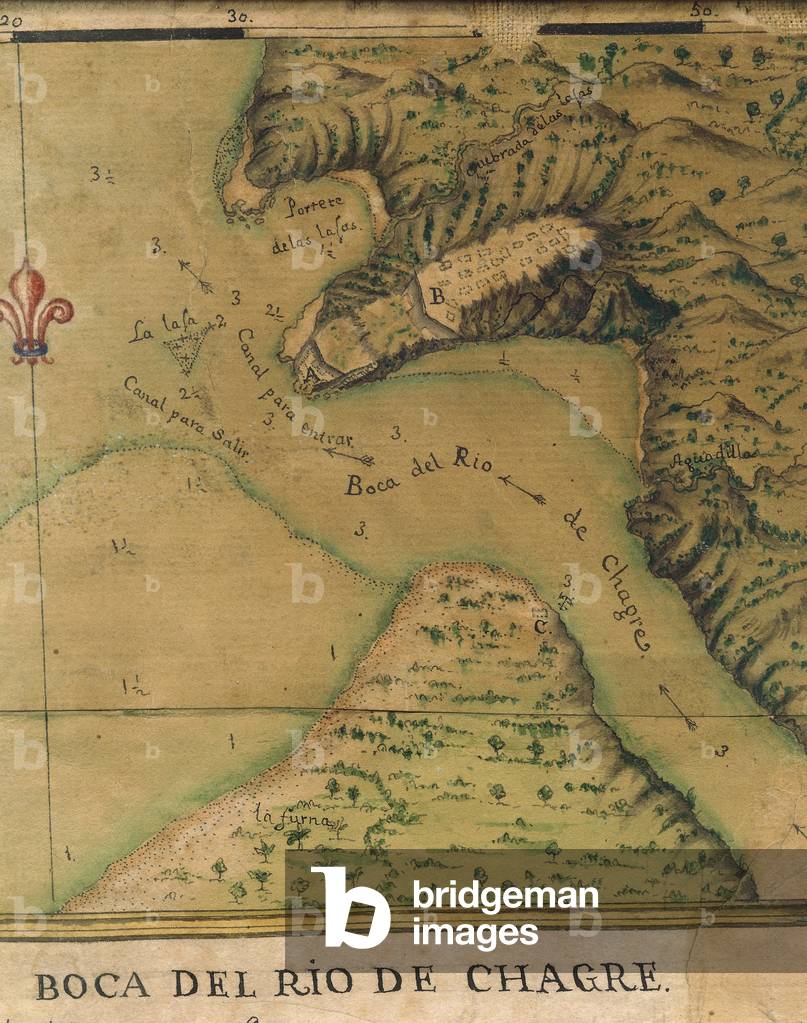
And the Chagres River, winding like a dark artery from the sea toward Panama,
was their unexpected road.
The River With a Mind of Its Own
The Spanish believed the Chagres protected them.
Its deep, wide mouth could swallow ships,
but upstream it became a maze — narrow, shallow, braided.
Mangroves strangled the banks.
Sandbars rose and vanished with the tide.
Whole stretches dried to nothing when the moon pulled the water away.
An army could not march through that.
A fleet could not sail through it.
Spain trusted the river because they did not understand it.
Morgan did.
He timed his approach with the tide —
riding inland with canoes when the water was high,
abandoning them when the river thinned,
and plunging into the marsh when the water withdrew and left patches of firm ground behind.
The same tide that protected Panama became the tide that betrayed it.
The March That Ate Men Alive
Nothing romantic can be said about the crossing.
It was a trial by mud.
Men sank waist-deep.
Canoes stuck in silt and had to be carried.
Drinking water turned brackish.
Food spoiled.
Mosquitoes came in clouds, humming like war drums.
Several men stepped into pools that looked shallow and never surfaced again.
By the time Morgan’s 1,200 pirates staggered out of the marsh days later,
eyewitnesses said they looked like “ghosts made of mud.”
Some accounts suggest two hundred never made it out at all.
But they emerged exactly where the Spanish had never bothered to look —
behind the city.
Spain had built high walls facing the sea.
The landward side had little more than hastily placed pikemen and a few cannons turned awkwardly inland.
Their strongest defenses faced the wrong horizon.
Because they trusted the marsh,
and no one had imagined water could think.
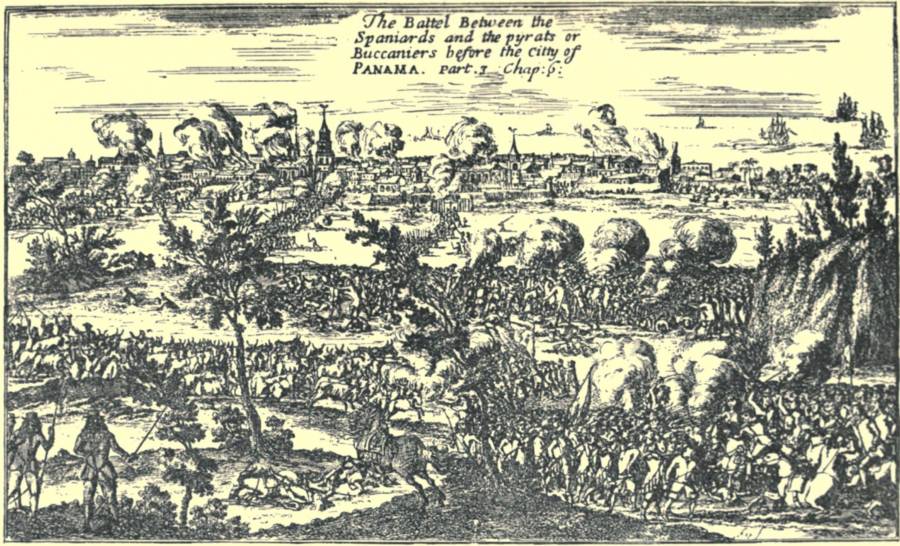
The Battle of Matachine
The first Spanish force to meet Morgan was a collection of cavalry and infantry — perhaps nine hundred men altogether —
sent in disbelief to check if the reports were true.
They were.
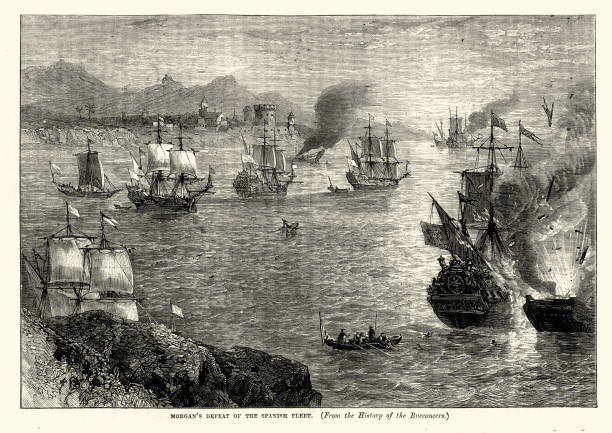
The pirates descended on the village of Matachine, where the terrain shifted from marsh to firm ground.
The Spanish cavalry attempted to charge, but the wetlands behind the pirates had soaked the air with humidity.
Spanish matchlock rifles fizzled when their burning cords grew damp;
pirate flintlocks snapped cleanly in the wet.
It was over in hours.
Hundreds of Spaniards fell.
The pirates lost fewer than sixty.
The swamp had delivered Morgan not only behind the city —
but onto high, dry ground where the wind favored him and the muskets of the empire betrayed their own troops.
The Fall of Panama City
Morgan marched on Panama before sunset,
and by the next day the city was in flames.
Treasure was seized, prisoners taken, cannons melted, and for Spain —
a catastrophic truth settled in:
Their greatest defenses had been pointed toward the sea,
while the real threat arrived by reading the river like an engineer reads a blueprint.
It wasn’t brute force that doomed Panama.
It wasn’t cunning alone.
It was environmental intelligence —
the simple, devastating understanding of how water behaves.
What This Story Means for Engineers
This was a battle decided not by numbers or weapons
but by:
- the tempo of tides
- the load-bearing nature of marsh soil
- the geometry of river channels
- the shifting width of braided waterways
- and the timing of diurnal flow cycles
Morgan crossed terrain that Spanish mapmakers labeled “unusable.”
But he saw what they did not:
water creates opportunities if you understand when and where it retreats.
In the hands of men who listened,
the marsh became a road.
The river became a guide.
The tide became an ally.
And the city fell because its defenders fortified walls
but never fortified understanding.
At Kousain, we study what Nature Whispers.
Every bridge, every canal, every foundation exists inside a living system.
Ignore that system, and the project fails — perhaps not today, but inevitably.
Panama fell because it trusted stone.
Morgan prevailed because he trusted waters