When Paper Became Steel
There’s something almost childish about the sound of it —
a bridge made of paper.
But behind that fragility lies one of the most extraordinary engineering revolutions of our time.
It began not with cranes or concrete —
but with a fold.
Because when paper folds, it doesn’t just change shape —
it changes strength, stiffness, and behavior.
Each crease is a hinge, each valley a beam,
and together they create structures that can carry thousands of times their own weight.
What began as art became algorithm.
What began as origami became engineering geometry.
From Cranes to Crumples
For centuries, engineers sought strength through bulk — thicker beams, denser concrete, heavier steel.
But nature rarely builds that way.
Leaves, wings, shells — they rely on geometry, not mass.
They fold, flex, and deploy.
So engineers began to ask:
“What if our structures could unfold too?”
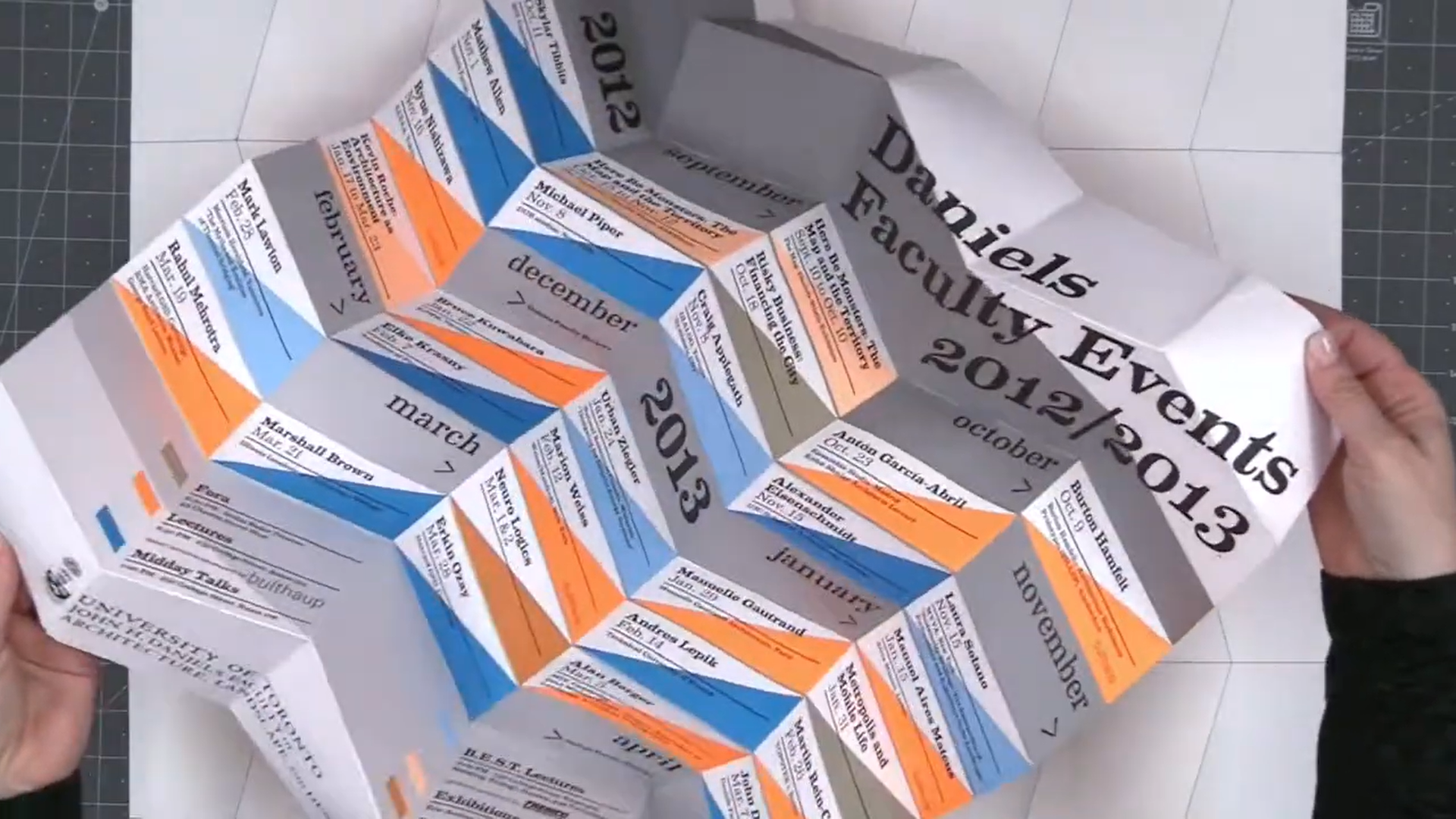
In the 1970s, Japanese astrophysicist Koryo Miura introduced a pattern that changed everything —
the Miura-ori fold.
It allowed a flat surface to expand and contract in one motion —
a perfect marriage of mathematics and mobility.
NASA adopted it for solar arrays,
deployable in orbit with no motors, no hinges, just geometry.
And soon, architects and civil engineers realized:
the same pattern could build bridges.
The video of Miura-ori fold can be found in the following link.
How to Fold the Miura Orihttps://www.youtube.com/watch?v=ufA1Yvdq_kk
The Bridge That Folded Itself
In 2016, in Amsterdam, a team of designers and robotic engineers built the MX3D Bridge — a steel pedestrian bridge printed by robots, layer by layer.
But behind its elegant web of metal lay the same principle that governs folded paper — distributed geometry.
The structure isn’t just supported by material — it’s supported by shape.
Each curve works like a fold, redirecting load paths smoothly, eliminating sharp stress concentrations.
And just like origami, it could be built without molds or formwork —
the structure drew itself into existence.
It was the first time a bridge became both sculpture and algorithm.

Folding Strength
But the real potential of folding geometry lies not in art —
but in efficiency.
Imagine foldable emergency bridges —
light enough to carry by truck,
strong enough to deploy across a river in minutes.
Or disaster shelters that unfold like a leaf,
offering strength and rigidity without heavy frameworks.
Even space structures — trusses and reflectors —
are now designed using origami mathematics,
so they can be launched compact and bloom in orbit like mechanical flowers.
All of it, born from the same idea:
“If you can fold it right, you can make it infinite.”
The Mathematics of Grace
The power of origami isn’t magic — it’s mechanics disguised as beauty.
Folding changes the moment of inertia, redistributes stiffness, and creates multiple load paths in minimal thickness.
In essence, folding is structural optimization through form.
Engineers today simulate fold patterns with algorithms that predict not just shape,
but how a structure breathes under stress.
Each crease becomes a hinge.
Each pattern becomes a framework.
The structure becomes alive — adapting instead of resisting.
And that’s what modern engineering is really about:
not building harder,
but building smarter.
From Paper to Future
Origami has now entered the lexicon of structural design:
- Deployable roofs that unfold like fans in stadiums.
- Folded concrete shells that achieve stiffness with minimal material.
- Kinetic façades that breathe with sunlight, changing angles through folding panels.
Even robotic fabrication now mimics folding,
printing layer by layer in continuous, flowing motion —
turning digital geometry into physical resilience.
It’s the same poetry the Romans found in the arch,
reborn in the age of algorithms.

At Kousain, we see origami as more than geometry —
it’s a philosophy.
To fold is to understand both strength and surrender.
Every crease holds both resistance and flexibility,
a reminder that the most resilient structures are the ones that can adapt.
From modular shelters to composite forms,
we believe in design that moves with purpose,
that unfolds from necessity into elegance.