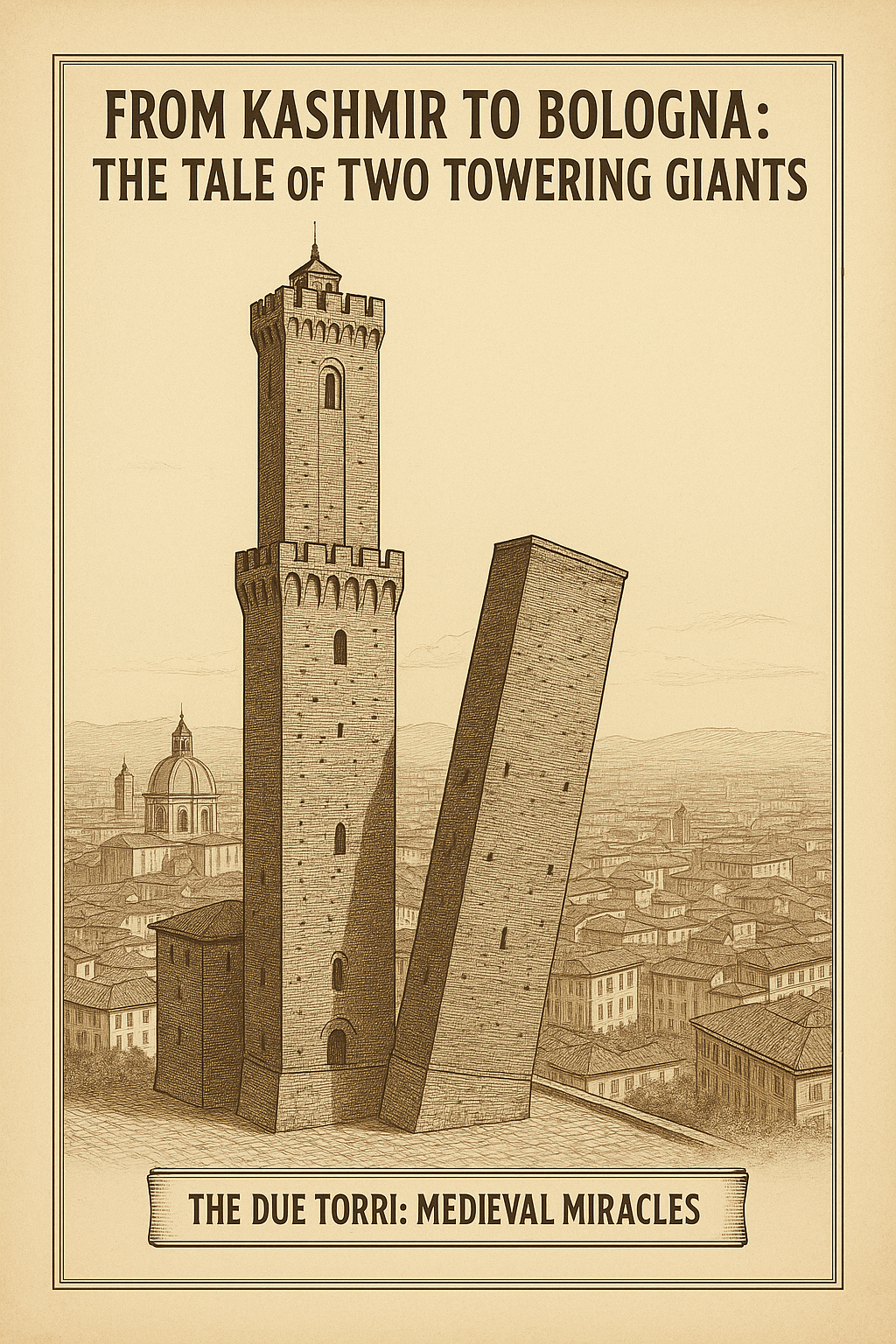
When I Googled Bologna…
The time was July, 2023. I had just received my acceptance letter from Unibo.
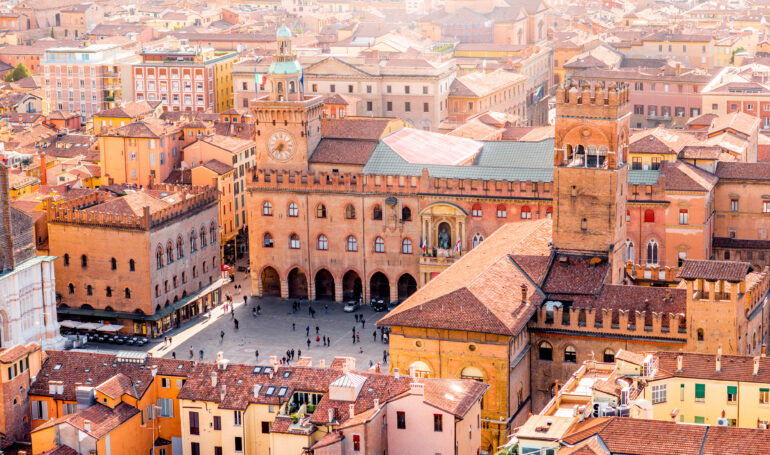
I still remember typing “Bologna, Italy” into Google Images for the first time.
A city of reddish-brown rooftops.
A skyline of terracotta.
Old streets.
Arches.
Cobblestones.
Something medieval, something ancient, something I didn’t yet understand.
And honestly?
My first impression wasn’t good.
I thought:
“This is just an old city. This is Europe??
How is this supposed to be the next chapter of my life?”
I imagined a place beautiful but outdated.
Historic but slow.
Charming but not alive.
But cities often hide their true selves from outsiders.
Bologna doesn’t reveal anything to you on a website.
You have to arrive.
Walk.
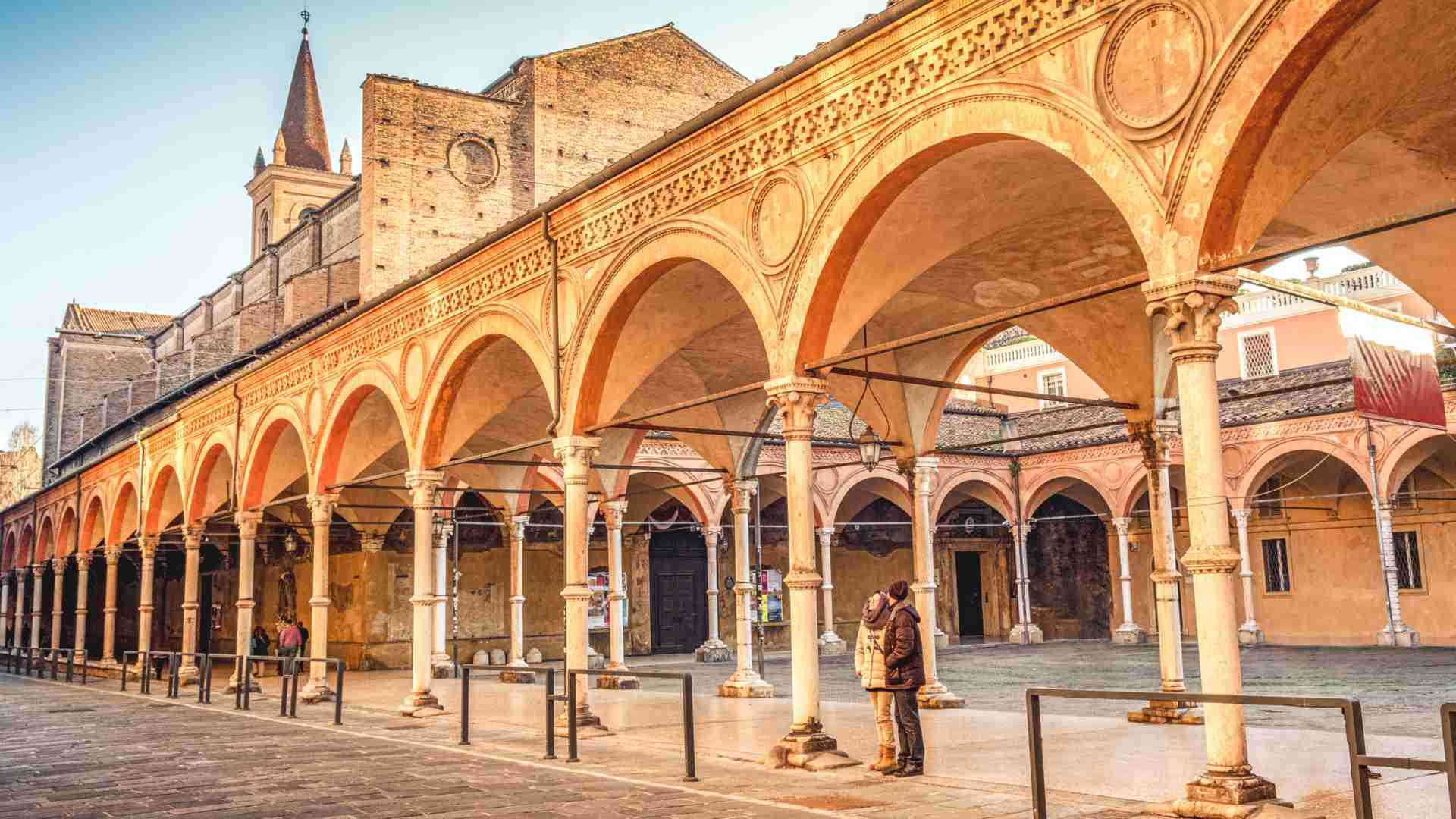
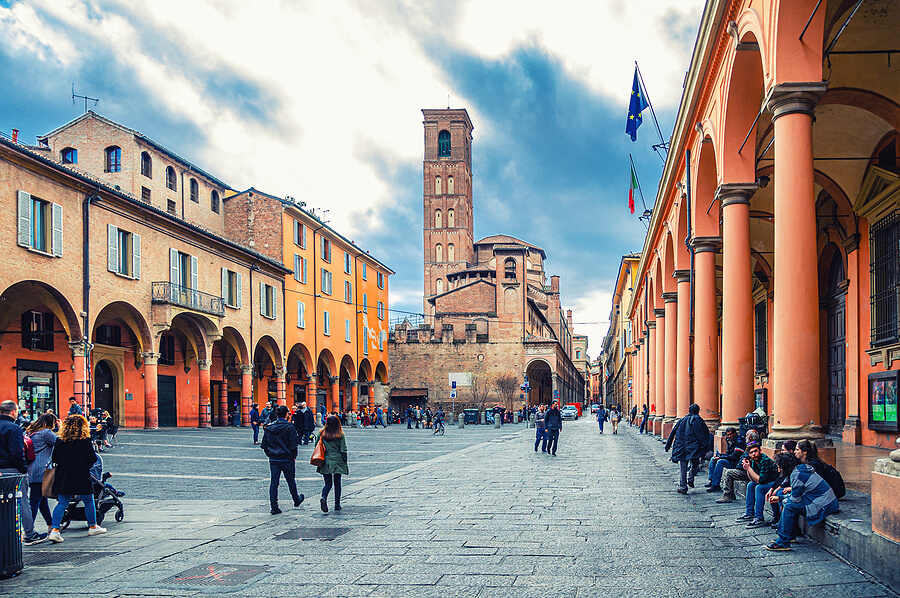
Get lost under its arcades.
Feel the rhythm of its shadows.
Hear its heartbeat in the narrow streets.
Only then does Bologna decide whether to let you in.
When I finally arrived as a master’s student at the University of Bologna,
the world’s oldest university,
I realized I wasn’t walking into a city…
I was walking into history wearing modern shoes.
And every step taught me something new.
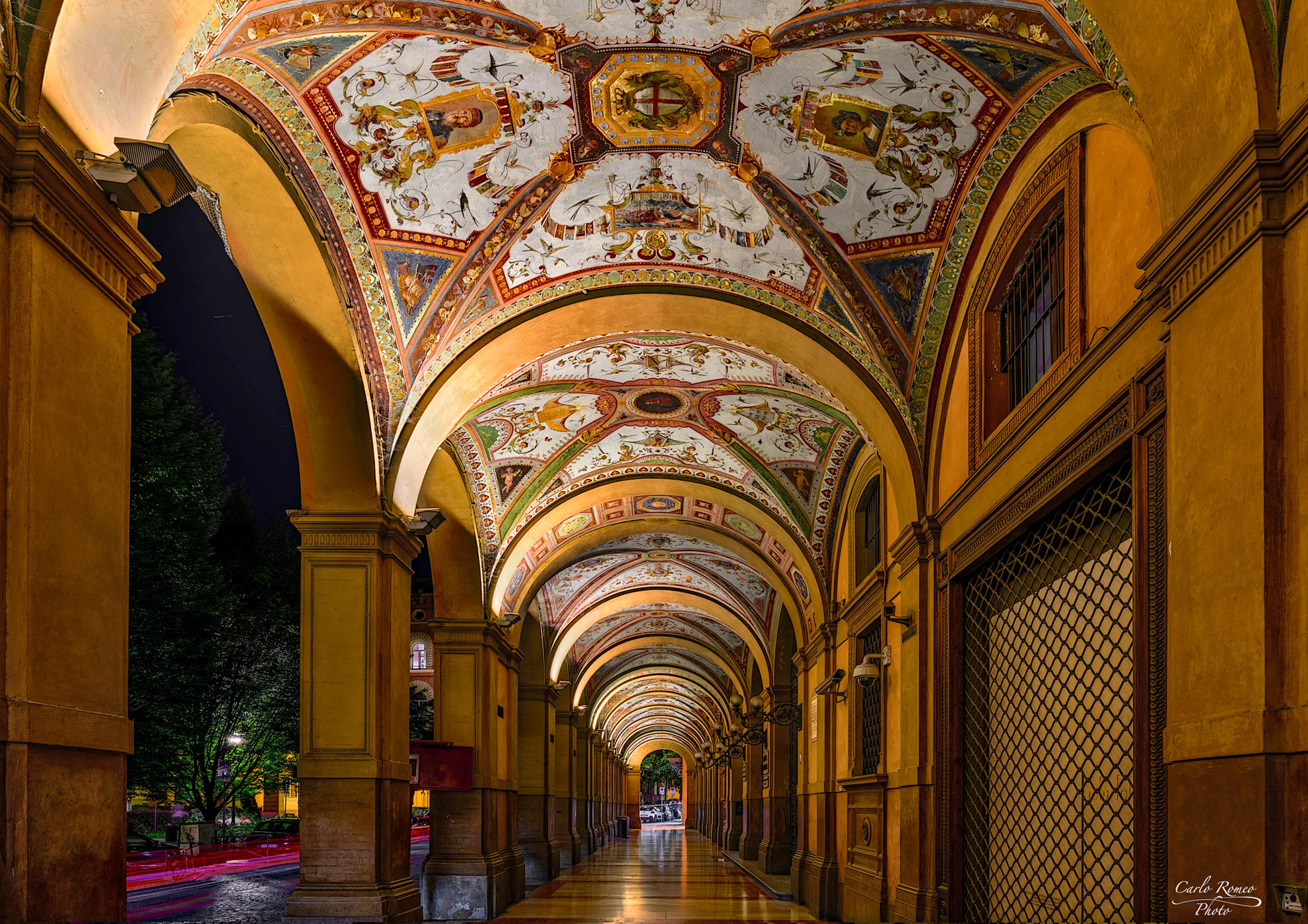
Bologna, the Classroom That Never Ended
I came to study structural engineering at the University of Bologna —
the world’s oldest university.
But the real curriculum wasn’t inside Aula Magna or Saragozza
It was outside, under 40 km of porticoes,
written in brick, timber, and stone.
I didn’t realize it at the time,
but Bologna was teaching me the same lessons my professors did —
except the city explained them better.
Every walk became a lecture:
- Arches taught load distribution.
- Porticoes taught stability through repetition.
- Narrow streets taught wind control.
- Brick façades taught thermal behavior.
- Sloping alleys taught drainage logic.
- Old foundations taught settlement and survival.
And the greatest teachers of all…
were two ancient towers that had spent 900 years refusing gravity’s command.
The First Time I Saw Them
The Due Torri —
Asinelli and Garisenda.
I remember looking up for the first time and thinking:
“How on earth did medieval masons build THAT?”
Two towers, straight out of a myth:
- Asinelli: 97 meters tall
- Garisenda: leaning like a question that never got answered
In the 1100s, these heights were unimaginable.
They were the skyscrapers of their age,
built without steel, without rebar, without modern calculations.
They stood in the heart of Bologna like two survivors of a forgotten war.
And the funny thing?
A myth.
Students said that anyone who climbs the Asinelli Tower before graduating… will never graduate.
What if the curse is true?
What if I just challenged a thousand-year legend? I thought to myself…
I never climbed it; some superstitions are too old, too beautiful, and too deeply rooted in Bologna to challenge.
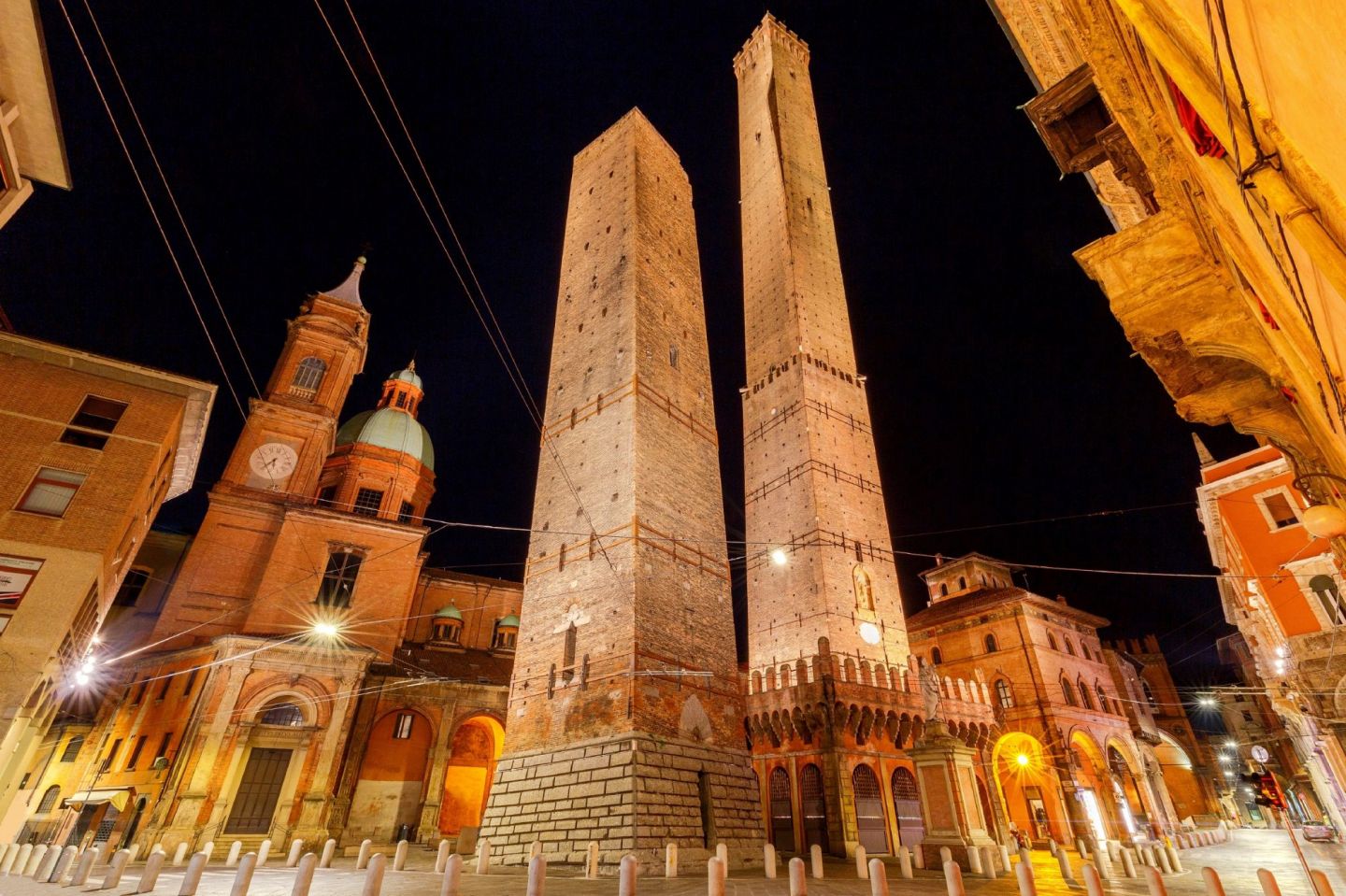
Bologna’s Age of Skyward Madness
Most people don’t know this part of Bologna’s history.
I didn’t either, not until I lived there.
Around the 12th century, Bologna was the New York of medieval Europe.
Rich families competed not with cars or companies,
but with towers.
Not two.
Not ten.
But around 180 towers.
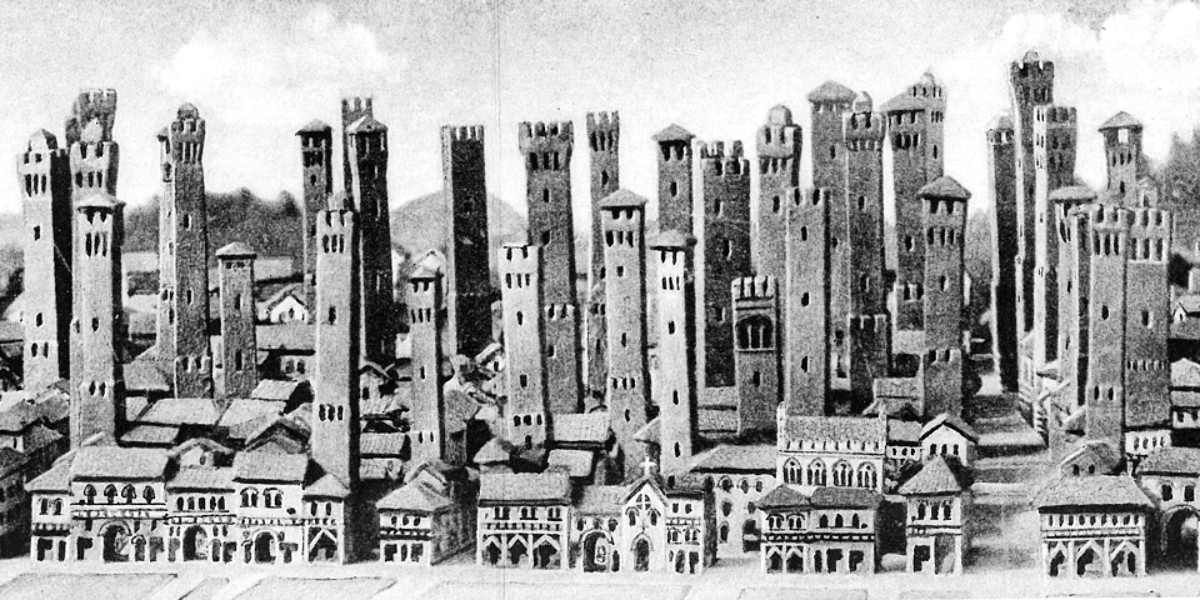
Each family built higher than the next,
each tower a symbol of:
- wealth
- influence
- status
- military power
It was structural engineering fueled by ego.
A skyline of brick spears,
each one shouting:
“My family stands above yours.”
Asinelli was the tallest one —
a skyscraper for a family that wanted the world to look up at them.
Garisenda, built nearby, rebellious sibling
leaned early in life and kept leaning,
but was spared from demolition because Dante himself described its tilt
in the Divine Comedy.
Dante Alighieri — yes, the Dante —
wrote about Garisenda in his Inferno (Canto XXXI):
“As when clouds pass over the leaning Garisenda,
so that it seems to topple on the watcher…”
Imagine that —
a leaning tower saved because a poet fell in love with it.
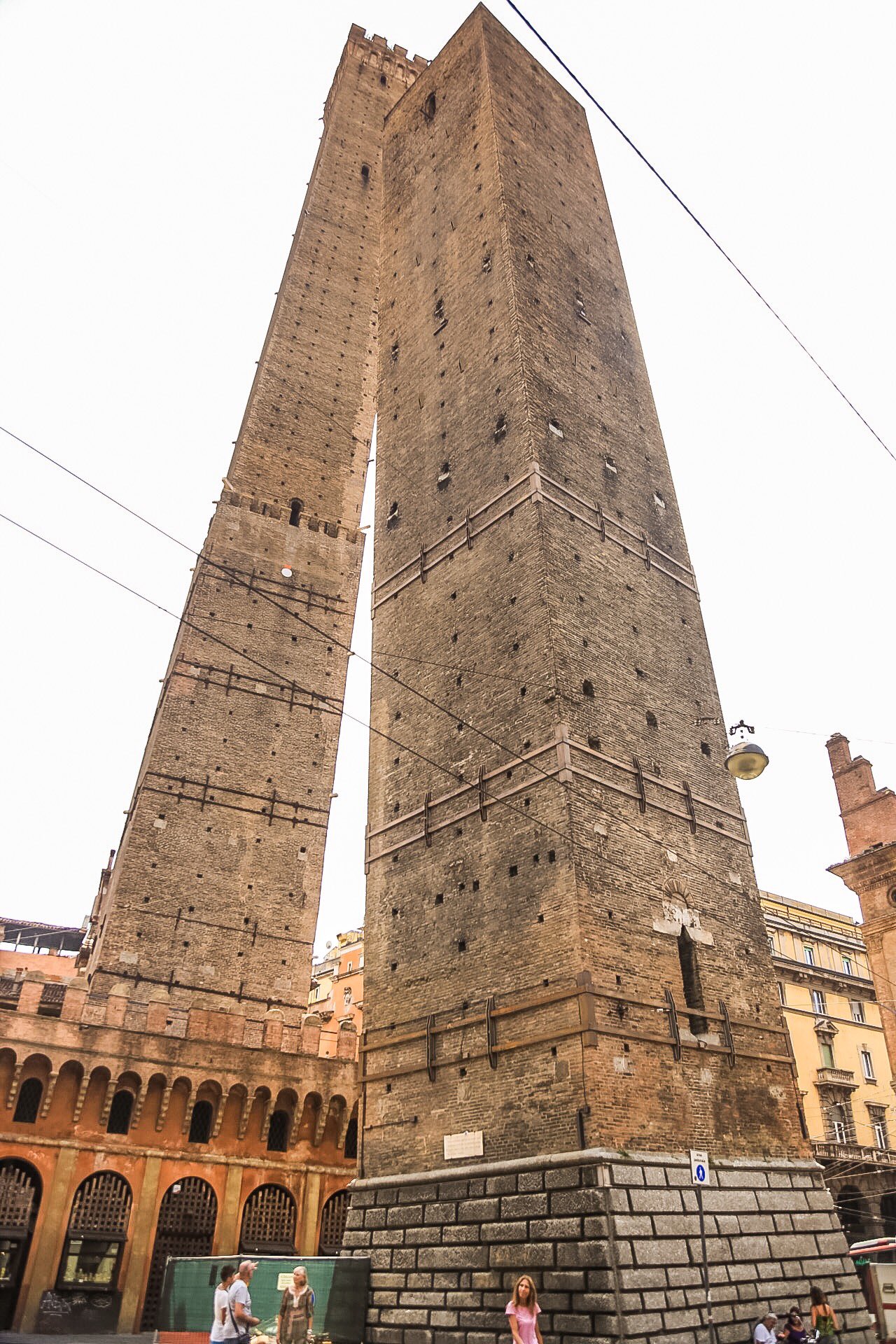
The Wars That Broke Bologna’s Skyline
Then came the centuries of conflict:
family feuds, papal wars, invasions, fires.
One by one, Bologna’s towers were:
- cut down
- burned
- demolished
- left to crumble
From nearly 180,
only a handful survived.
And at the center stood the twins:
- one tall and proud
- one crooked and stubborn
As if the city chose two guardians to represent every tower it lost.
The Engineering That Should Have Failed — But Didn’t
This is where the story becomes unbelievable.
The towers were built on:
- poor soil
- no concrete
- no deep foundation
Just bricks.
Lime mortar.
And stubborn ambition.
Asinelli rises 97 meters
on a foundation barely 3 meters deep.
Garisenda leans because its soil compressed faster on one side —
a differential settlement problem
that today would shut down a construction site instantly.
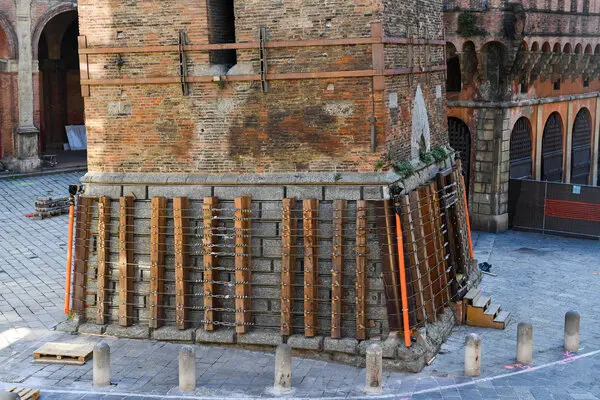
The tilt is now 4 degrees,
more than Pisa.
With earthquakes, storms, wars, and 900+ years…
they should have collapsed long ago.
The only reason they still stand is because the base widens like a pyramid,
creating a natural stability zone.
The medieval masons did not know the formulas —
but they knew the behavior.
Sometimes intuition builds what mathematics only later explains.
The Day I Heard They Needed Saving
In 2023, during my time in Bologna,
news spread across the city:
Garisenda was in danger.
Serious danger.
Cracks.
Movement.
Material fatigue.
Foundation stress.
Aching brickwork.
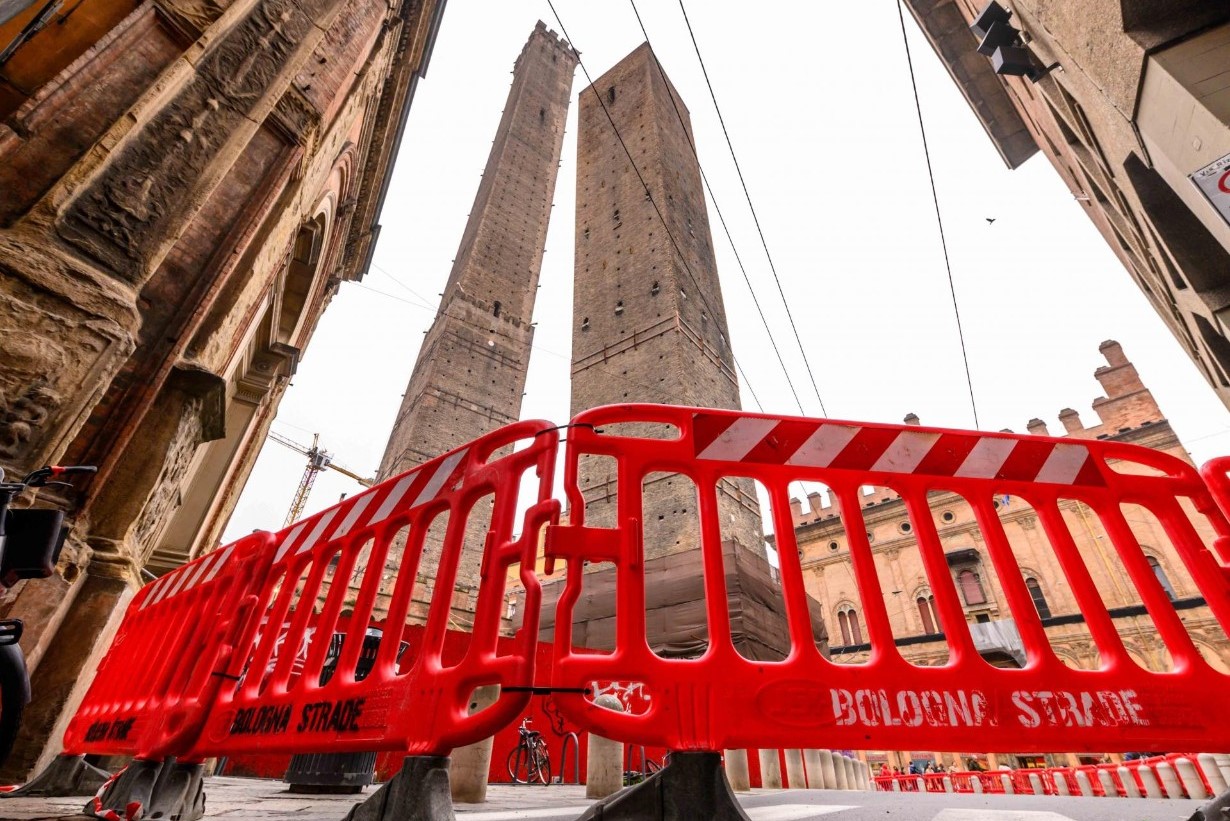
Engineers declared a red zone.
And then —
the city approved €30 million
to save the leaning tower’s life.
It felt strangely personal.
These towers had watched me walk to class,
watched me grow as a structural engineer,
watched me fall in love with the city.
Now they needed engineers.
The same city that taught me
now asked my profession to protect its symbols.
There is no better feeling than seeing engineering
not as math, not as design —
but as preservation of memory.
Why Bologna Means More To Me Now
When I left Bologna,
I realized something:
Those towers didn’t just stand for a city.
They stood for me.
I arrived as a student—
uncertain, curious, excited.
I left as an engineer—
shaped by arcades,
molded by history,
humbled by structures that survived 900 years without modern knowledge.
Bologna gave me
not just memories,
but identity.
And Asinelli & Garisenda…
they taught me the most important lesson:
Engineering is not the art of building.
It’s the art of helping things endure.
A Message From a Student Who Became an Engineer
I don’t know where my career will take me.
But every time I design a structure,
I carry Bologna with me:
- the porticoes that taught me rhythm
- the piazzas that taught me space
- the towers that taught me humility
- the city that taught me identity
And that is why Kousain carries the Two Towers in its logo—
a promise to honour the city that shaped me,
and the university that gave me everything.
Somewhere in the back of my mind,
I always feel those medieval giants.
Still standing.
Still leaning.
Still watching.