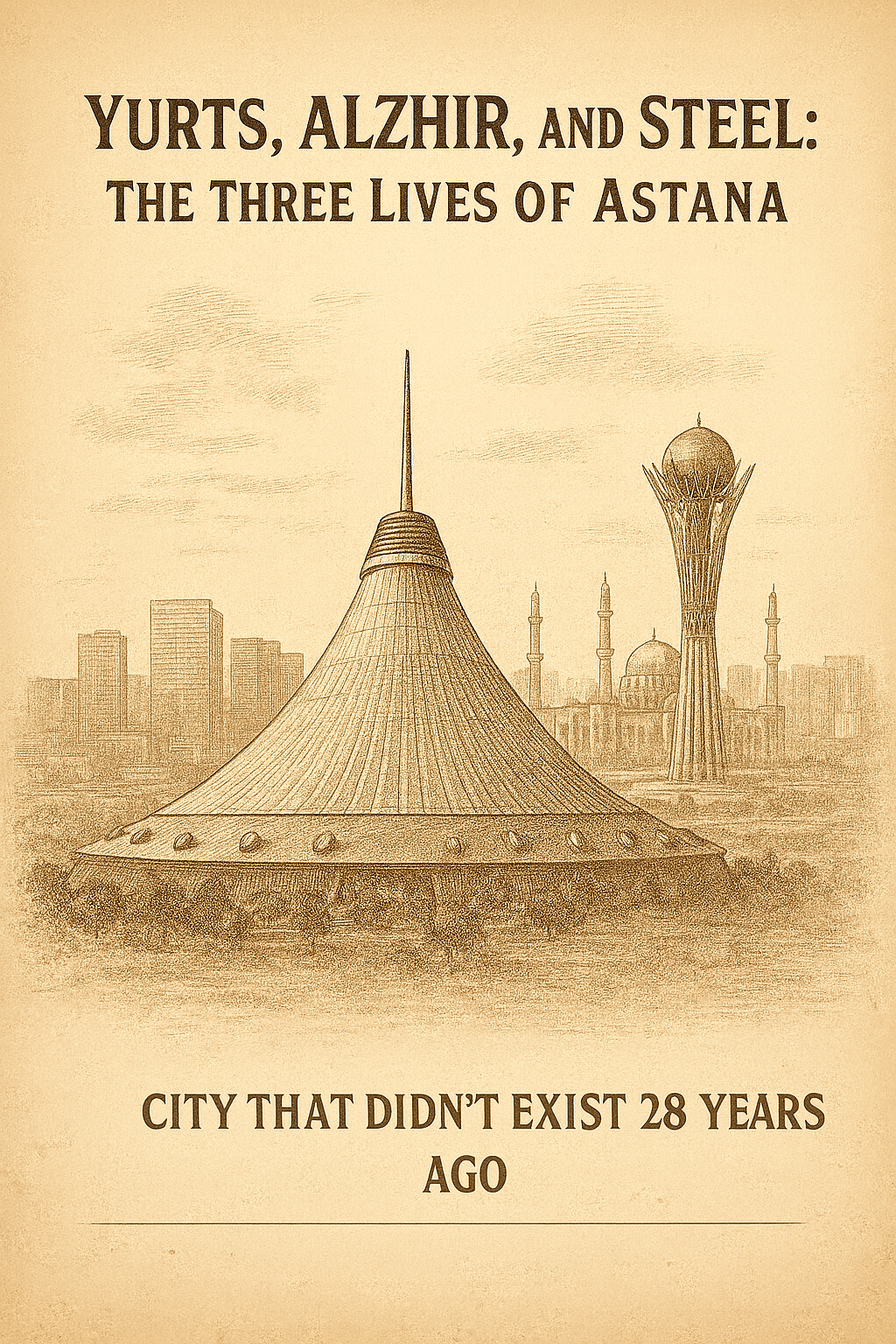
The City That Stayed Hidden at First
When I arrived in Astana (or Akmola) in October 2025,
my first glimpse of the capital felt almost unreal.
The cab driver took the highway around the outskirts,
far from the city center.
There were no towers yet, no skyline,
just endless steppe stretching into the horizon —
a landscape so flat and so quiet
And in that moment, I felt something strange —
as if the cab had carried me backward in time to 1997.
But Astana was there…only as a faint outline in the distance,
a suggestion of a city rather than the city itself.
And that was my first surprise:
Astana doesn’t reveal itself immediately.
It appears slowly —
as if rising from the steppe only when you get close enough.
What I didn’t know then
was that this gentle first impression hides a much older story.
This land has seen winters, migrations, silence…
and conflict.
Some of its older Soviet-era buildings still have
shell fragments quietly lodged in their walls —
not displayed, not highlighted,
just there,
like small reminders that the past never fully disappears.
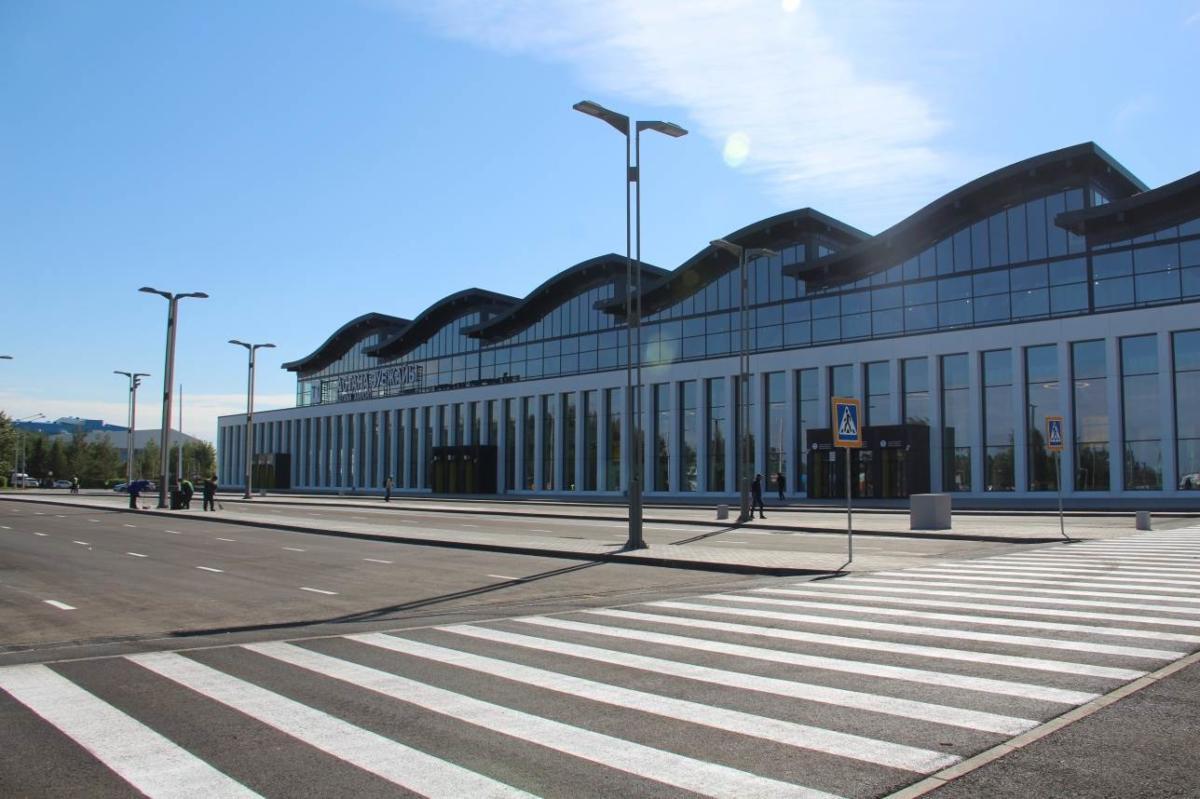
The Grand Mosque — Asia’s Largest Mosque and a Lesson in Structural Logic
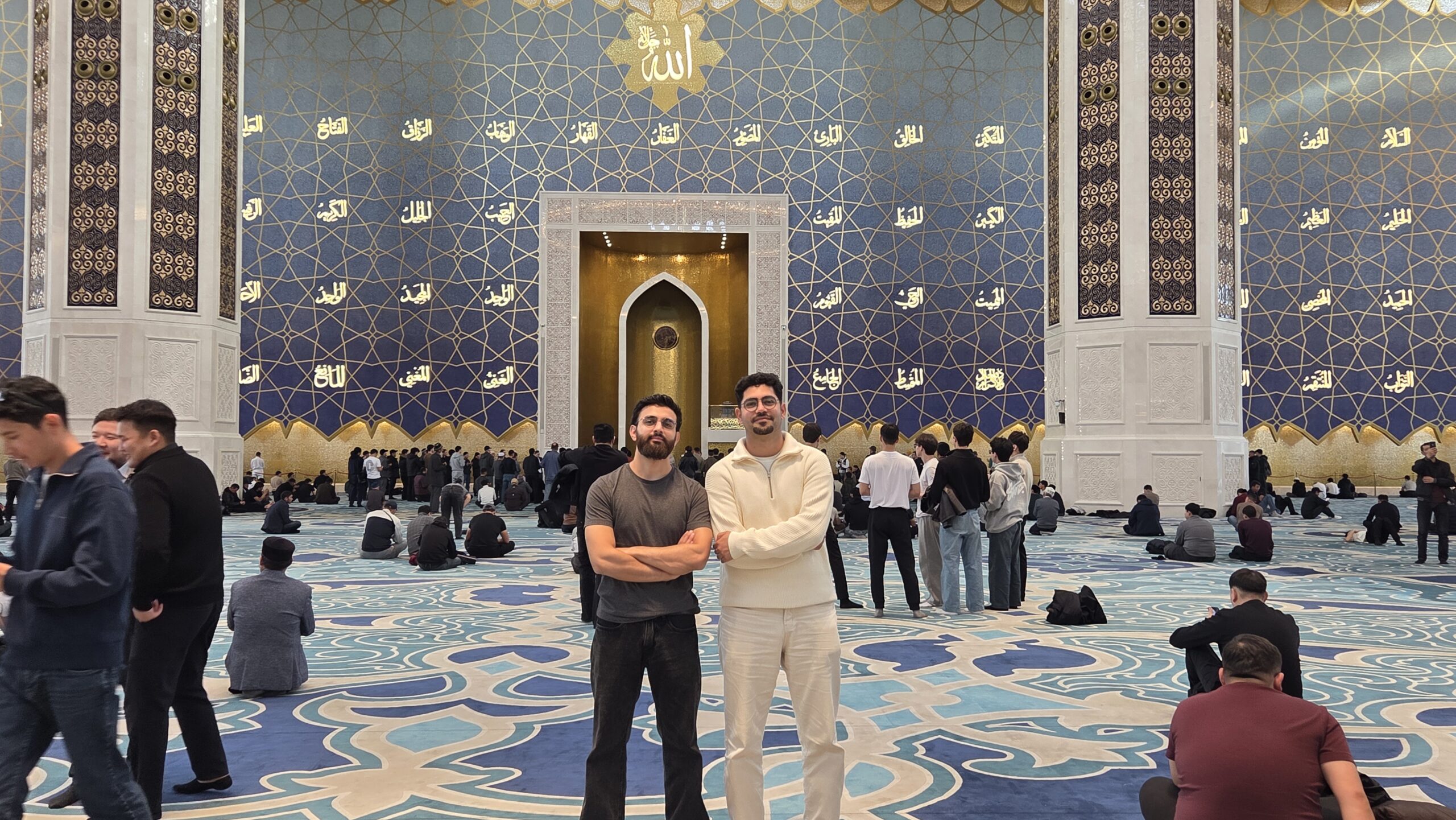
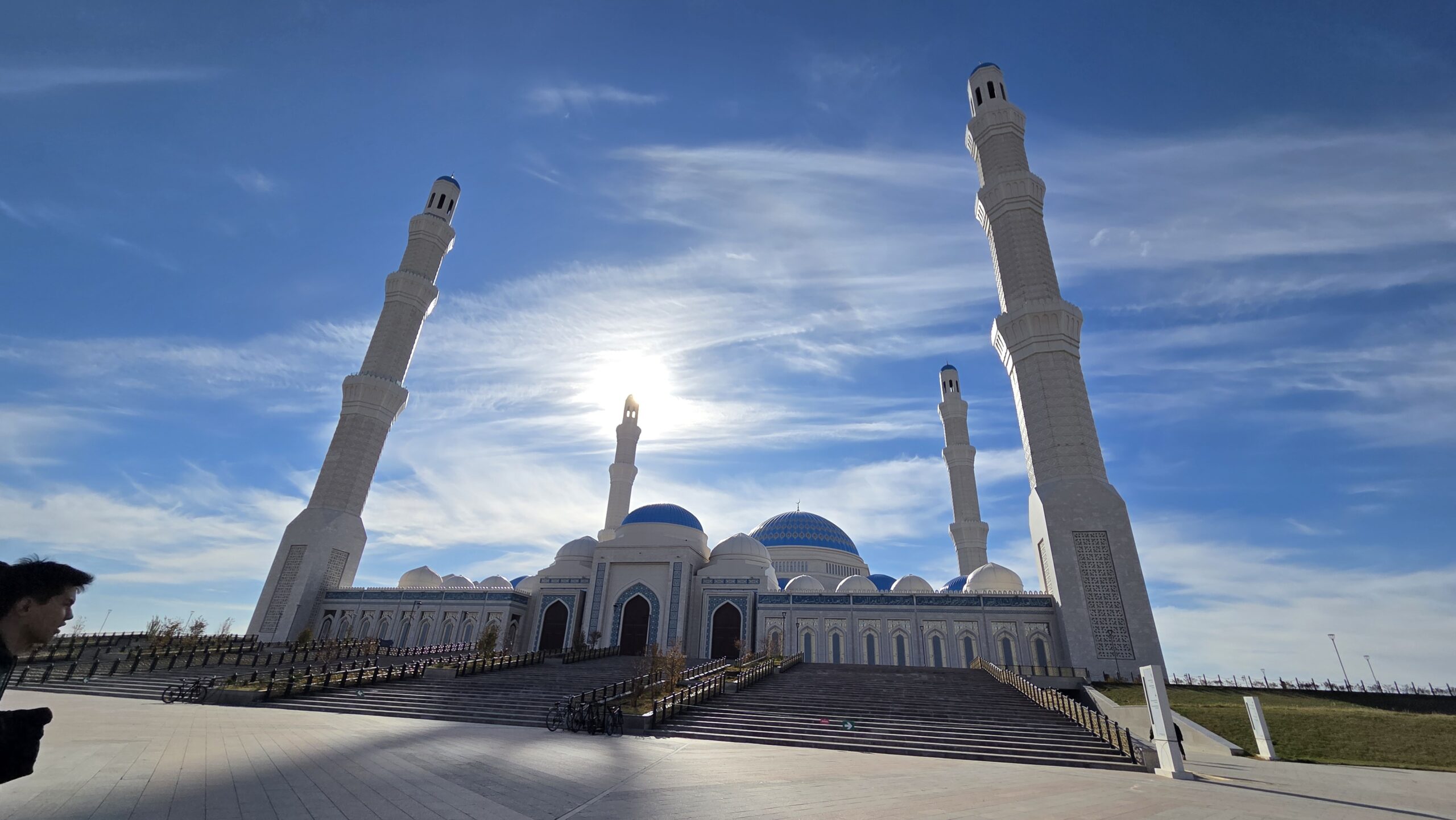
The first major landmark I visited was the
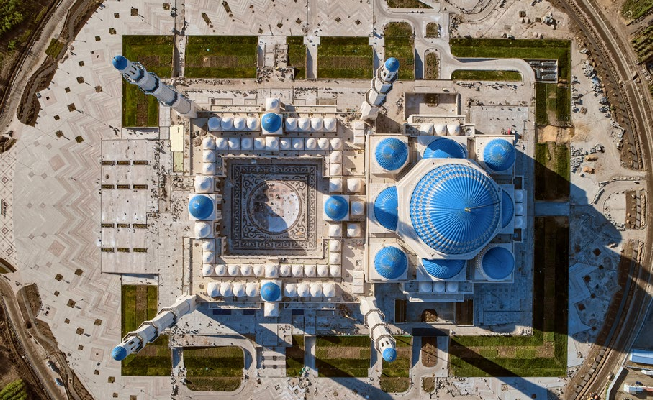
Grand Mosque of Astana, the largest mosque in Asia.
Its scale is overwhelming:
- 68,000 m² built area
- Central dome nearly 90 meters wide
- Four minarets reaching 130 meters
But the engineering inside it is even larger than the architecture.
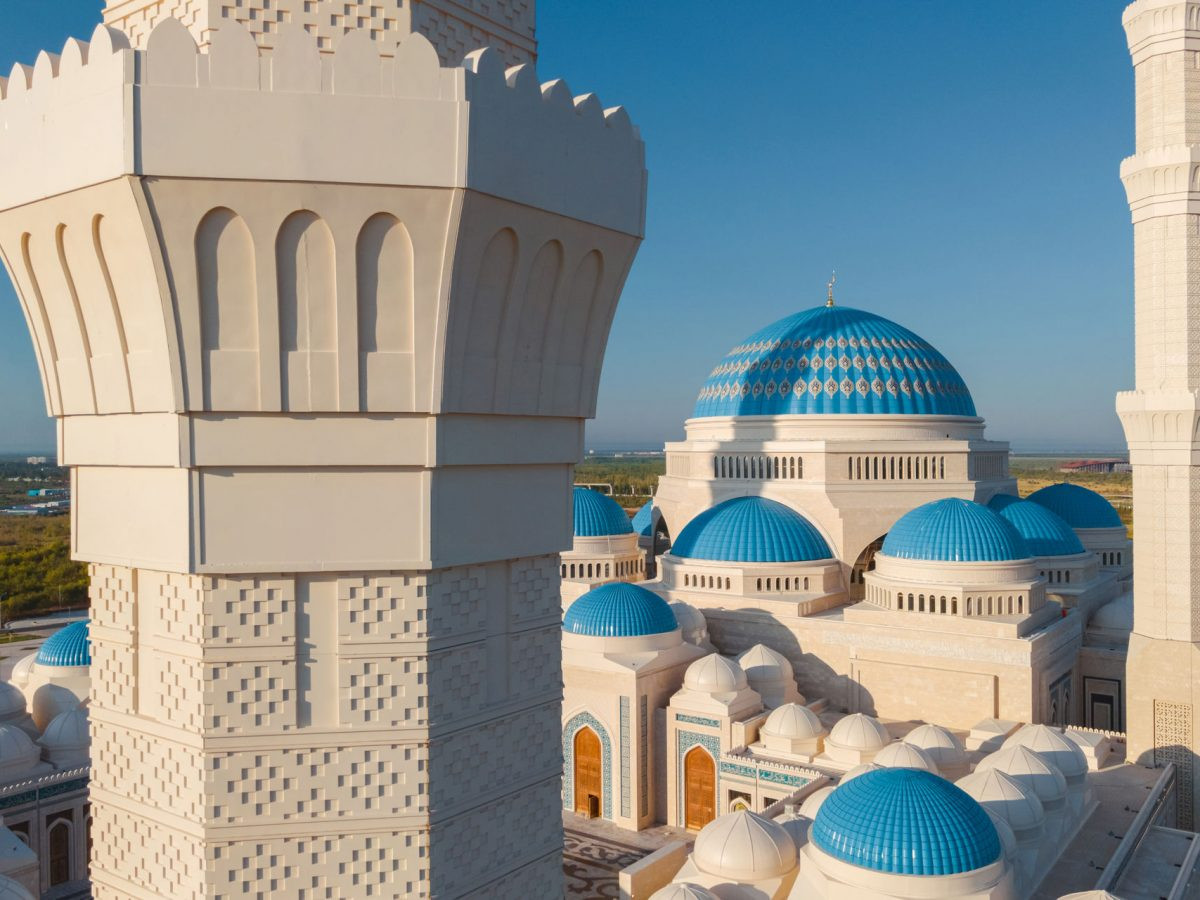
1. The Dome — A Modern Reinvention of Ancient Mechanics
The dome is a double-layered steel shell,
a structural solution that balances:
- dead load
- snow load (very high in Kazakh winters)
- thermal expansion (from -40°C to +40°C)
- and seismic lateral forces
Underneath the dome is a tension ring —
a continuous steel band that prevents the dome from spreading outward
under compression.
This is pure dome mechanics:
- Meridional forces (compression) travel downward
- Hoop forces (tension) travel around the perimeter
- The thrust line is kept inside the thickness of the shell
It is the oldest structural principle
executed with modern analysis tools.
2. A Column-Free Prayer Hall
The main prayer hall spans nearly 60 meters without interior columns.
This is achieved through:
- hidden long-span steel trusses
- composite beams that resist bending
- vibration damping to avoid resonance during large gatherings
3. Minarets in the Wind
Astana’s winters produce steppe winds exceeding 70–80 km/h.
Each minaret acts as:
- a hollow vertical concrete core
- with steel bracing inside
- designed for both flexural resistance and torsional rigidity
Aesthetically slender.
Structurally stiff.
This duality defines Astana.
Khan Shatyr — The Giant Tent Rooted in Nomadic Memory
You cannot understand Kazakhstan
without understanding its history of nomads and tents.
Khan Shatyr is the architectural tribute.
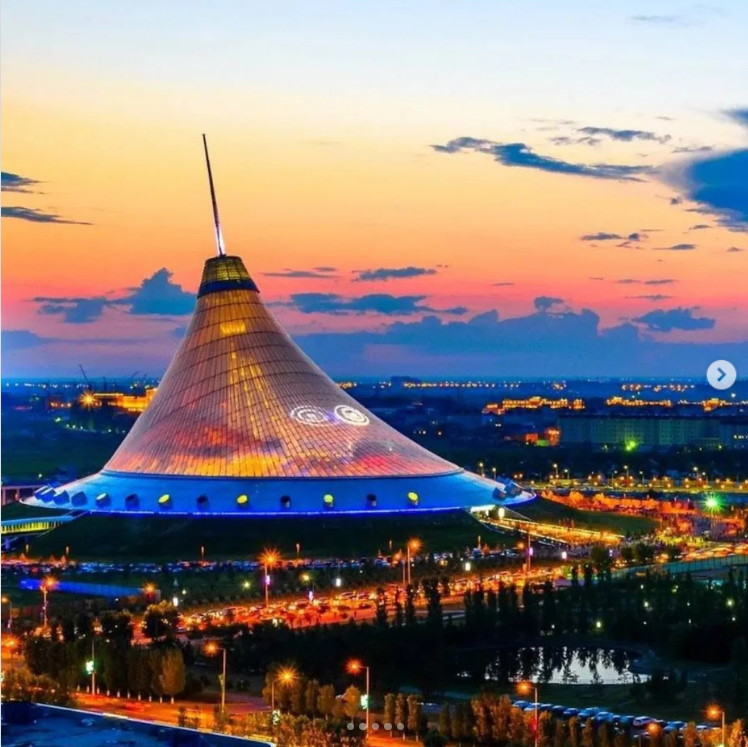
A 150-meter-high tensile tent,
the largest in the world.
Khan – “King”, Shatyr – ” A big Tent”, which depicts “The King of Tents” or “Royal Marquee”
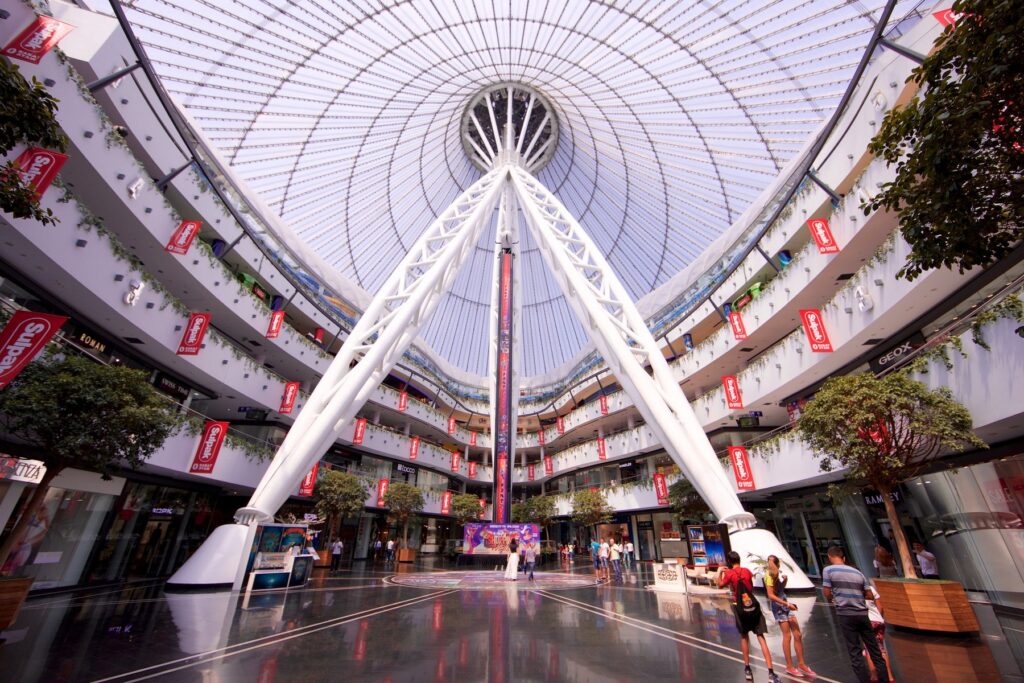
Inside, it contains:
- a shopping center
- an indoor beach
- artificial climate
- and a continuous cable-net roof
inspired directly by yurts — the ancient Kazakh tents.
1. The Membrane
Made of three-layer ETFE, which is:
- extremely light
- translucent
- self-cleaning
- capable of resisting snow loads
- flexible at -40°C
A perfect choice for a climate this harsh.
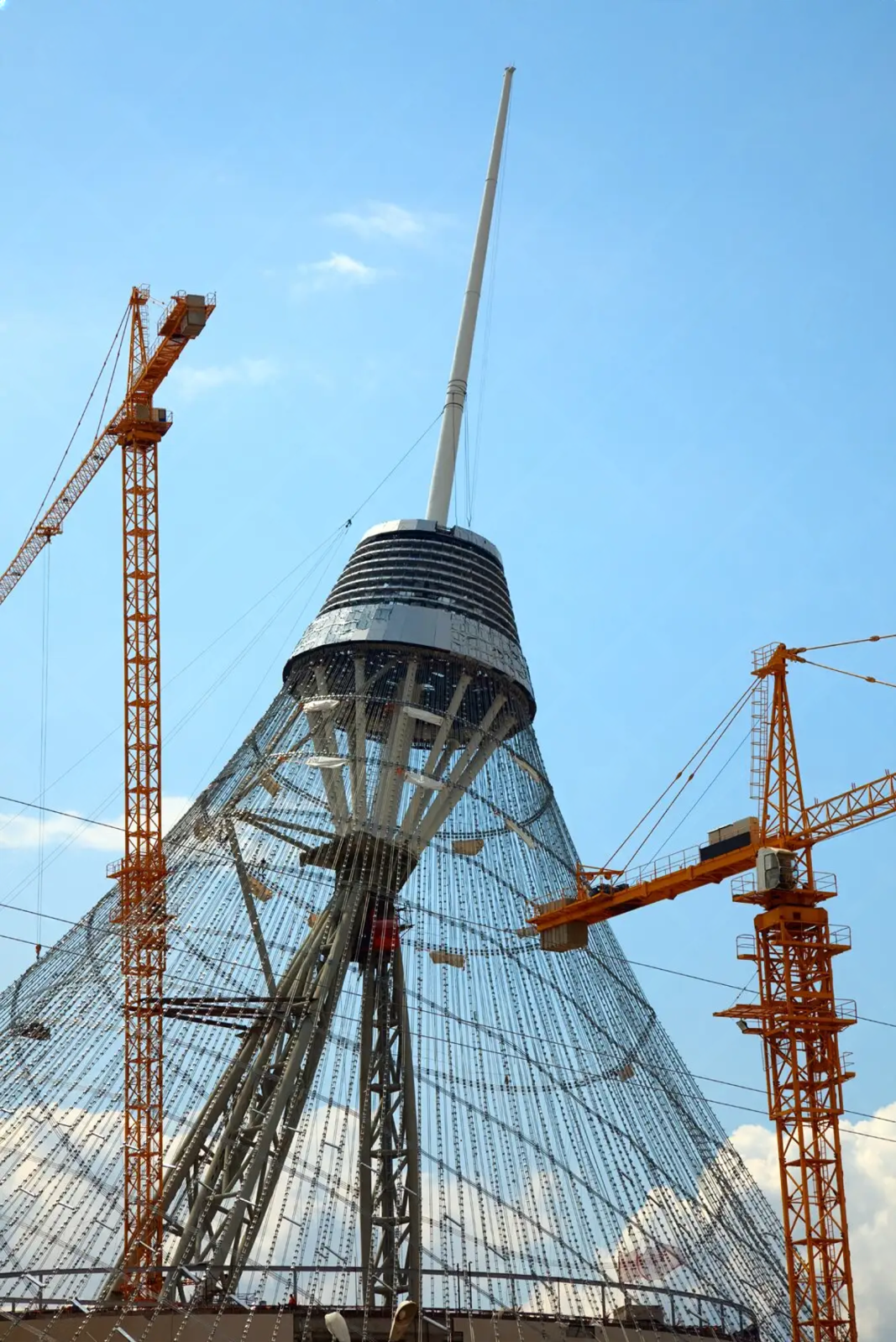
2. The Cable-Net System
Khan Shatyr doesn’t “stand”;
it hangs.
Its stability comes from:
- compression in the central mast,
- tension in the radial cables,
- curvature stiffness in the ETFE membrane,
- and pre-stress that keeps everything taut.
This form finds equilibrium
like a bowstring pulled tight.
3. Climate Engineering
To maintain indoor temperature, engineers used:
- stack effect ventilation at the apex
- active heating floor network
- ETFE’s thermal buffering
- circulatory air systems
A desert tent conditioned for Siberian winters.
The past reinterpreted through engineering.
Bayterek Tower — Myth, Structure, and Steel Intertwined
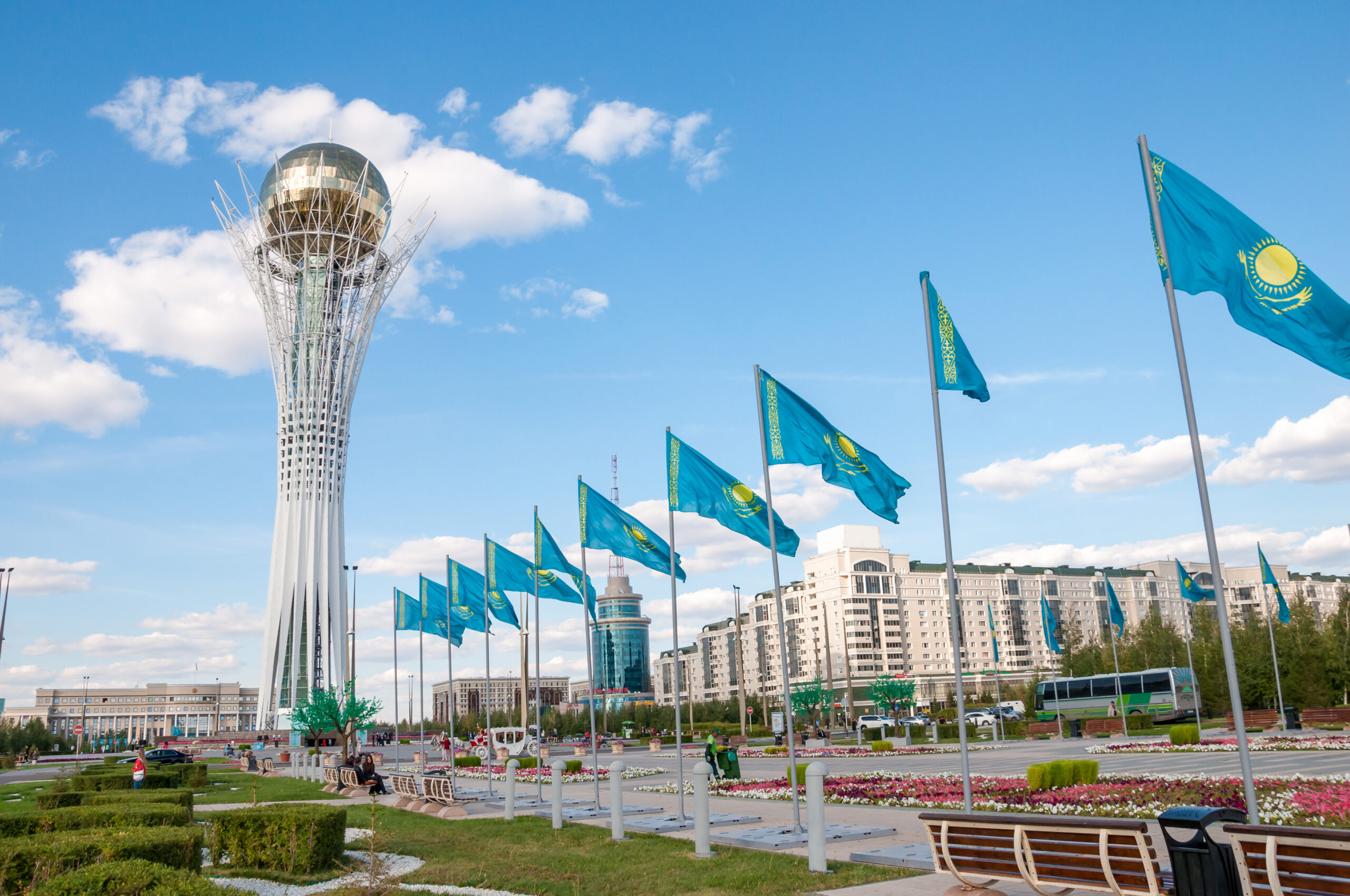
Bayterek Tower is not just a monument.
It is the symbol of Astana.
Its concept comes from the Kazakh legend of the
Samruk (magic bird) laying a golden egg in the Tree of Life.
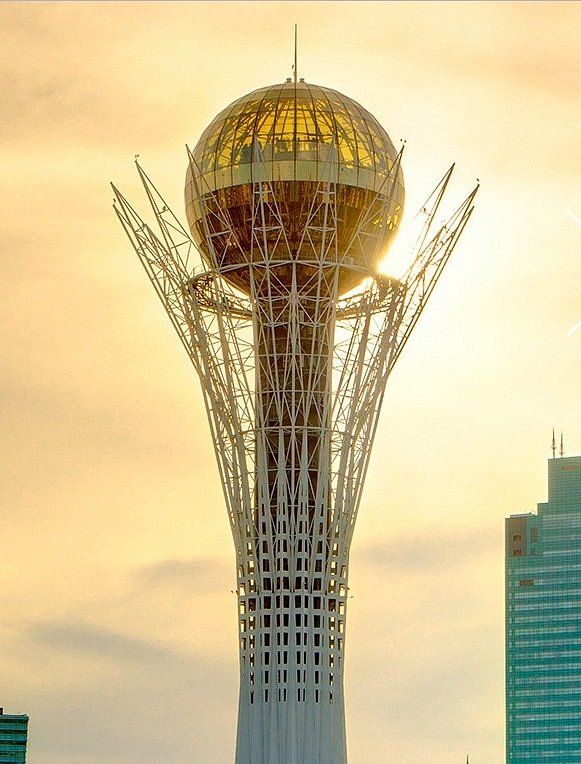
That golden egg is the sphere on top.
The white branches holding it are the steel lattice.
1. The Steel “Branches”
These act as:
- inclined mega-columns
- forming a three-dimensional space truss
- distributing gravity load
- resisting lateral wind
- minimizing torsion
Every branch transfers load to a circular ring foundation
to avoid uneven soil settlement on Astana’s soft steppe.
2. The Sphere
A 22-meter diameter glass-and-steel orb
supported by:
- ring beams
- circumferential ribs
- and a central steel frame
The sphere is not placed ON the structure —
it is hung WITHIN the structure,
reducing torsional stress during wind oscillations.
3. Foundation on Harsh Soil
Astana’s soil behavior changes dramatically:
- frozen for months
- thawing in spring
- expanding in summer
This requires:
- deep piles
- below the frost line
- anchored in stable layers
The tower stands not by height,
but by depth.
Astana: A Future Built by Engineering and Investment
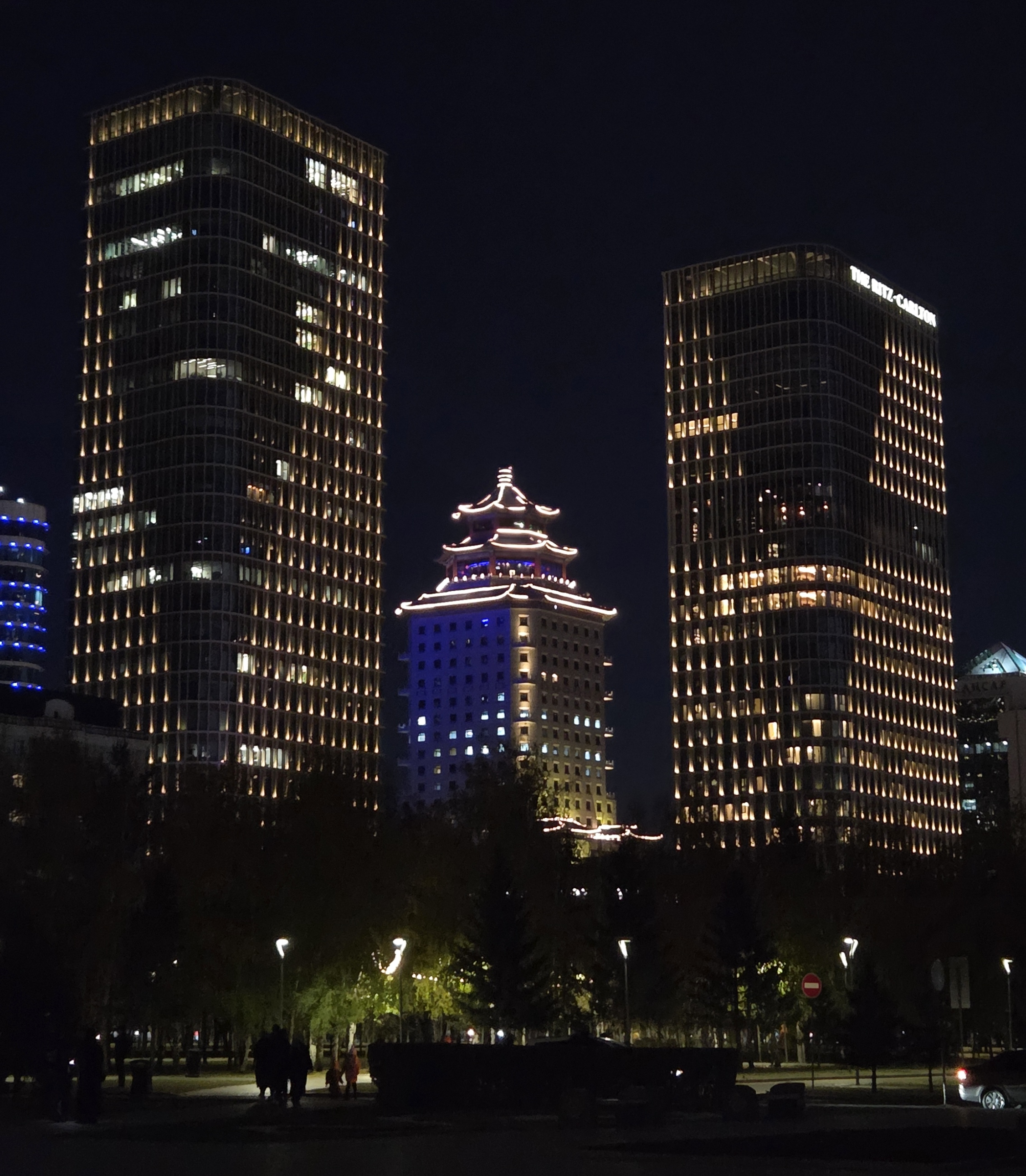
What surprised me most wasn’t just the skyline that already exists,
but the one Astana is preparing for.
Astana is not merely a city.
It is a civil engineering experiment at national scale,
fueled by global investment.
Investors from Dubai, Germany, Turkey, China, and Europe aren’t just funding buildings —
they are betting on a city carved out of emptiness,
a place where the steppe is being persuaded, one structure at a time,
to behave like a capital.
Engineers come here because the land is harsh, the wind is stubborn,
and the climate tests every detail of design —
and that is exactly what makes it irresistible.
Astana feels like a competition ground for ideas:
Who can design the next tower to cut the wind more gracefully?
Who can build the next roof strong enough for the winter weight?
Who can shape the next landmark that blends nomadic memory with steel?
The future here won’t grow by accident.
It will arrive the same way the city did —
through intention, courage, and the engineers bold enough to imagine what doesn’t exist yet
What Astana Taught Me as an Engineer
Astana didn’t impress me all at once.
It grew on me the same way its skyline grew out of the steppe — slowly, deliberately, through engineering rather than nature.
The more I explored, the more I realized this city isn’t built on the land;
it is built against it.
Here, the wind doesn’t whisper — it attacks.
So buildings stiffen their spines, twist their geometry,
and anchor deep into frozen soil that shifts with every season.
Snow gathers in heaps heavy enough to crush lesser structures,
so roofs become trusses, domes become shells,
and even membranes like Khan Shatyr learn to fight weight with curvature and heat.
And beneath all this futuristic ambition is something unexpected:
a city run with quiet discipline by women who guide its daily machinery
and international engineers from Dubai, Germany, Turkey, and China
who treat Astana like a blank canvas for bold ideas.
Astana taught me that some cities grow from rivers or valleys,
but a few are built from pure intention — just like our work at Kousain
where engineering replaces geography, and courage replaces history.