I. The Exam That Finally Let Me Leave
I finished my master’s exams on 11 August, but not in the usual way.
It was close to Ferragosto — Days when no one works in Italy.
The city was closed.
The university gates were shut.
Corridors empty.
Yet that morning, one door opened.
For my Computational Wind Engineering exam,
the university was unlocked just for me. Imagine….
Inside, when me and Prof. Luca Patruno reached the exam room,
Prof. Marzani looked at me with a half-smile, half-disbelief —
the kind that clearly said:
“Are you crazy? In August…”
And maybe I was.
This was the exam I feared the most.
For months, I had lived inside simulations —
wind fields, pressure coefficients, vortices, convergence checks.
Hours watching flow separate, reattach, destabilize in OpenFOAM.
Learning how invisible forces quietly decide whether structures behave… or fail.
When the exam ended,
there was no celebration.
Just a long breath out.
Relief.
I stepped outside, pulled out my phone,
and called my friends immediately.
The plan was on.
By afternoon, bags were packed.
No overthinking. No delay.
That familiar instinct after intense effort —
when the mind finally quiets and the body just wants to move.
We got into the car and left Germany-bound.
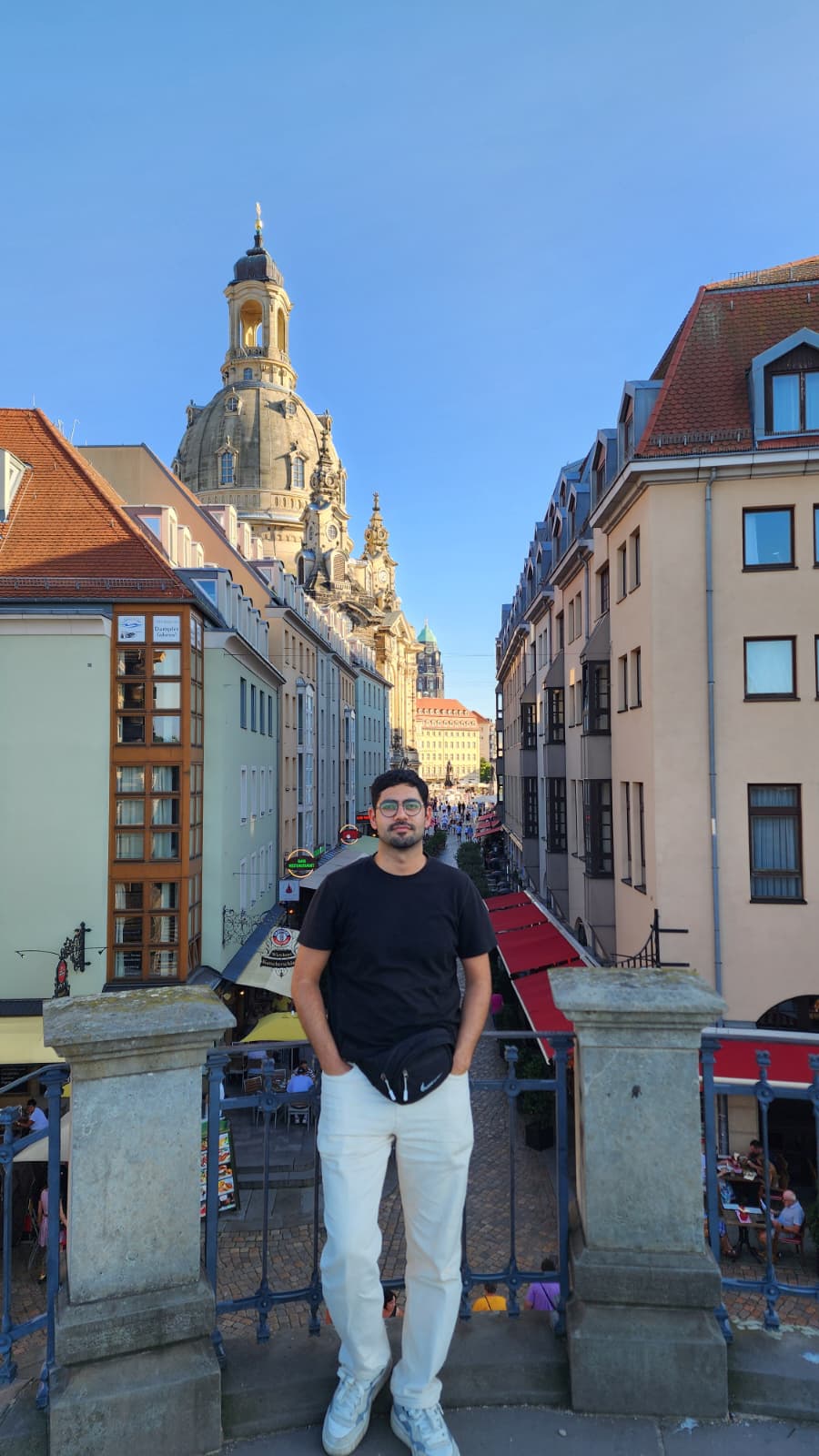
By the next day, 12 August, we were in Dresden.
At the time, it felt like just a trip.
Only later did I realize how closely the city —
and one of its bridges —
would echo everything I had just studied.
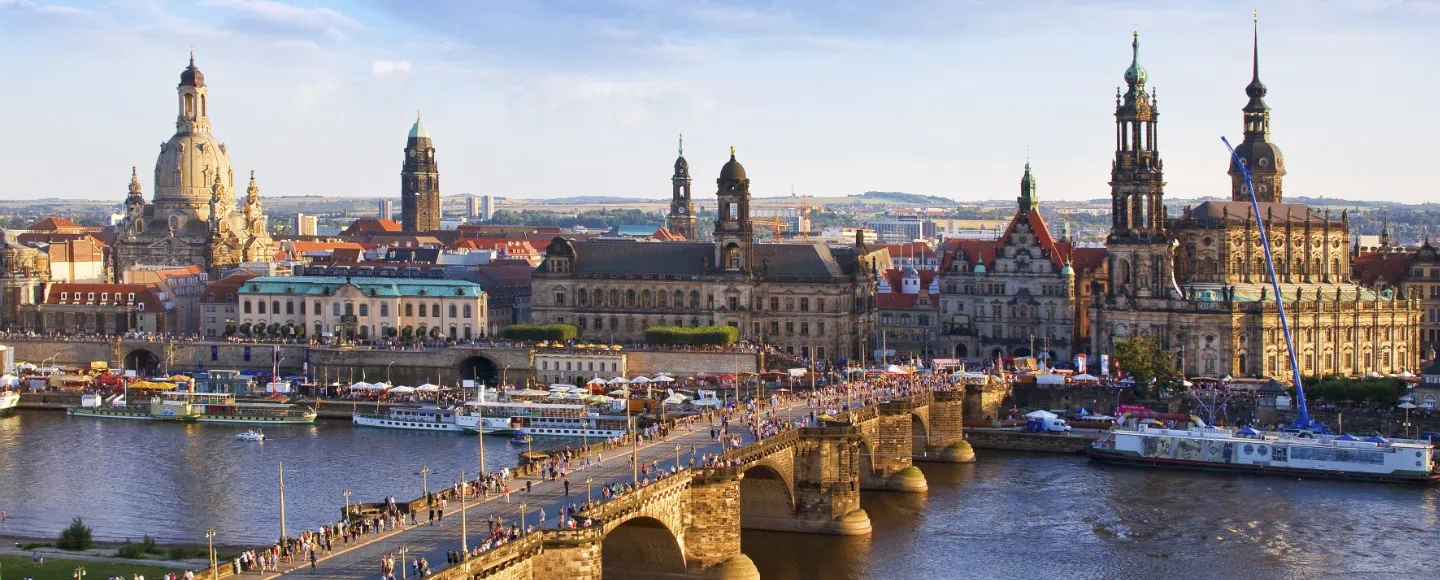
II. Dresden — A City That Carries Memory in Its Structures
Dresden doesn’t announce its history loudly.
It lets you discover it.
You notice it in stone that looks too clean to be ancient
and too deliberate to be new.
In churches rebuilt not to erase scars,
but to remember them correctly.
This is a city that once disappeared.
In 1945, Dresden was bombed into near nonexistence.
Firestorms erased entire districts.
The Frauenkirche collapsed and remained a ruin for decades —
a conscious decision to let absence speak.
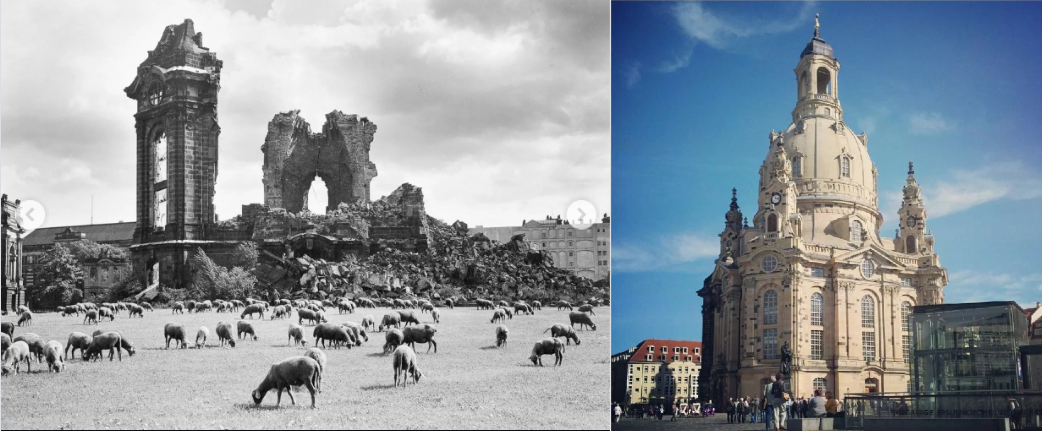
And then, Dresden rebuilt.
Slowly.
Carefully.
Stone by stone.
Walking through the city in 2025,
you feel restraint everywhere.
This is not a city that trusts permanence blindly.
Which is why the Elbe River matters.
III. The River That Holds the City Together
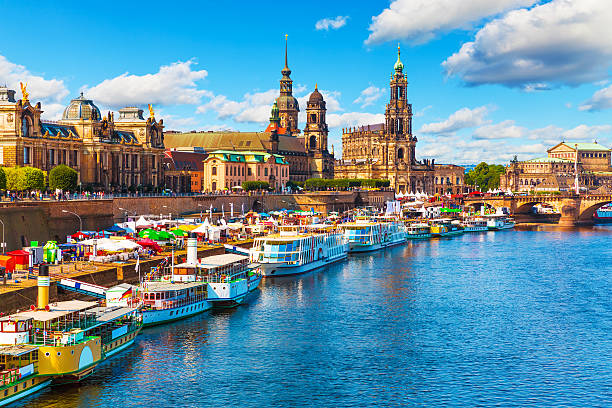
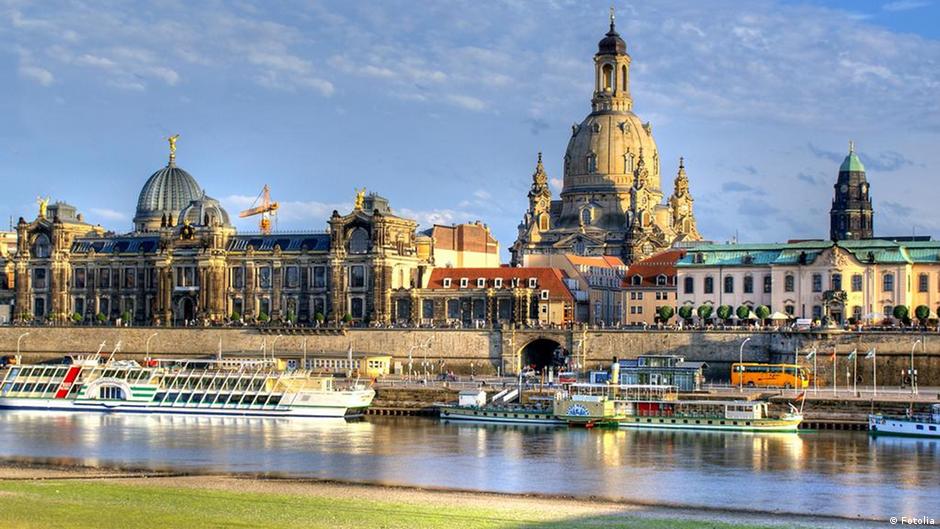
The Elbe doesn’t divide Dresden.
It connects it.
Bridges here are not just crossings —
they are continuities between a city that was destroyed
and a city that chose to return.
They carry more than traffic.
They carry memory.
So when a bridge fails in Dresden,
it isn’t just a structural event.
It feels personal.
That is how the Carola Bridge entered my thoughts —
not as breaking news,
but as part of the city’s quiet structural language.
IV. The Carola Bridge — Designed to Be Invisible
The Carola Bridge was never meant to be iconic.
Built in the 1970s,
it belonged to an era of confidence in modern materials:
- prestressed concrete
- efficient spans
- slender profiles
- long design lives
It didn’t frame postcards.
It didn’t compete with cathedrals.
It simply worked.
And for decades, it did exactly that.
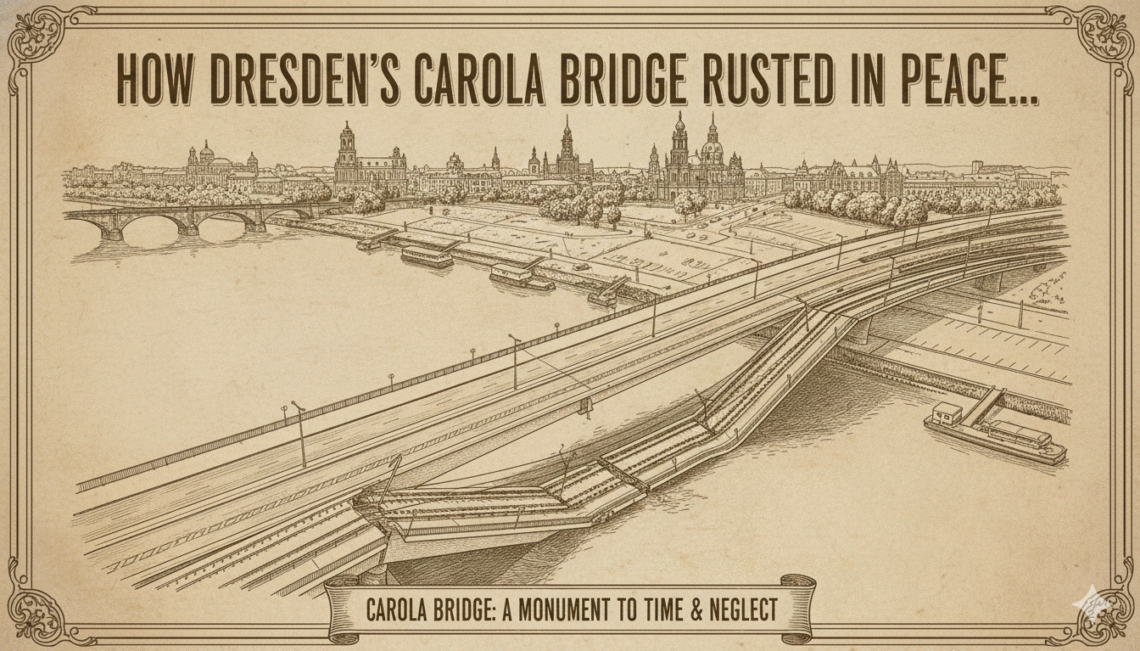
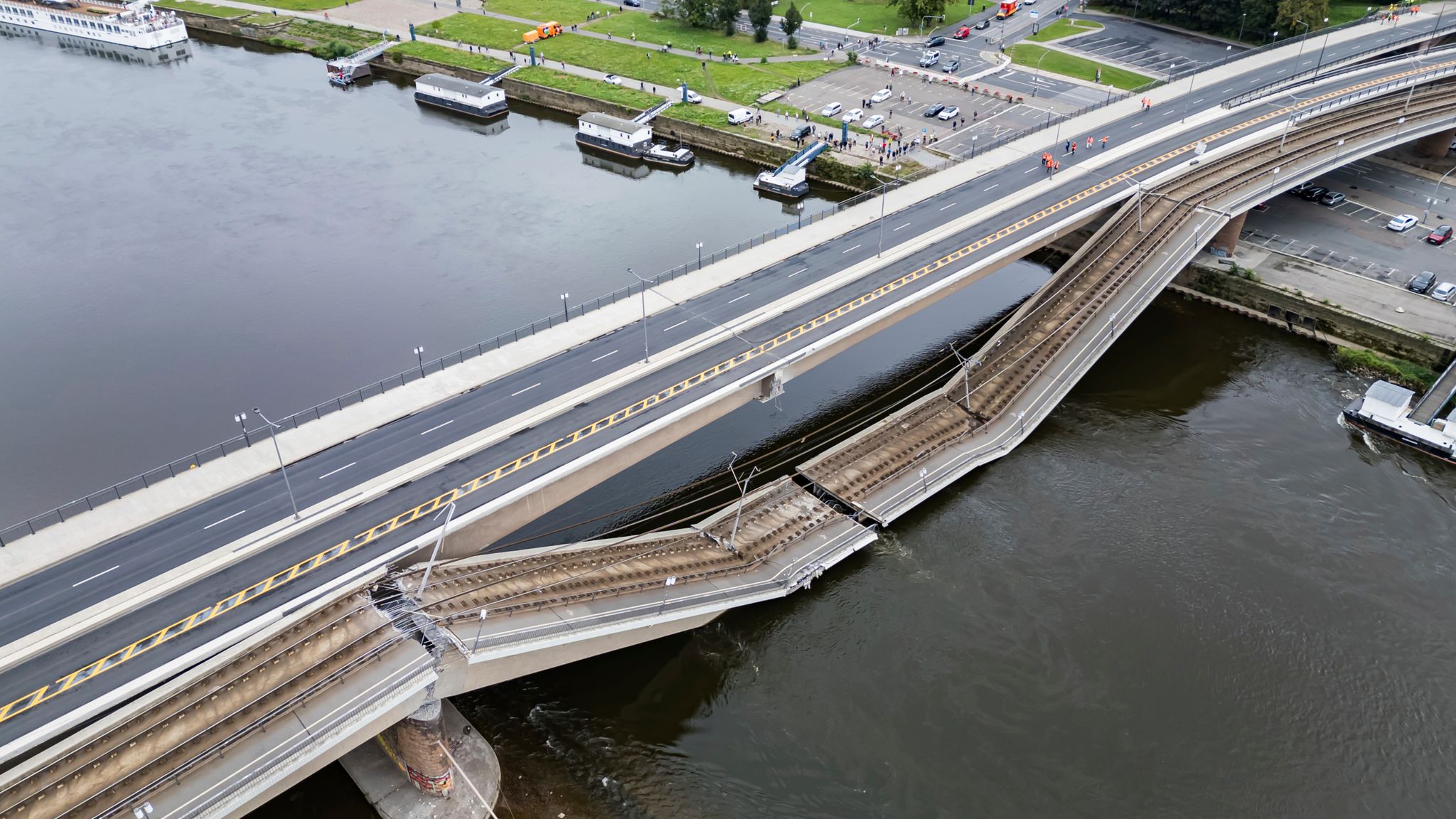
Until September 11, 2024,
when part of the bridge collapsed suddenly.
No earthquake.
No flood.
No explosion.
The 53-year-old Carola Bridge spanning the Elbe tumbled into the river in the middle of the night, 10 minutes after a tram had passed over it.
No one was harmed. City authorities said it was a miracle…
Just failure.
And that made it far more unsettling.
V. What Really Happened — Beyond “Fatigue”
Early explanations leaned on a familiar word: fatigue.
But fatigue alone does not explain
a sudden, brittle collapse in prestressed concrete.
Subsequent forensic investigations —
including detailed studies by experts from TU Dresden —
revealed a far more complex and troubling picture.
This was not one failure mechanism.
It was a long, silent interaction between material, chemistry, stress, and time.
VI. Hydrogen, Steel, and a Problem Hidden Since Construction
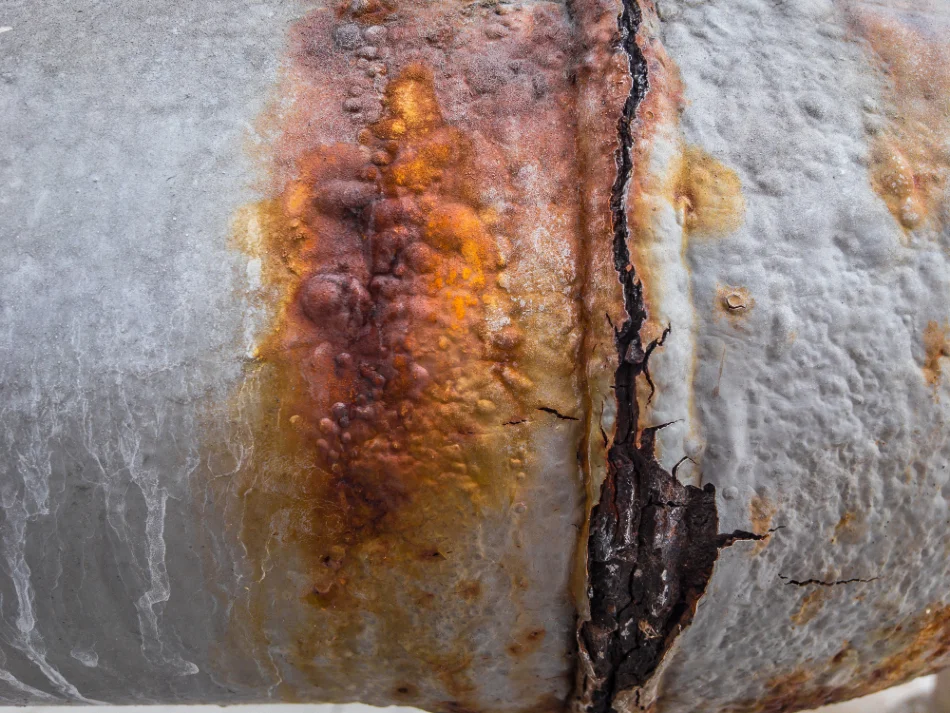
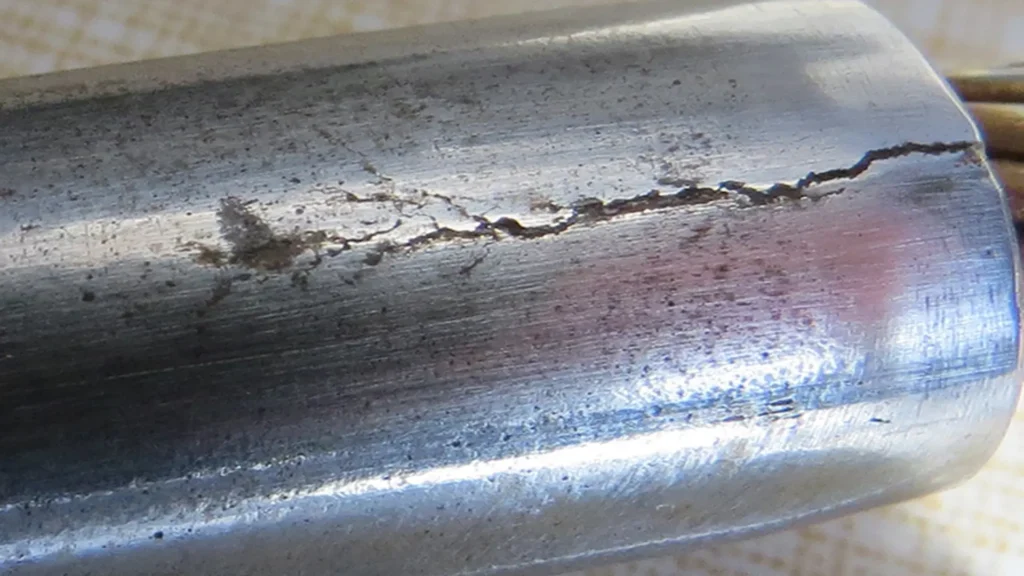
1. Hydrogen-Induced Stress Corrosion Cracking (SCC)
Prestressing tendons are held under permanent high tensile stress.
That makes them especially vulnerable to hydrogen embrittlement.
Hydrogen atoms can diffuse into high-strength steel,
reducing ductility and enabling microscopic crack initiation.
Under sustained stress, these cracks grow —
not visibly,
not dramatically,
but relentlessly.
This is stress corrosion cracking:
a mechanism that does not need large section loss
and gives almost no warning.
Investigators identified SCC in multiple prestressing tendons
at the failure location.
2. Construction-Stage Vulnerabilities (1970s Legacy)
The origins of the problem trace back to construction.
Evidence suggests that during the original build:
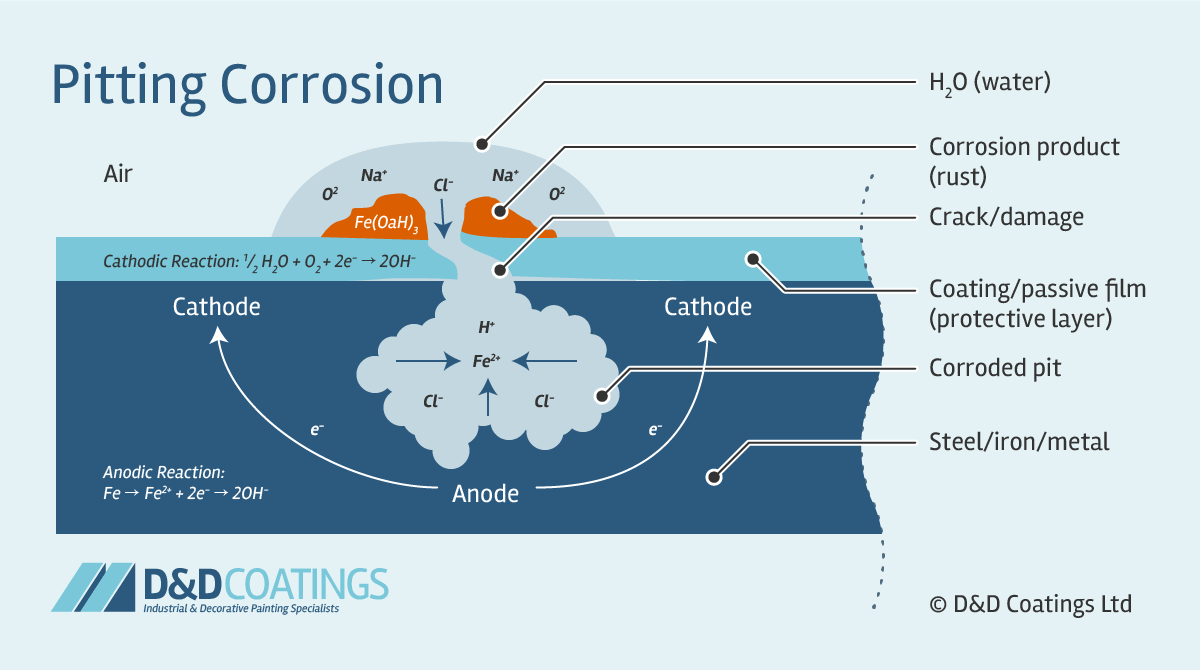
- moisture entered tendon ducts
- chlorides were present
- sealing and grouting practices were less controlled than today
These were not immediate defects.
They were latent conditions.
Prestressed structures remember how they were built.
[Credits: D&DCOATINGS https://www.ddcoatings.co.uk/2276/what-is-pitting-corrosion]
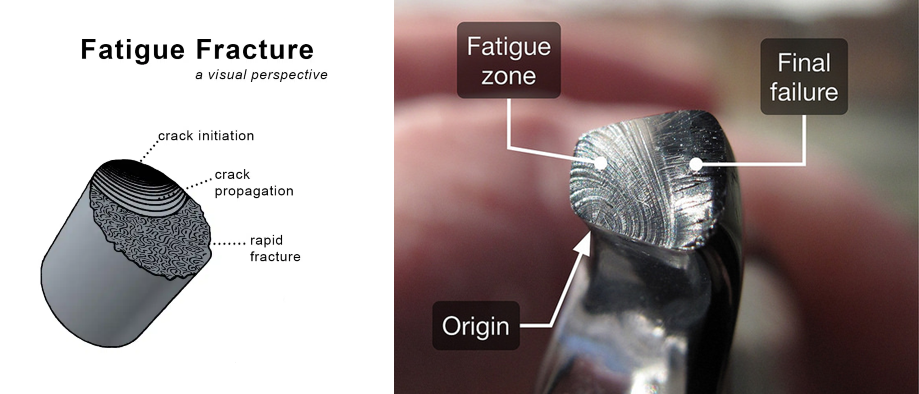
3. Fatigue as an Accelerator, Not the Cause
Decades of traffic loading introduced cyclic stresses.
Fatigue did not initiate failure —
but it accelerated crack growth in already weakened tendons.
Over time:
- prestress levels reduced
- redundancy quietly vanished
- internal force paths shifted
At the critical section,
more than two-thirds of the prestressing tendons were already compromised.
Once the system crossed a threshold,
collapse was inevitable — and sudden.
VII. Why Maintenance Didn’t Prevent Collapse
This is the uncomfortable truth.
The bridge was inspected.
Maintenance was performed.
But prestressed concrete hides its most critical elements:
- tendons are internal
- corrosion is invisible
- SCC leaves minimal surface evidence
- prestress loss is difficult to quantify without invasive testing
Inspection regimes often detect what can be seen.
This failure lived below visibility.
Engineering didn’t fail here due to neglect.
It failed due to overconfidence in what cannot be observed.
VIII. A City That Knows Collapse — Learning a New Kind
Dresden knows sudden destruction.
It has seen collapse caused by violence and fire.
The Carola Bridge failed differently.
Quietly.
Patiently.
Without spectacle.
One collapse rewrote history.
The other rewrites engineering judgment.
Standing there in August 2025,
with the rubble already cleared and life continuing around it,
I realized something unsettling:
The most dangerous failures
are not the ones that shock the world.
They are the ones that behave normally
until the very end.
IX. What the Carola Bridge Quietly Taught Me
The Carola Bridge did not fail because it was ignored.
It failed because it was trusted.
Trusted to age predictably.
Trusted to reveal damage in time.
Trusted to behave as our models said it should.
But prestressed concrete does not warn loudly.
Its most dangerous failures grow internally —
through chemistry, sustained stress, and decisions made decades earlier.
Standing in Dresden, I realized that structures don’t forget how they are built.
They remember moisture, materials, and assumptions long after drawings are archived.
At Kousain, this is why we study failures like the Carola Bridge —
not for spectacle,
but because quiet collapses teach the hardest engineering lessons.
The responsibility of structural engineering is not just to make structures stand,
but to understand what they cannot show us.