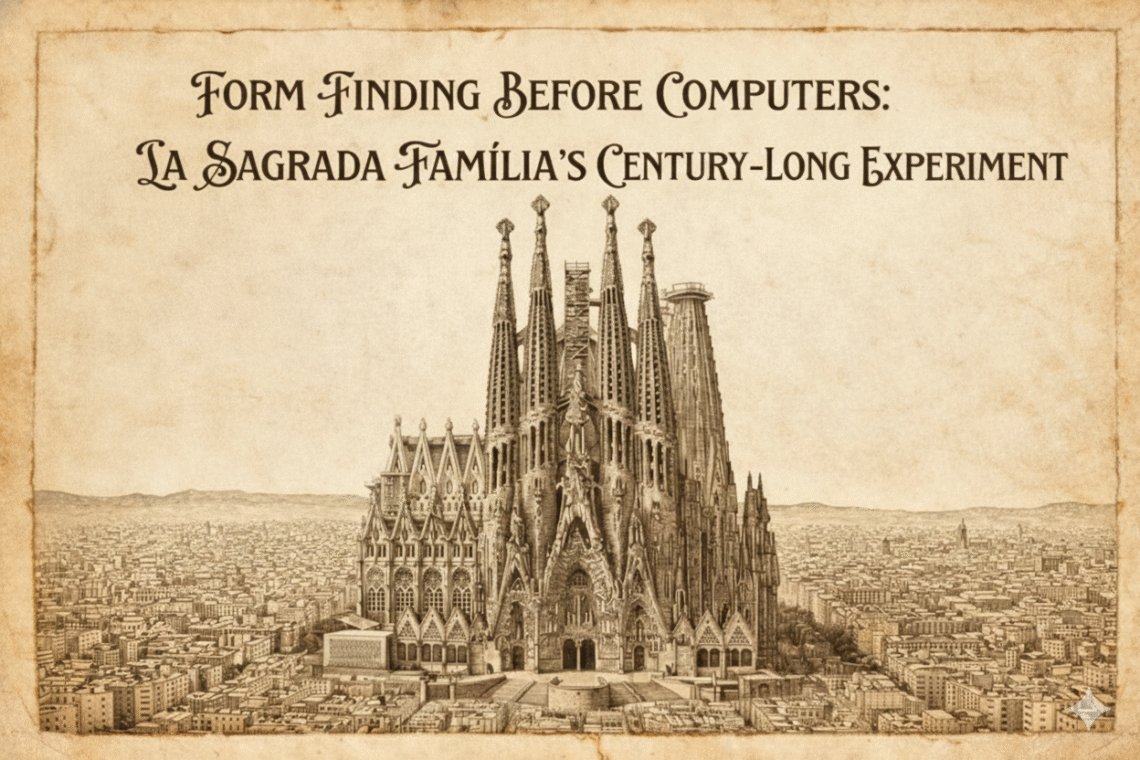
I. Barcelona, Before the Cathedral Appeared
Barcelona doesn’t overwhelm you immediately.
It calibrates you.
When I arrived on 16 April 2025, the city felt measured, confident—
a place that trusts geometry.
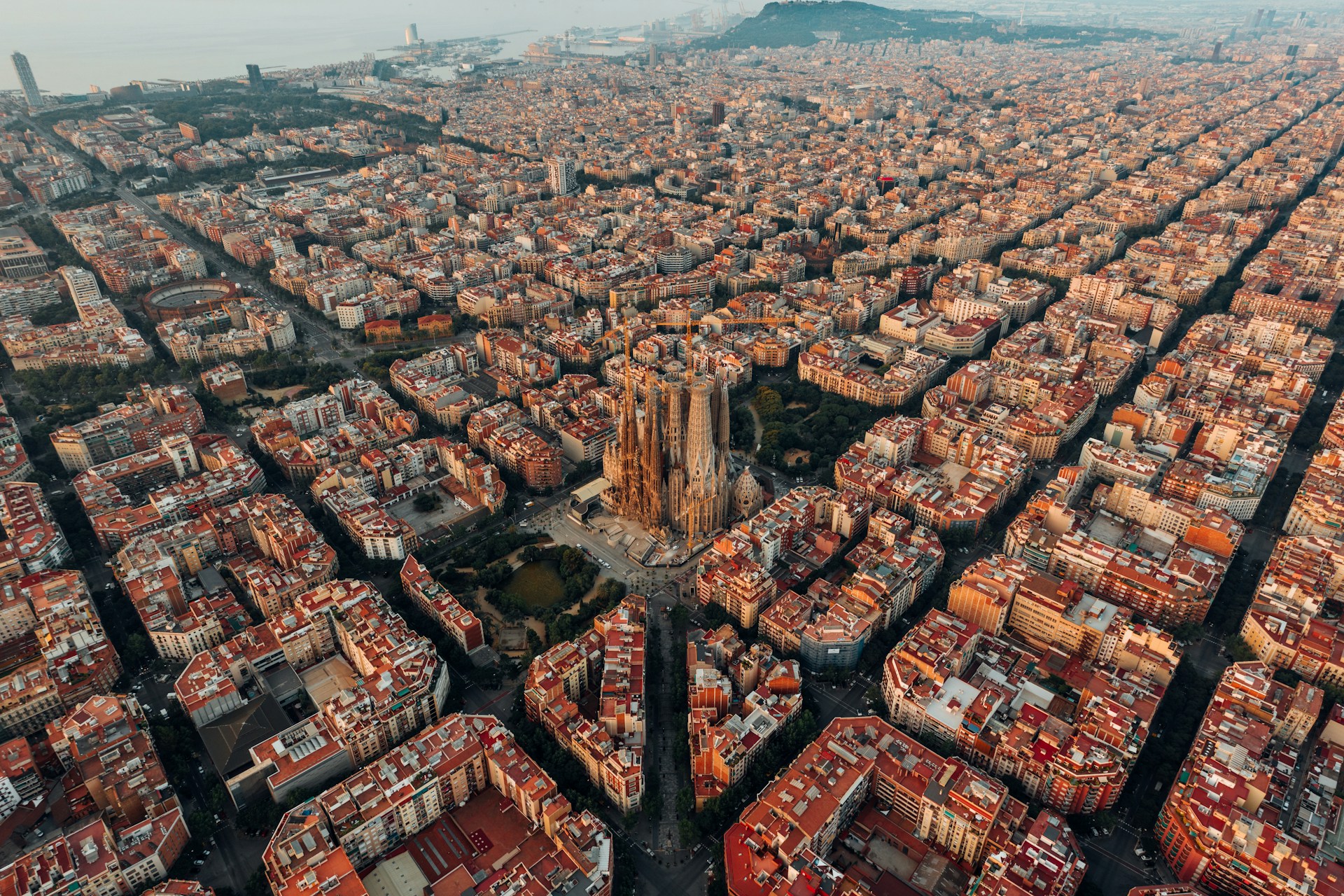
Wide avenues cut cleanly through dense blocks.
Buildings obey height lines.
Corners soften into curves with almost mathematical politeness.
Everything feels intentional, as if the city once agreed on a set of rules
and never felt the need to question them again.
We landed at the airport, took a bus into the city,
and were dropped halfway near the Museu Nacional d’Art de Catalunya.
From there, Barcelona revealed itself step by step—
stone staircases, long sightlines, ordered façades.
It felt complete.
We reached the hostel, changed clothes,
and without planning anything else, started walking.
That’s when Barcelona broke its own rules.
II. The Moment the City Lost Control of Its Geometry
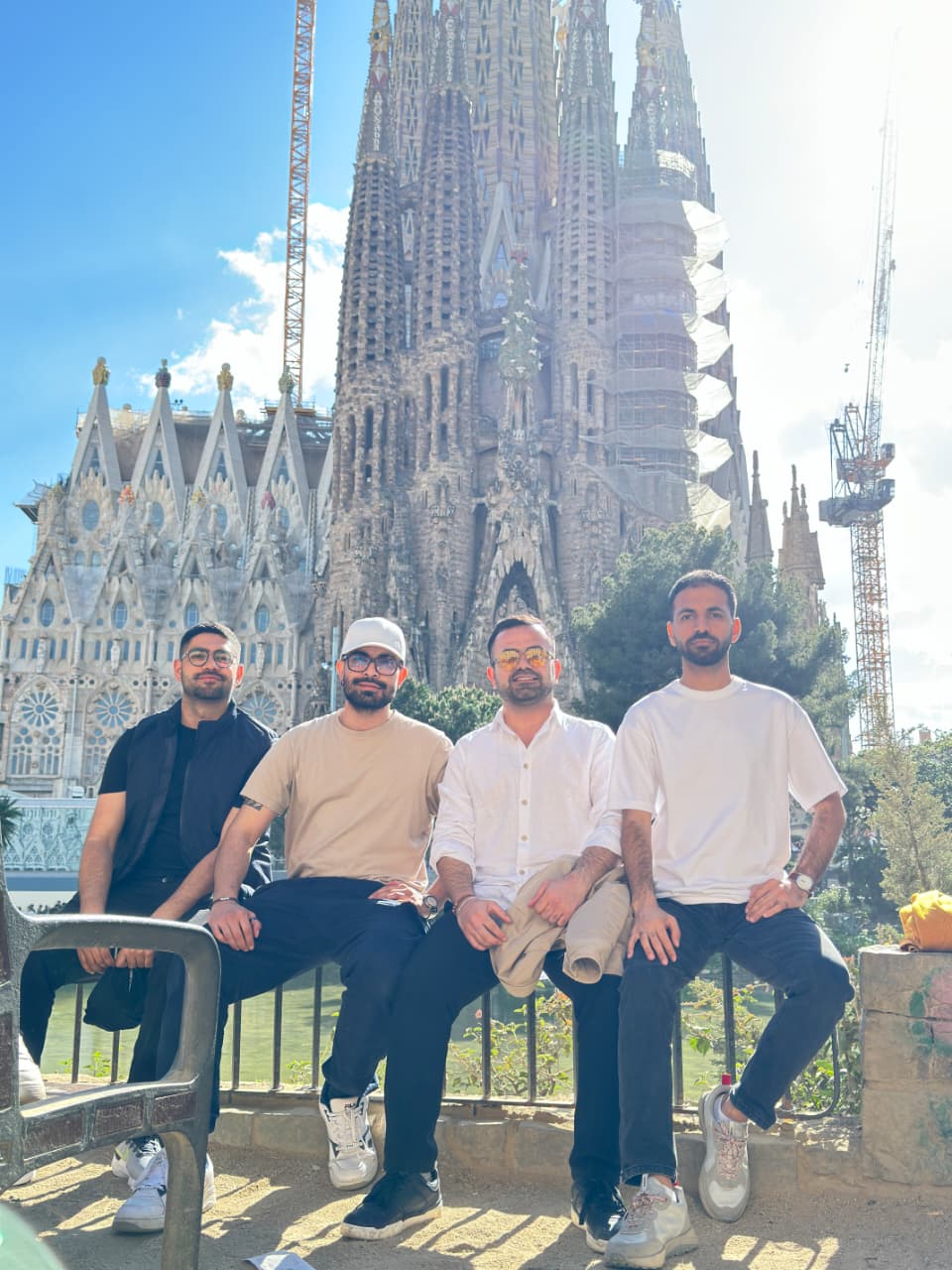
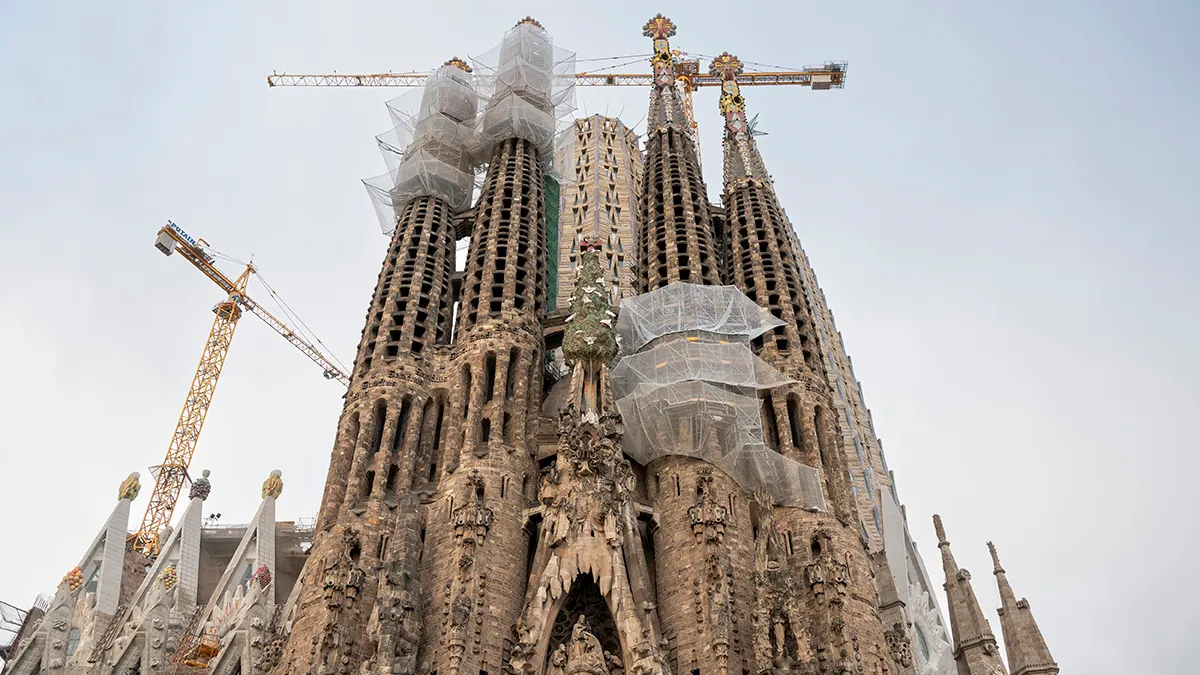
La Sagrada Família does not rise gradually into view.
It interrupts you.
One moment you’re surrounded by ordinary urban logic,
and the next, the skyline fractures.
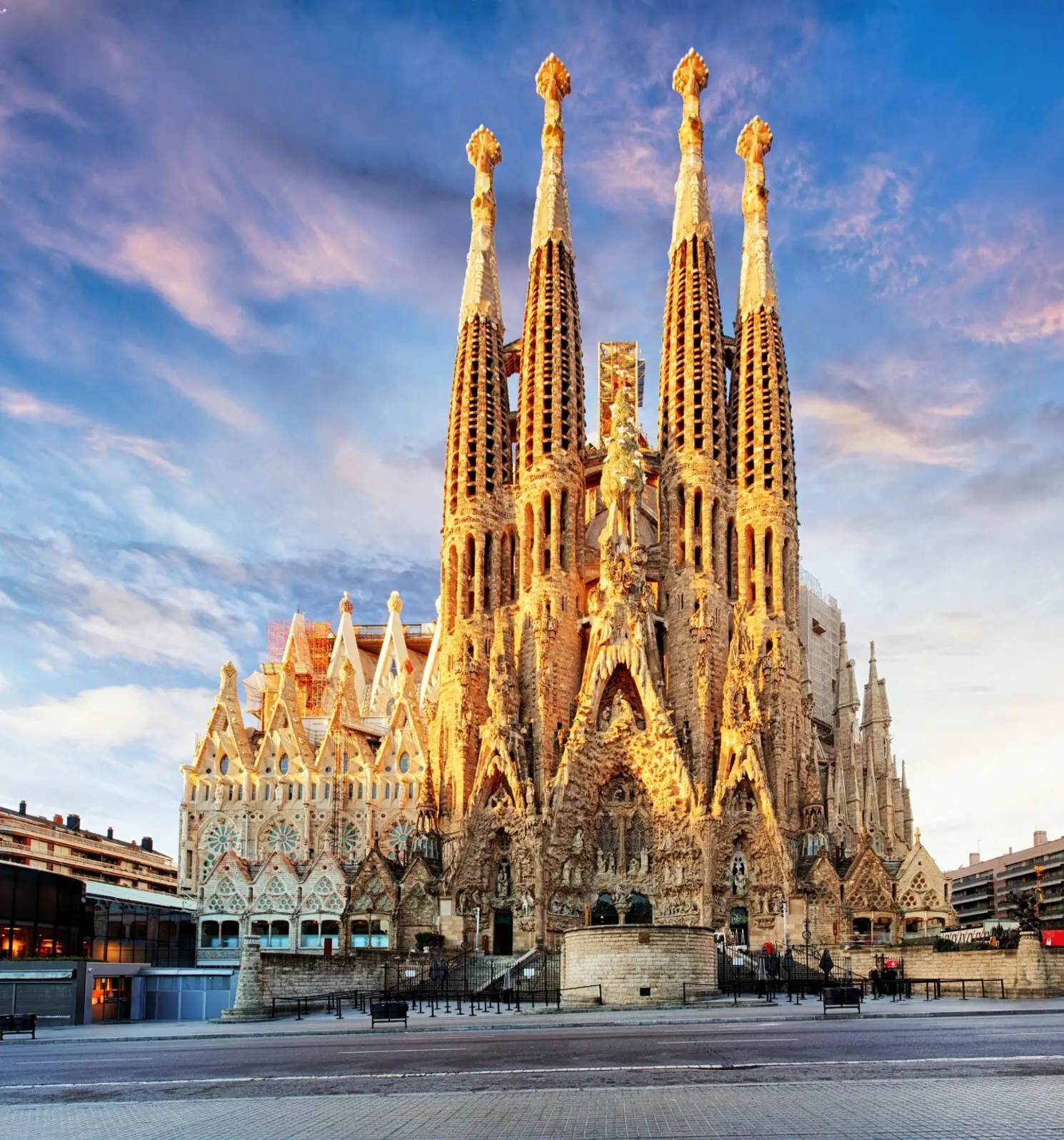
At first, it looks unfinished.
At second glance, it looks abandoned.
At third, it looks alive.
Cranes—once inseparable from its identity—hovered for decades,
so constant that people stopped noticing them.
This was not a monument frozen in time.
It was a construction site that lasted longer than most civilizations’ confidence.
And yet, standing there in April 2025,
something felt different.
III. A Structure That Outlived Its Architect—and Almost Its Century
Construction of La Sagrada Família began in 1882.
When Antoni Gaudí took over the project in 1883,
he did not inherit a vision.
He created one.
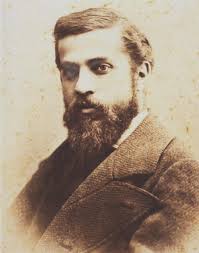
Gaudí dedicated 43 years of his life to the basilica.
When he died in 1926, less than one-quarter of the structure stood.
The rest—over 75%—was left to the future.
Few engineers design knowing they will never see completion.
Fewer still design knowing no one alive will.
Since then, the cathedral has survived:
- the Spanish Civil War
- the destruction of Gaudí’s original plaster models
- technological revolutions in analysis and construction
- changes in materials, codes, and engineering philosophy
By the early 2020s, after more than 140 years of continuous construction,
a historic milestone was reached.
The primary structural system was completed.
The major towers were closed.
Load paths were finalized.
And for the first time in over a century,
construction cranes began to disappear from Barcelona’s skyline.
Not because the story ended—
but because the structure could finally stand on its own.
And finally On October 30, 2025,
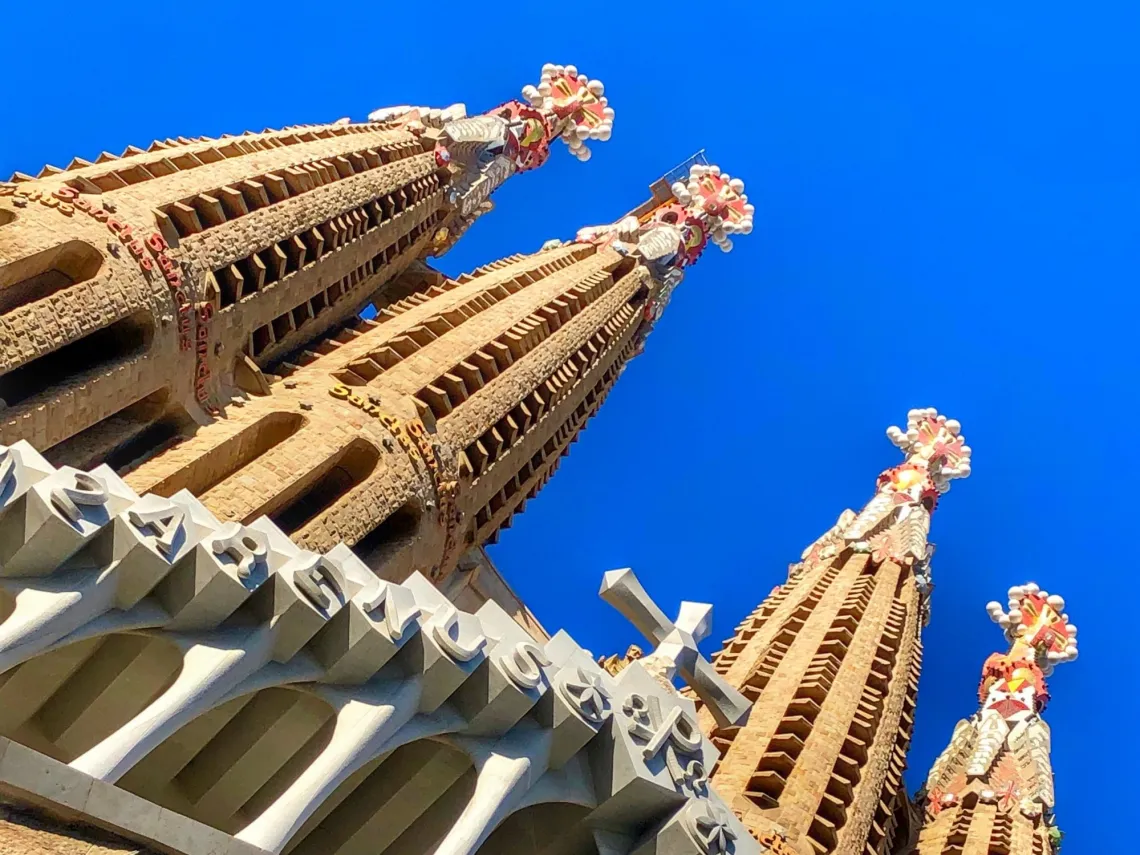
workers lifted a section of the central Tower of Jesus Christ into place,
bringing the building to 162.9 meters and
making it world’s tallest church surpassing Germany’s Ulm Minster.
IV. Gaudí’s Obsession Wasn’t Beauty. It Was Gravity.
Gaudí did not trust drawings.
He trusted forces.
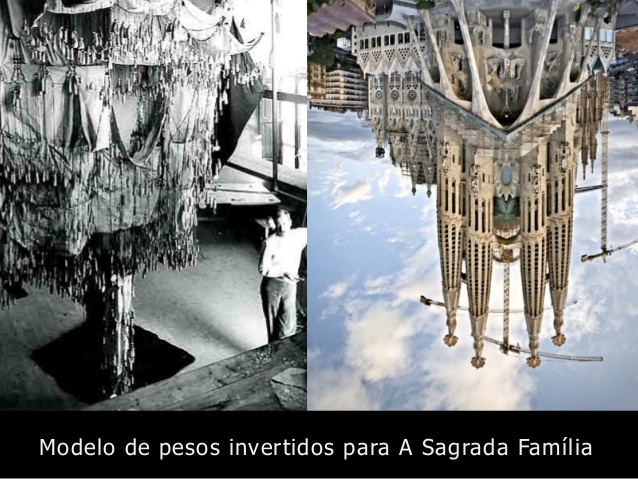
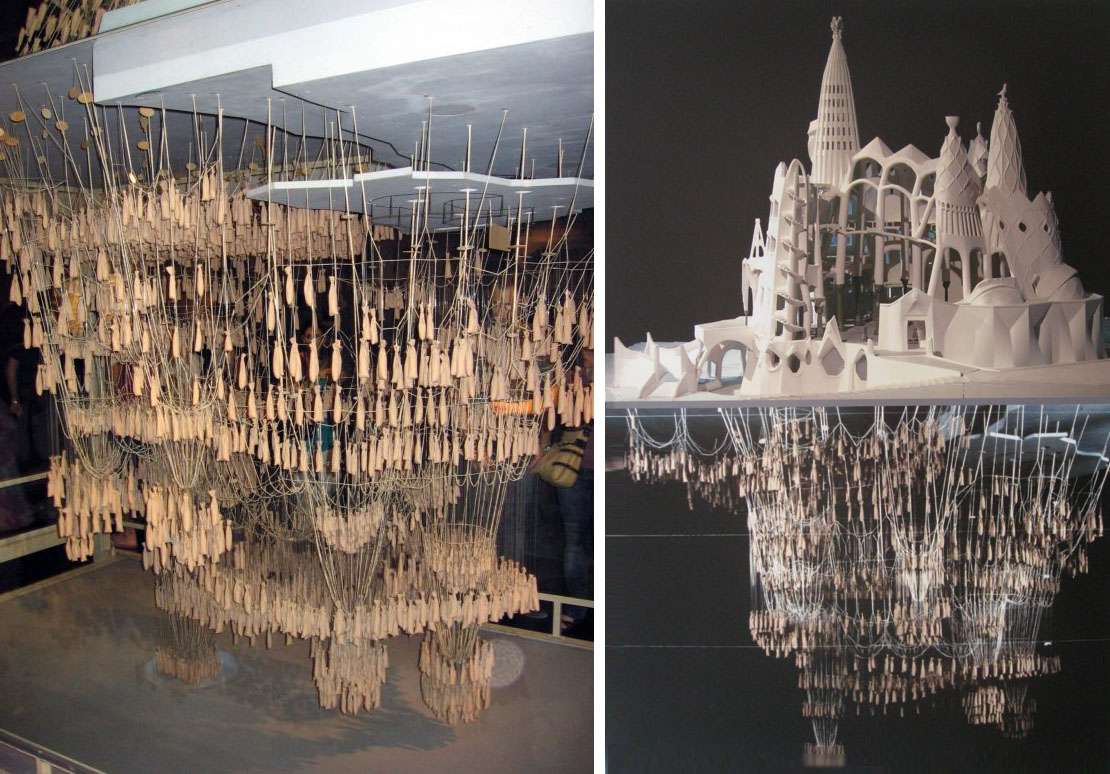
Instead of sketching arches,
he suspended chains from ceilings,
attached weights to them,
and let gravity choose the shape.
These hanging chains naturally form catenary curves—
the most efficient shape in pure tension.
Invert that shape,
and you get pure compression.
Stone’s language.
Every major arch, vault, and inclined column in La Sagrada Família
is derived from inverted catenaries.
The result:
- minimal bending stresses
- forces flowing directly into foundations
- geometry performing the analysis
- structure and form becoming inseparable
Gaudí was doing physical finite-element modeling
decades before computers existed.
V. Columns That Branch, Split, and Vanish
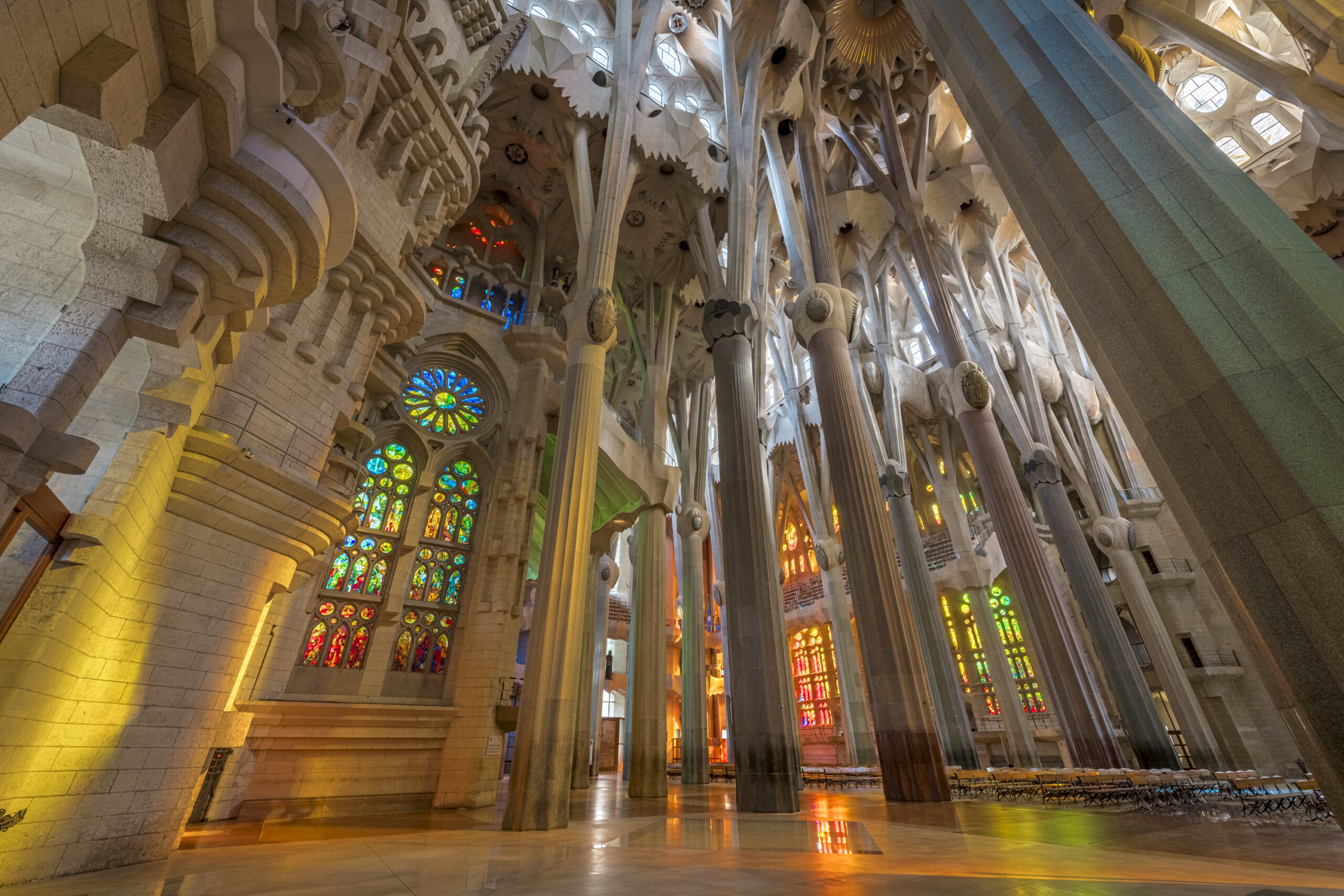
Inside the basilica, nothing behaves conventionally.
Columns do not rise straight.
They branch, like trees.
This is not symbolism.
It is structural logic.
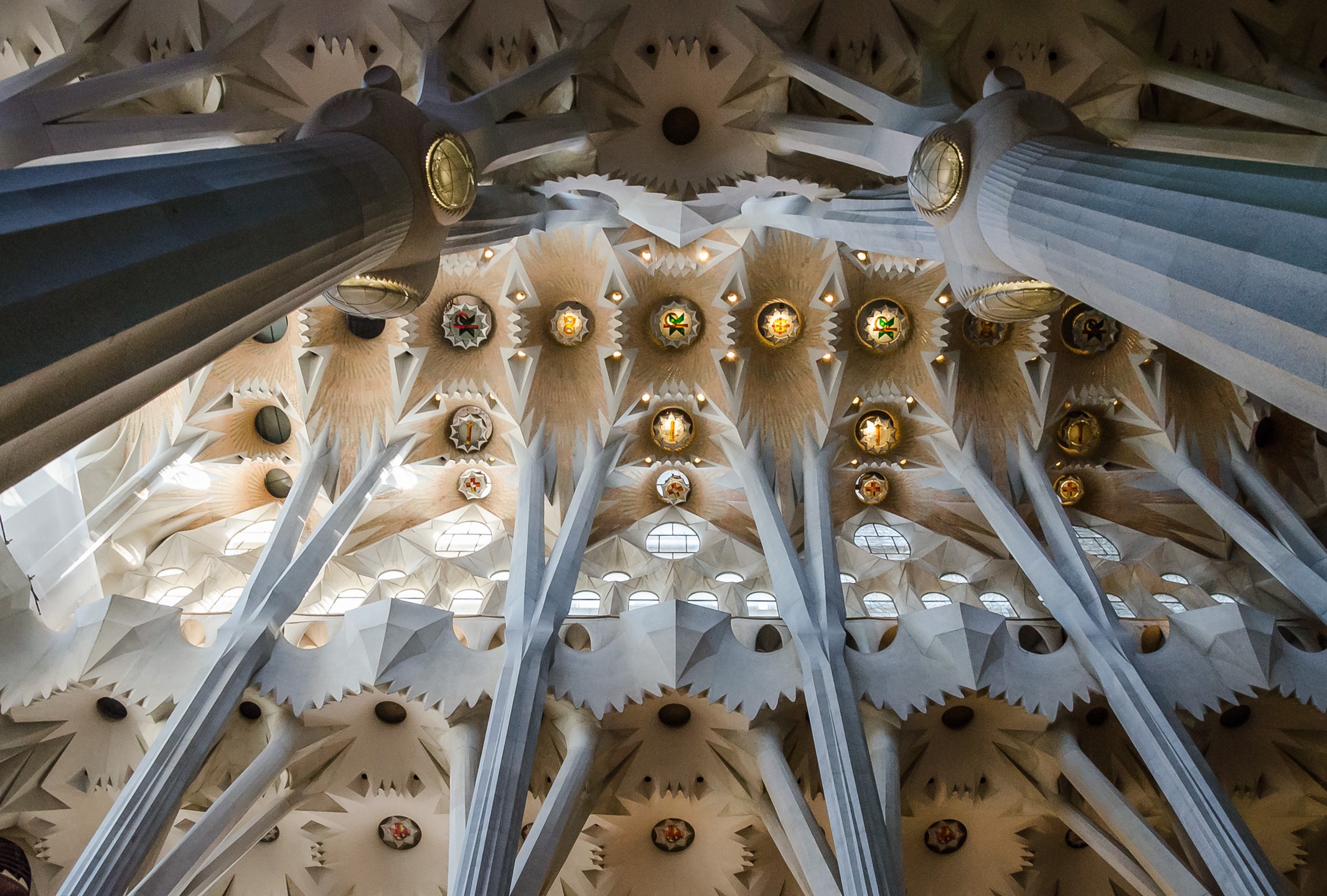
Each column:
- begins as a vertical compression member
- splits as tributary area increases
- redirects forces through inclined branches
- reduces effective buckling length
- aligns with principal stress trajectories
The largest central columns exceed 2 meters in diameter,
while upper branches become increasingly slender.
Loads are not resisted.
They are shared.
The building feels light
because it is constantly redistributing force.
VI. Hollow Stone, Light, and the Ghost Inside
One of the strangest sensations inside La Sagrada Família
is how empty it feels for its size.
This is intentional.
The structure incorporates:
- hollow columns
- internal voids within towers
- perforated stone elements
- light wells carved through mass
Reducing self-weight was a structural priority.
Less mass means:
- lower compressive stresses
- reduced foundation pressure
- improved seismic behavior
- longer material life
Light floods the interior not as decoration,
but as a consequence of structural thinning.
The cathedral feels ghostly
because much of its mass is missing by design.
VII. Numbers That Anchor the Madness
Some numbers make the ambition tangible:
- Construction start: 1882
- Continuous construction time: 140+ years
- Centuries involved: 3
- Planned total height: ~172.5 m
(intentionally lower than Montjuïc hill—Gaudí refused to surpass nature) - Number of towers: 18
- Central Christ tower: tallest church tower in the world upon completion
- Primary structural system: now complete
- Cranes: largely removed from the skyline
This is not architectural excess.
It is structural confidence stretched across generations.
VIII. Architecture and Structure Are the Same Thing Here
In most buildings:
- architecture leads
- structure follows
At La Sagrada Família:
- structure generates architecture
Hyperboloids, paraboloids, helicoids—
not chosen for aesthetics,
but because they:
- are ruled surfaces
- distribute stress efficiently
- avoid stress concentrations
- behave predictably under compression
Decoration is secondary.
Geometry is primary.
What looks complex is often the most efficient solution.
IX. What La Sagrada Família Teaches Engineers
La Sagrada Família is not a monument.
It is a process.
It teaches that:
- gravity is not an enemy
- form should follow force, not fashion
- structure can be expressive without ornament
- patience is a design parameter
- engineering can span centuries if the logic is sound
At Kousain, this is what we mean by engineering with memory—
designing not just for completion,
but for continuity.