I. Arrival on Red Ground
We landed in Kuala Lumpur in the early morning of 25 November 2025.
I was traveling with Faheem—a friend of thirteen years, yet somehow this was our first trip together. No planning, no long discussions. Just a decision made quickly and carried through.
At the airport, we hesitated briefly—new city, unfamiliar systems—until a local student noticed and helped us buy bus tickets. A small moment, but one that set the tone for the city: efficient, quiet, generous.
On the bus from the airport toward the city center, one thing immediately stood out.
The ground was red.
The soil carried a deep rusted color. It looked raw, almost aggressive, especially under the low morning sun. It felt geological, unfinished, as if the city hadn’t been placed on the land but had been excavated from it.
At the time, I simply stared. I didn’t yet realize that this rusted earth was a clue—a geological foreshadowing of what this city is truly made of.
We reached the hostel, dropped our bags, and walked straight back out. No rest. No debate.
There was only one structure worth meeting first.

II. Two Towers, One Decision
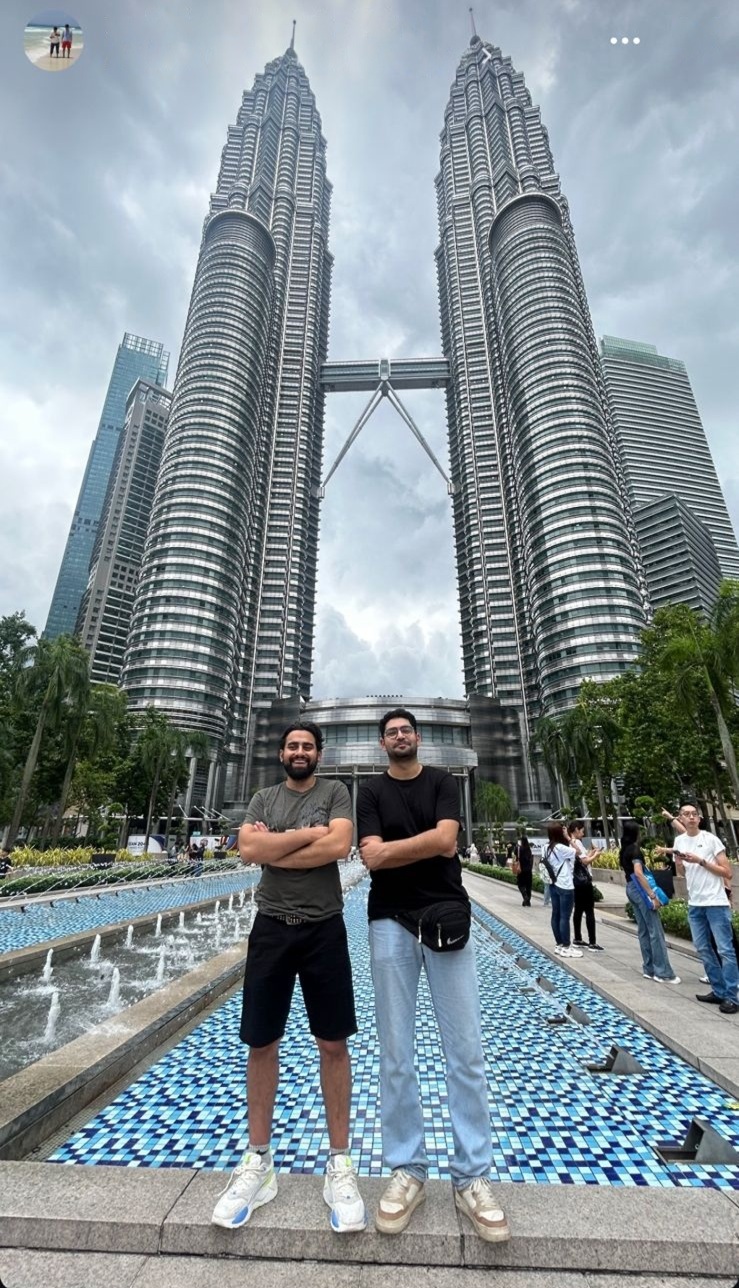
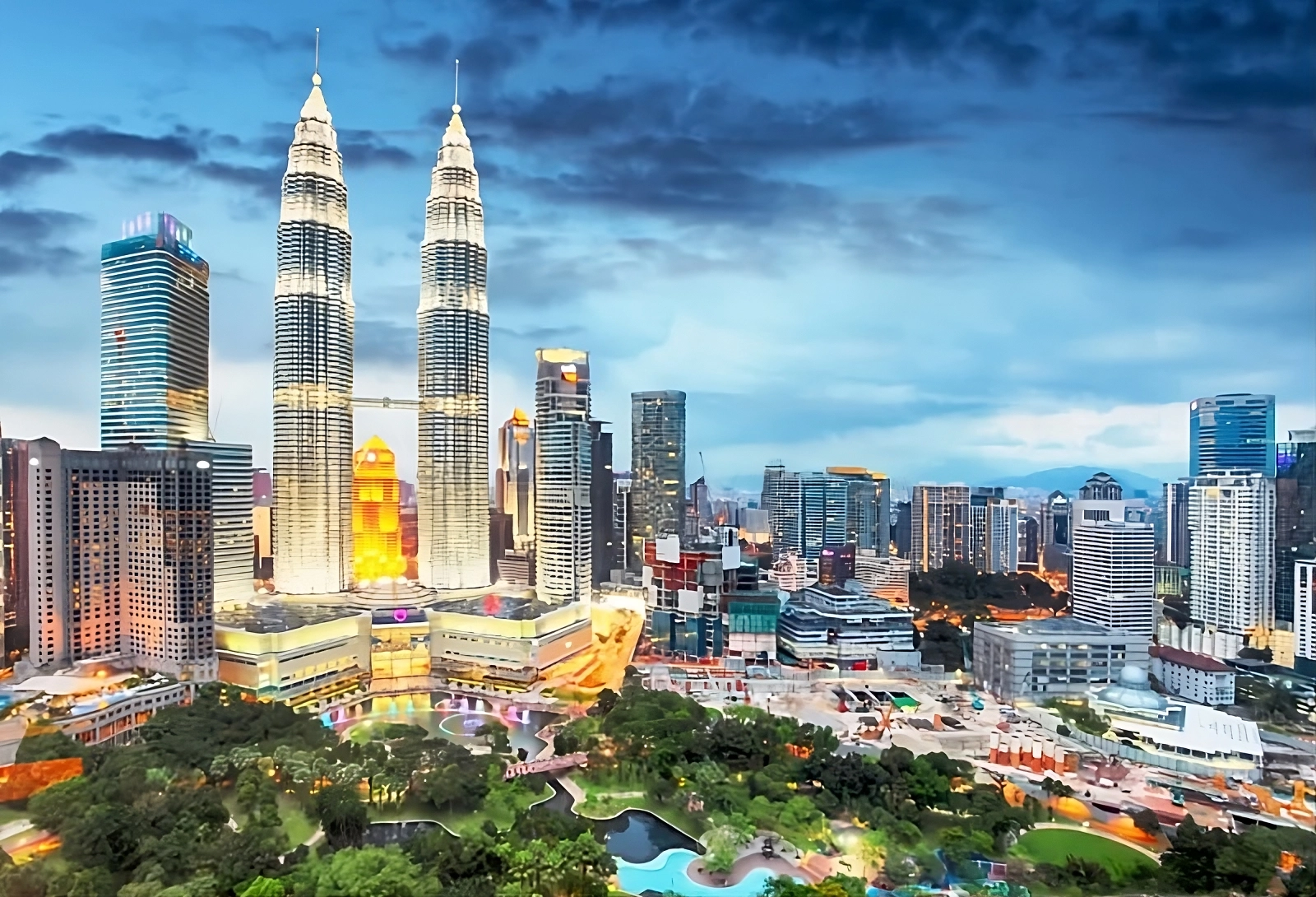
The Petronas Towers don’t arrive gradually in your field of view.
They appear together.
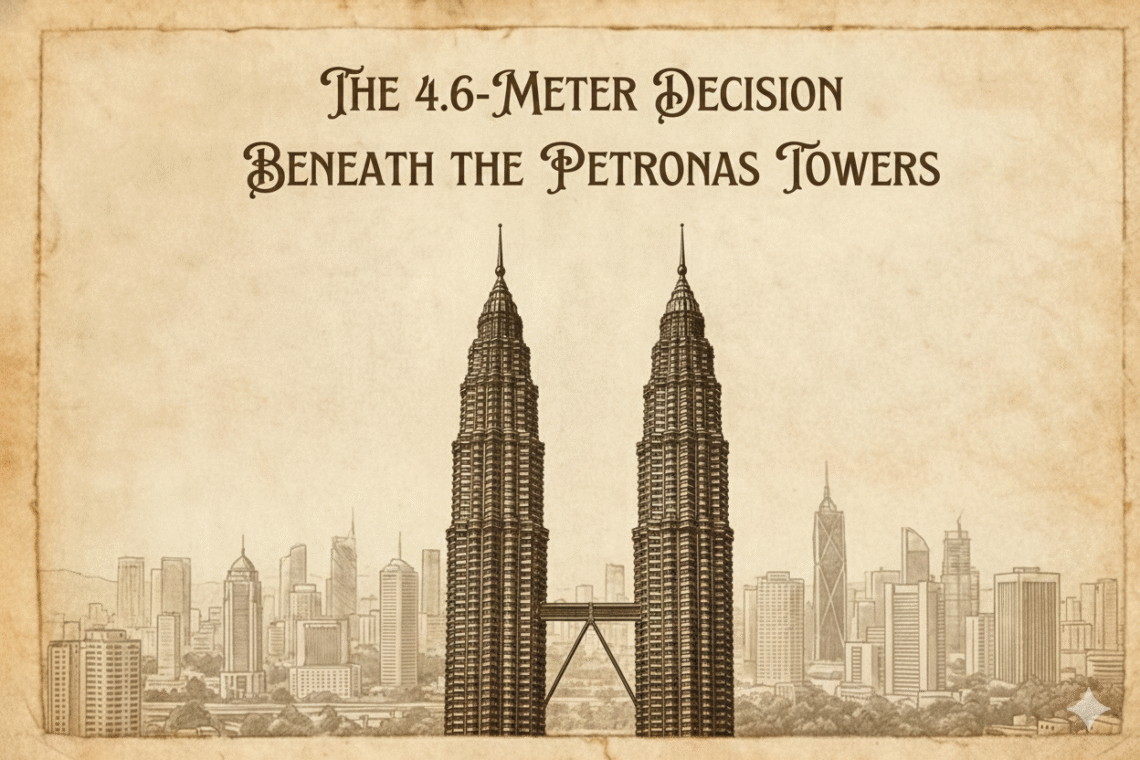
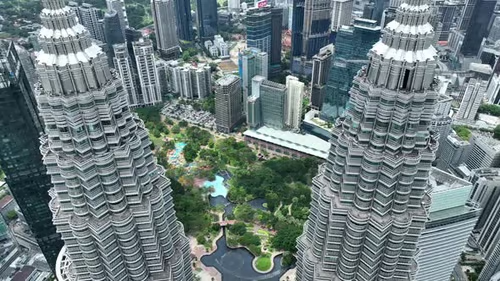
Two identical giants, rising side by side, neither attempting to dominate the other. In a world obsessed with singular tallest buildings, this felt almost rebellious.
And structurally, it was.
These towers were never meant to compete.
They were meant to cooperate.
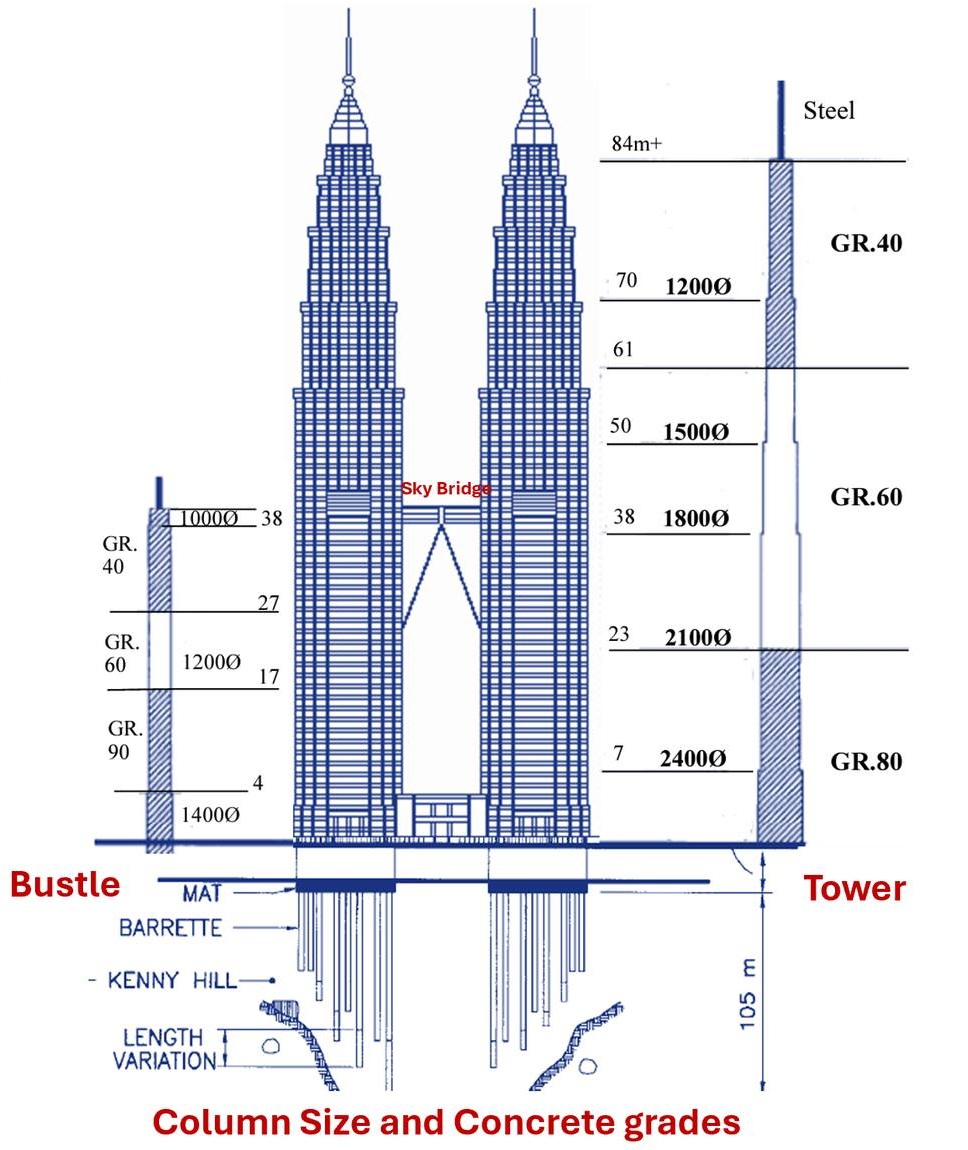
Each tower rises to 452 meters, with 88 occupied floors, and together they defined the skyline of Kuala Lumpur from 1998, when they became the tallest buildings in the world, until 2004.
But height is the least interesting thing about them.
III. The Structural Brain Behind the Height
The Petronas Towers are built using a tube-in-tube structural system, a concept pioneered by the man often called the Einstein of Structural Engineering — Fazlur Rahman Khan.
>> (You can read more about him in our earlier piece: “Einstein of Engineering: Fazlur Rahman Khan” on Kousain — https://kousain.com/blogs/einstein-of-structural-engineering-dr-fazlur-rahman-khan/)
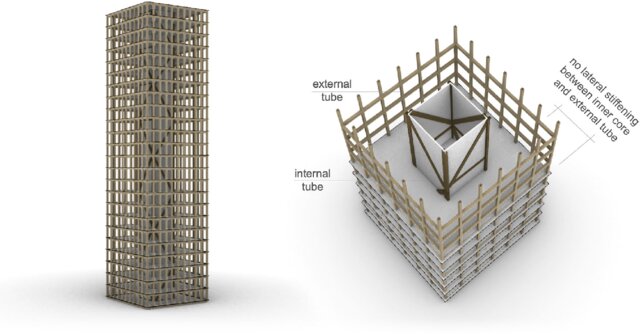
In the Petronas Towers, this system takes a concrete-heavy form:
- A central reinforced concrete core, approximately 25 m × 25 m, housing elevators, staircases, and services
- An outer structural tube formed by 16 massive cylindrical supercolumns
- Concrete ring beams connecting the outer tube to the inner core, forming a continuous moment-resisting system
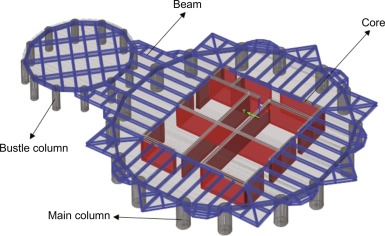
Together, the inner core and outer tube act like a single vertical cantilever, resisting wind and lateral loads over the full height of the tower.
This is not decorative structure.
This is load path clarity.
IV. Why Concrete, Not Steel
Most skyscrapers of this height rely heavily on steel.
The Petronas Towers did not.
They were built using super high-strength reinforced concrete, with compressive strengths exceeding 80 MPa in critical elements.
Why?
- Importing steel into Malaysia was expensive
- Local contractors had deep expertise with concrete
- Concrete provides higher inherent damping, reducing wind-induced sway
At this height, reinforced concrete proved nearly twice as effective as steel in controlling lateral movement.
The cost of that decision?
Weight.
The towers weigh almost twice as much as a comparable steel structure.
And weight demands honesty from the ground.
V. The Ground That Almost Rejected the Towers
The original site sat above a geological problem engineers rarely like to see:
- Solid limestone on one side
- Softer, fractured sedimentary rock on the other
An underground cliff.
Building across it would have caused differential settlement—slow, invisible, catastrophic over decades.
So the engineers did something extraordinary.
They shifted the entire project footprint by about 60–61 meters, placing both towers fully on the more predictable soft rock.
Not stronger rock.
More predictable rock.
Engineering is not about strength alone.
It’s about certainty.
VI. The Deepest Foundations Ever Attempted
To support the enormous mass of the concrete towers, engineers designed foundations that, at the time, were unprecedented:
- 104 bored concrete piles
- Depths ranging from 60 to 114 meters
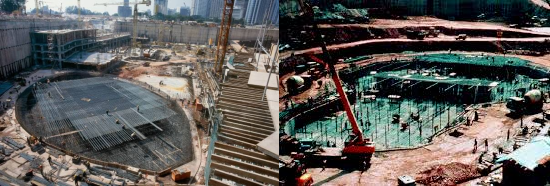
- A 4.6-meter-thick reinforced concrete raft
- Total raft weight: approximately 32,500 tonnes
The raft was poured continuously over 54 hours, without interruption — setting a national record for the largest single concrete pour in Malaysian history at the time.
Once the pour began, there was no pause.
Only trust in design, logistics, and gravity.
VII. The Skybridge That Refuses to Hold Them Together
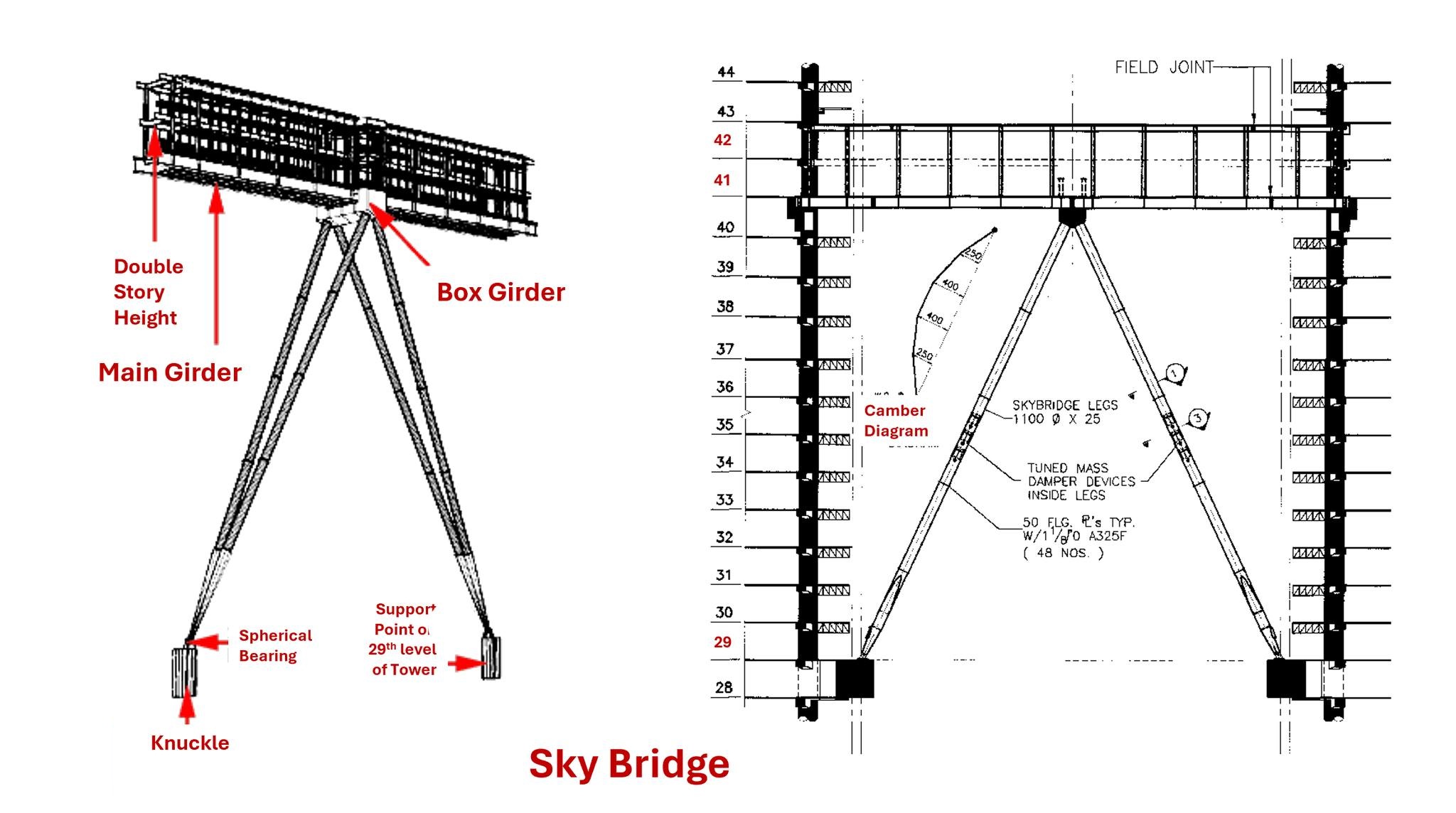
The skybridge, connecting the towers at the 41st and 42nd floors, is one of the most misunderstood elements of the project.
It is not a structural brace.
It is pin-connected at both ends.
Why?
Because tall buildings move.
Wind and thermal effects cause each tower to sway independently. A rigid connection would introduce massive stresses and potential damage.
The bridge connects people, not forces.
- Span: 58.4 meters
- Construction: assembled on the ground
- Installation: lifted using 16 hydraulic jacks over 20 hours
It is a lesson in allowing movement rather than resisting it.
VIII. Geometry, Culture, and Structural Efficiency
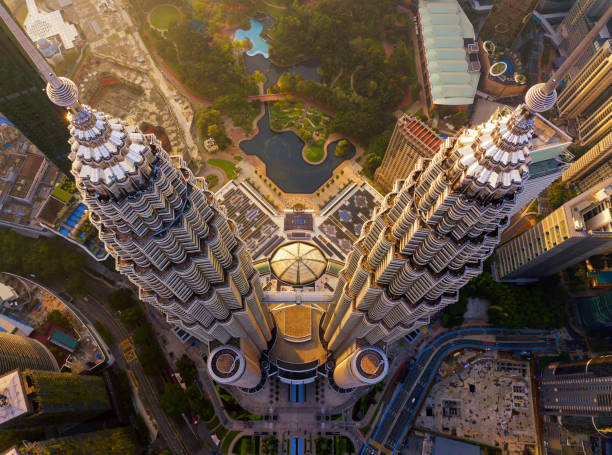
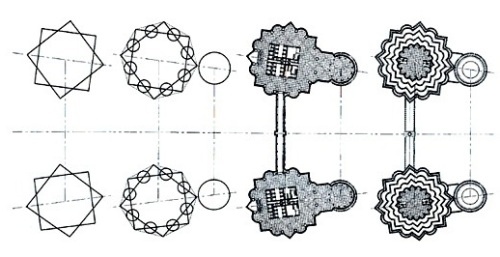
The floor plan of each tower is based on the Rub el Hizb, an eight-pointed Islamic star.
But this geometry wasn’t adopted blindly.
Circular sectors were added to:
- increase usable floor space
- smooth stress concentrations
- improve aerodynamic performance
The stainless-steel and glass façade reflects Islamic art while reducing heat gain and UV penetration — essential in Malaysia’s tropical climate.
Each tower is topped with a 73-meter tapering steel spire, supporting:
- maintenance equipment
- aviation warning lights
- lightning protection systems
Even the spires are structural citizens.
IX. What the Petronas Towers Taught Me as an Engineer
Standing beneath the towers that morning, the red soil now made sense.
This was not a structure imposed on the land.
It was a structure that listened first.
The Petronas Towers teach that:
- material choice must respect local context
- foundations decide fate long before façades do
- movement is not failure — it is design
- redundancy is calm engineering
- collaboration can be stronger than competition
At Kousain, this lesson is fundamental.
Because real engineering isn’t about chasing records.
It’s about understanding forces deeply enough
to let structures stand quietly against them.