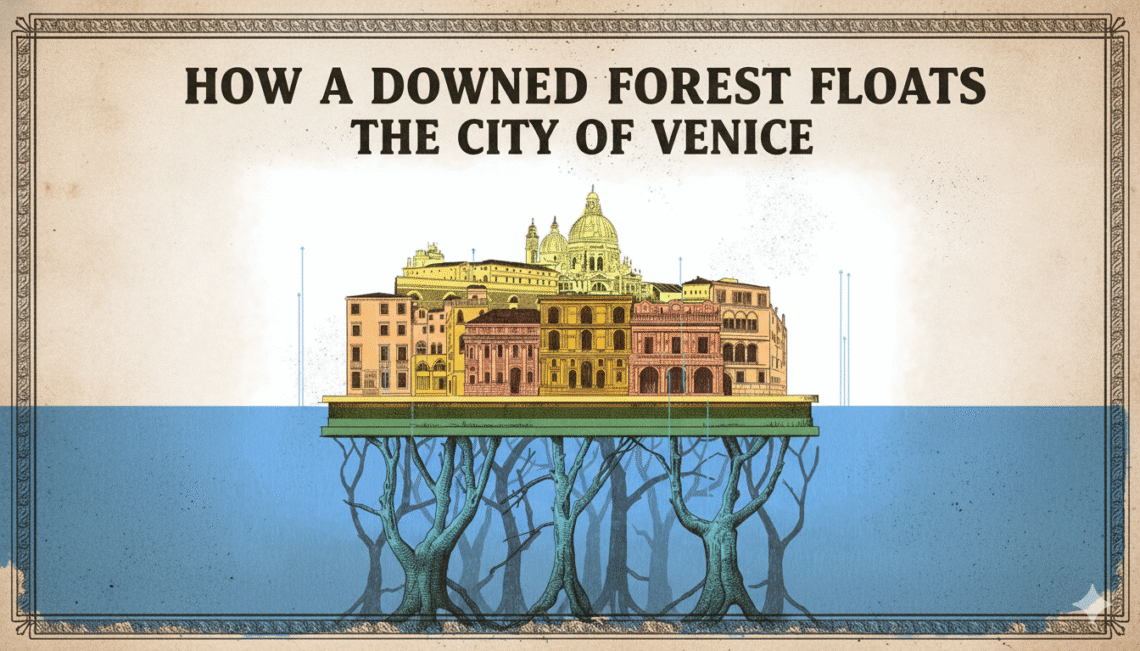
The City Built on Water That Wasn’t Meant to Hold Anything
When the first settlers looked at the Venetian lagoon,
they didn’t see stability.
They didn’t see firm ground.
They saw something between ocean and land —
a wobbling, shifting, shimmering expanse of marsh and mud.
No sane engineer would build a hut there.
Yet Venice built palaces.
The lagoon floor was:
- too soft to bear weight
- too wet to support stone
- too unstable for foundations
- too dynamic to map
But to the refugees escaping war on the mainland in the 5th century,
stability mattered less than safety.
And so they made a decision no engineer had ever dared make:
If the earth won’t support us, then we’ll make our own earth.
This is where Venice stopped being a settlement
and became an engineering experiment.
The First Engineering Secret: A Forest Underwater
The Venetians knew they couldn’t build on mud.
So they did something extraordinary:
They planted trees into the sea.
But not living trees.
Millions of logs, cut from:
- oak
- alder
- elm
- larch
- ash
shipped from forests across northern Italy, Slovenia, Austria, and Croatia.
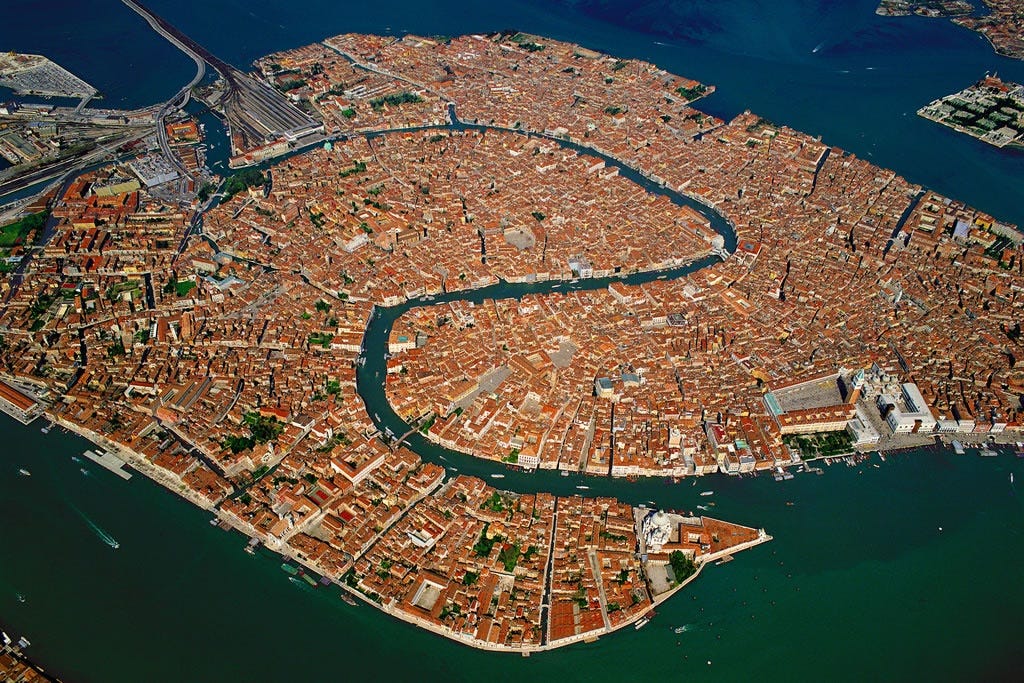
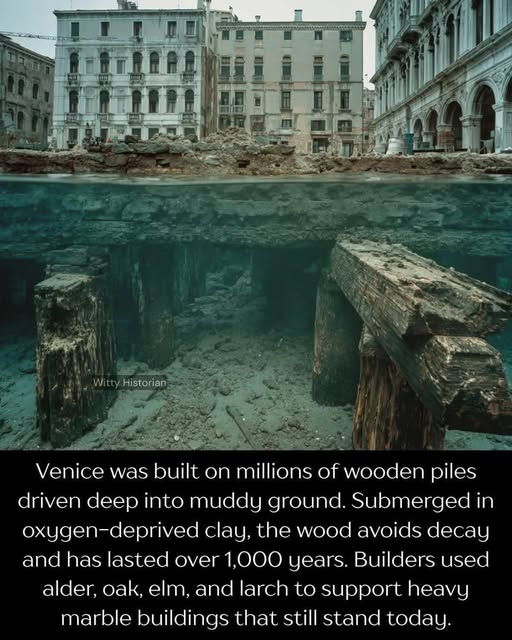
These logs — 10 million of them — were driven vertically into the soft lagoon bed,
forming a dense, artificial forest beneath every building.
Why wood?
Because wood rots in air —
but in water, without oxygen,
it petrifies.
The submerged piles underwent a process called mineralization:
- water replaces organic compounds
- minerals fill the cellular gaps
- the wood becomes harder than stone
- it essentially fossilizes in place
But the real genius?
They did not drive them until they found firm soil.
There is no firm soil there.
Instead, they drove them until friction and compaction created stability.
They invented an early form of:
- friction piles
- group pile behavior
- soil-pile interaction
- ground consolidation
Centuries before the words existed.
Venice is not floating.
Venice is standing on a man-made, underwater forest of petrified wood —
a foundation that modern engineers still marvel at.
The Second Secret: Turning Mud Into Stone
Once the piles were in place,
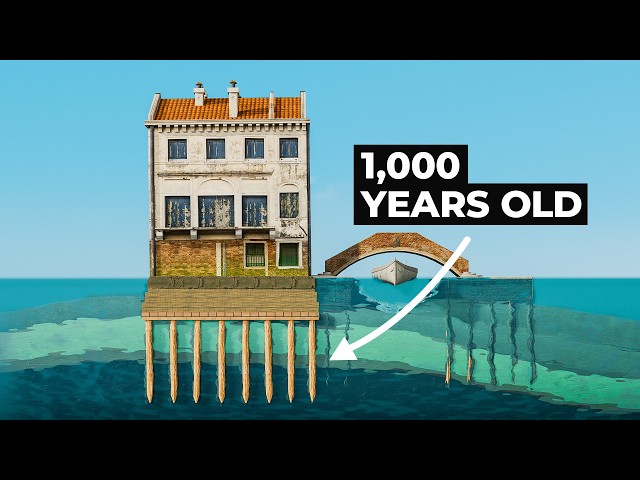
Venetians created a platform by laying horizontal planks across the piles.
Then they added a layer of:
- crushed Istrian stone
- lime
- marine clay
- pozzolana
- and compacted debris
This mixture acted like a primitive raft foundation.
But here’s the miracle:
This “floating raft” didn’t float —
it spread load over a vast area,
reducing pressure on the soft lagoon mud.
This is literally the same principle behind modern:
- raft foundations
- mat foundations
- soil improvement techniques
…invented accidentally by people escaping invaders.
Every palace in Venice stands on a giant stone mattress
resting on a fossilized underwater forest
resting on compressed lagoon mud.
It’s insane.
And it works.
The City That Moves With the Water
Unlike modern foundations,
Venice does not resist the lagoon.
It collaborates with it.
The whole city behaves like a system:
- the piles act in friction, not end bearing
- the raft distributes load evenly
- the mud consolidates slowly under weight
- the buildings settle uniformly
This uniform settlement is the secret.
Venice sinks, yes —
but it sinks evenly.
If even one building settled faster,
it would crack.
But because the entire city shifts together
like a raft drifting downward,
it remains stable.
Civil engineers call this:
differential settlement control.
Venetians called it survival.
Stone That Fights Salt
Another surprise:
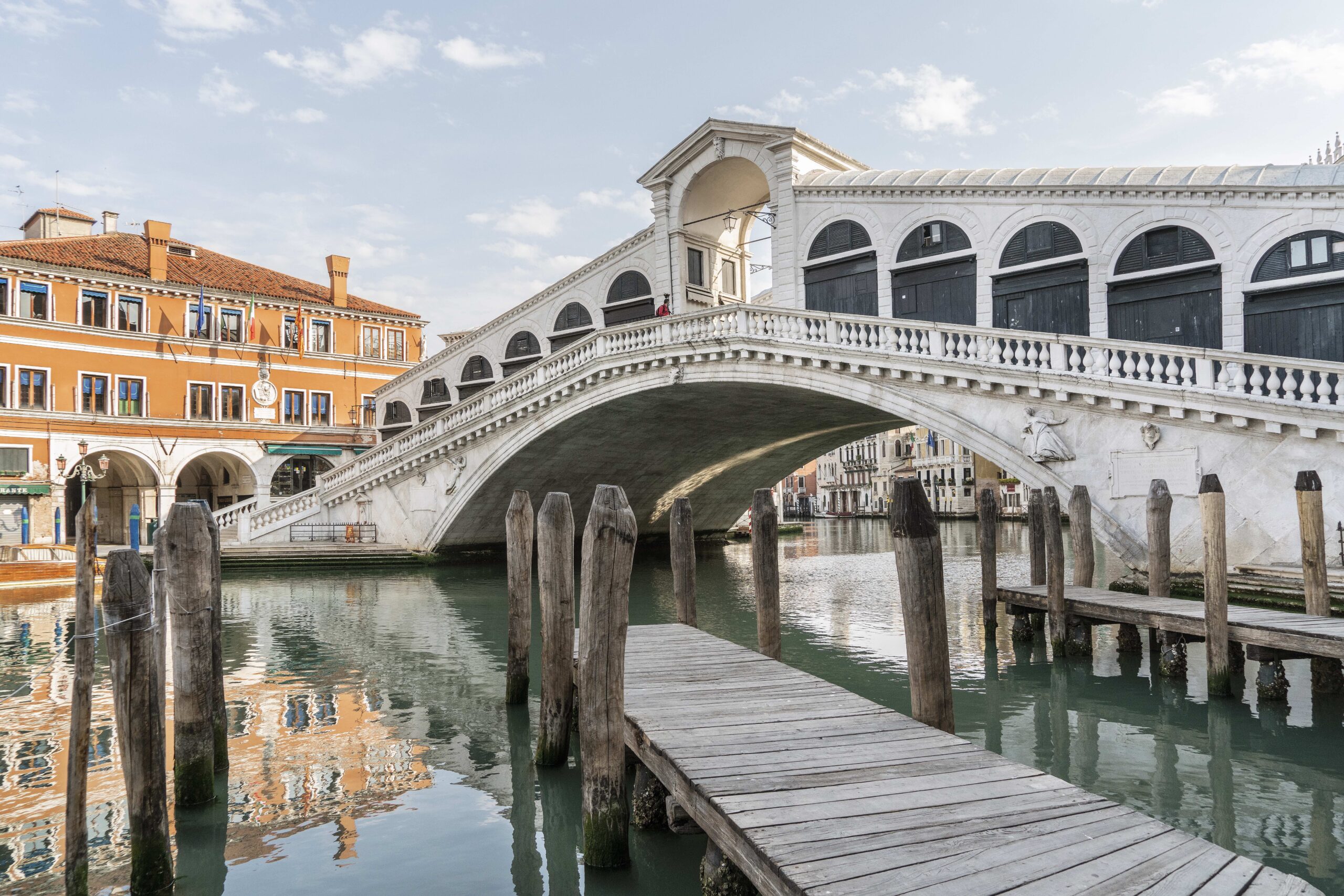
The façades of Venice are mostly built from Istrian limestone,
a bright white stone from Croatia.
Why?
Because Istrian stone:
- does not absorb salt
- resists erosion
- stays smooth for centuries
- withstands wave attack
It’s more durable than marble in seawater.
Venice is one of the few cities where buildings have marine-grade exteriors.
Every Venetian palace is basically a ship’s hull made of stone.
The Sea Tried to Drown Venice — But Venice Engineered Back
For centuries, the city fought tides with:
- raised walkways
- flood-adapted architecture
- brick joints designed to “breathe” moisture
- sacrificial lower floors (magazines, warehouses, not living quarters)
But the greatest engineering feat came in modern times:
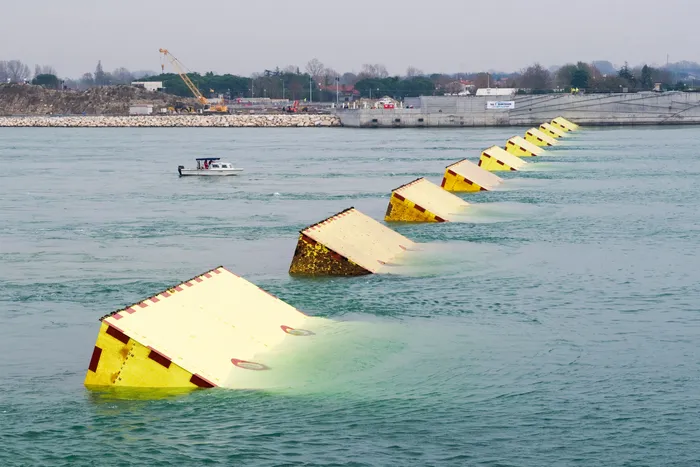
MOSE — the 78 floating gates that rise to block high tides.
This system, completed in the 2020s,
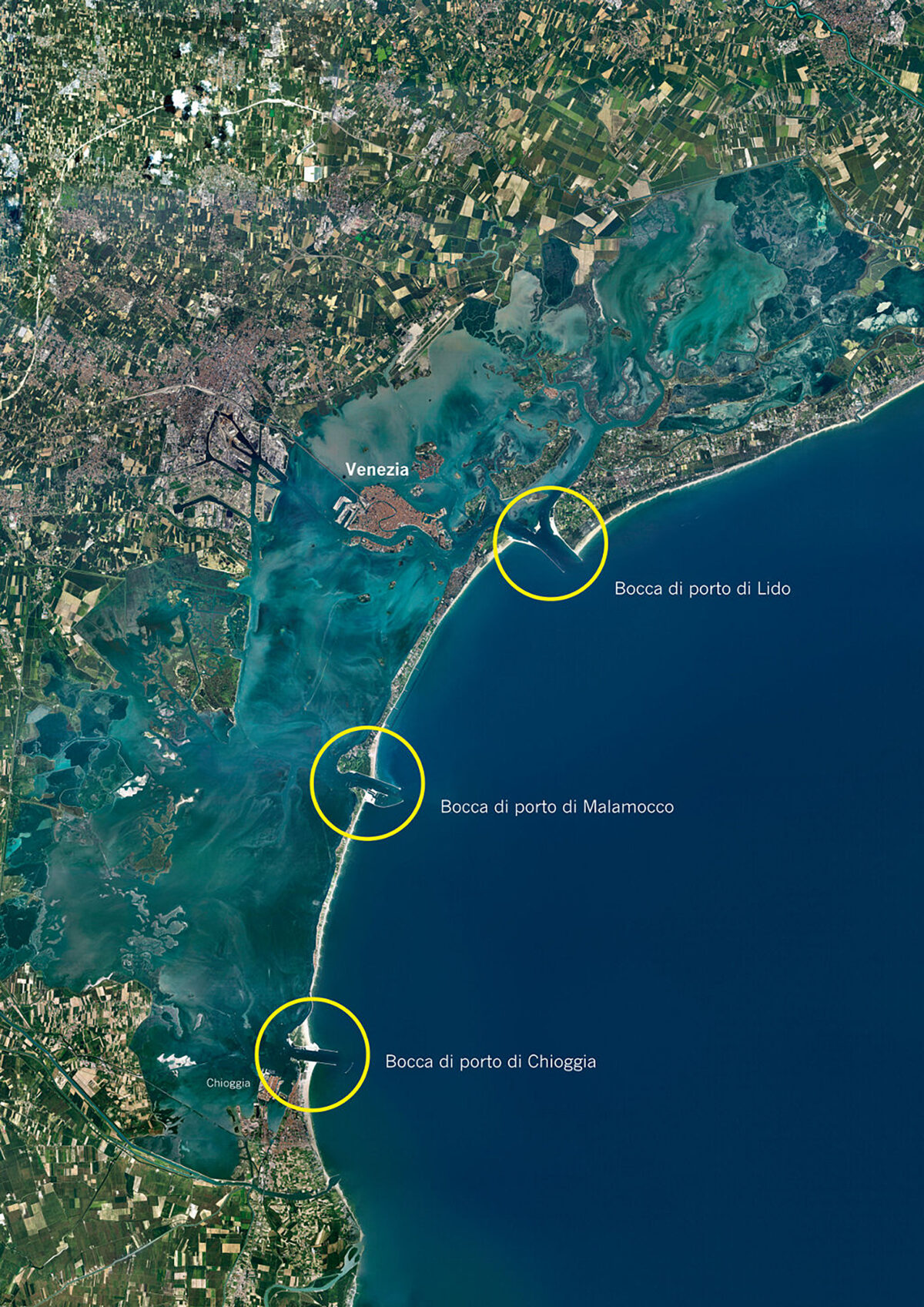
can seal the entire lagoon from the Adriatic Sea.
It’s the largest mobile flood barrier in the world.
Venice, once built on the sea,
now controls the sea.
The City That Should Have Failed — But Chose to Stand
Venice isn’t a miracle.
It’s a negotiation.
Between:
- wood and water
- stone and salt
- engineering and imagination
- foundation and fluid
Venice is the proof that civil engineering is not a battle against nature
but a dialogue with it.
The city doesn’t float.
It endures.
And endurance is the most beautiful engineering of all.

At Kousain, we build like Venice did
With humility.
With creativity.
With understanding that the ground beneath us is not an obstacle —
but a partner.
And sometimes,
the greatest structures are born from desperate decisions
that become timeless solutions.

