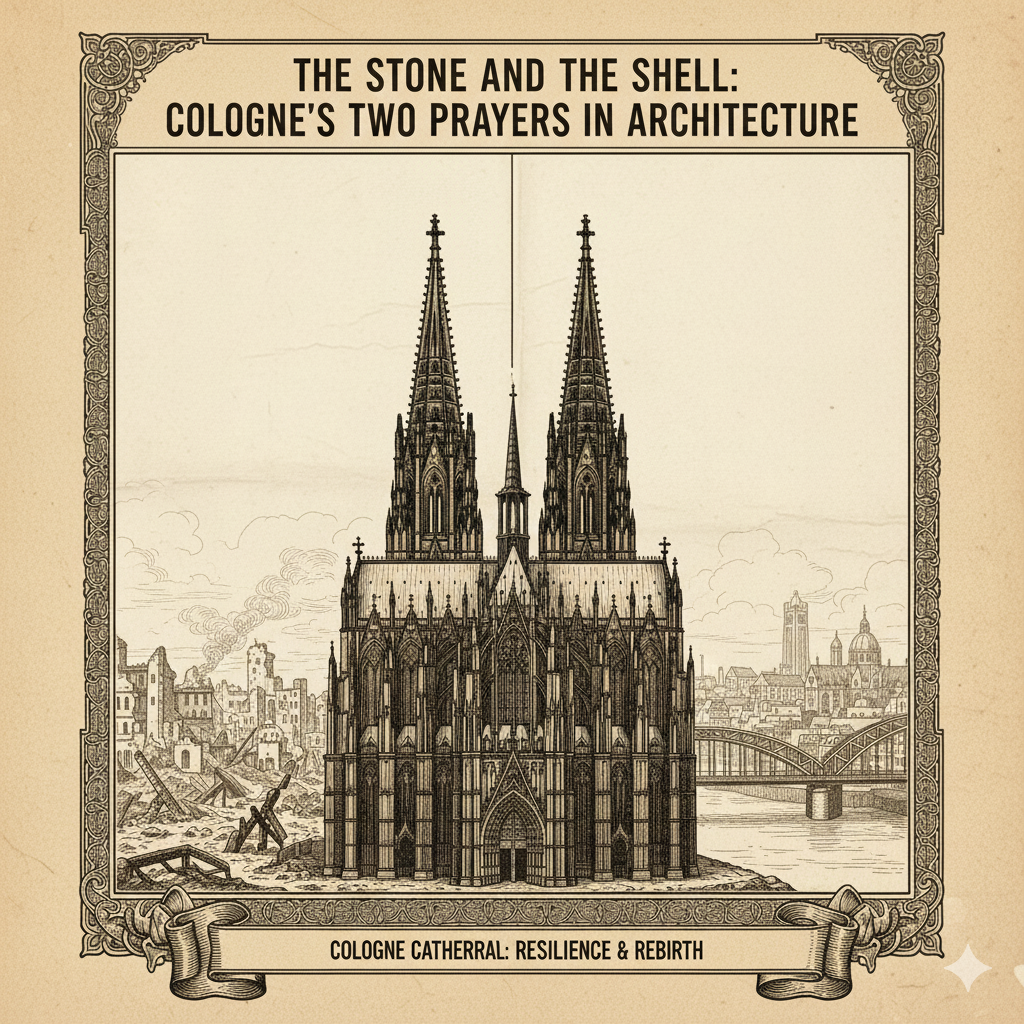
I. The Journey That Almost Didn’t Happen
I traveled to Cologne on 27th December 2024,
leaving from our friend’s place in Frankfurt with Junaid.
Germany’s regional trains were in their usual winter mood—
delayed, unbothered, stubborn.
We missed our connection and found ourselves
stranded in a town whose name I don’t even remember,
holding a Deutschland ticket
and an hour to kill.
So we stepped outside.
A small street.
A warm bakery.
Croissants so large they could qualify as architecture.
Coffee strong enough to restart a locomotive.
It was unplanned,
but it softened the cold,
and when we boarded the next train,
the world outside became a moving painting—
river on one side,
mountains on the other,
the Rhine carving its history through stone
as we headed toward a city built on stone.
Cologne.
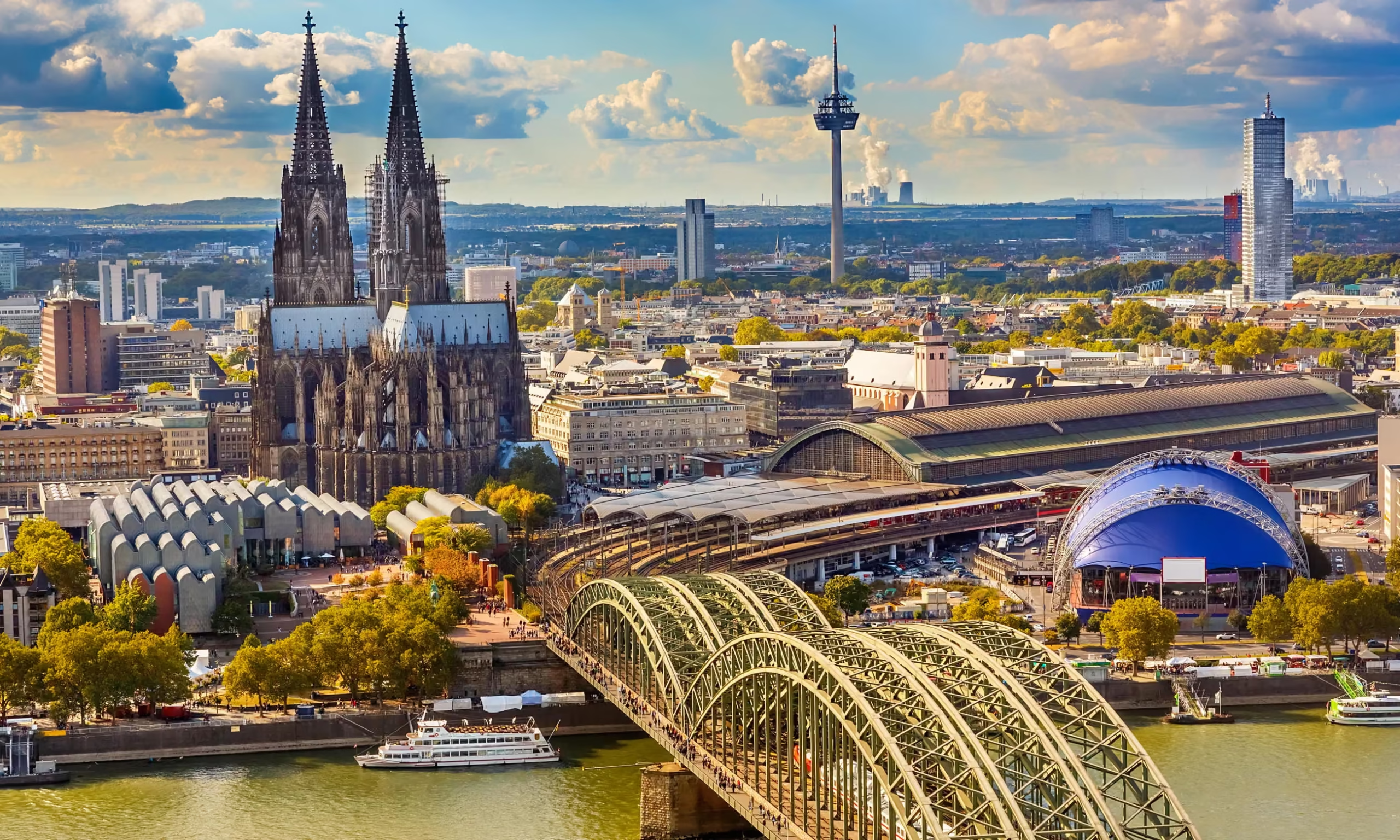
A place where Gothic ambition meets modern grace.
II. The Mosque That Bends Concrete Into Prayer
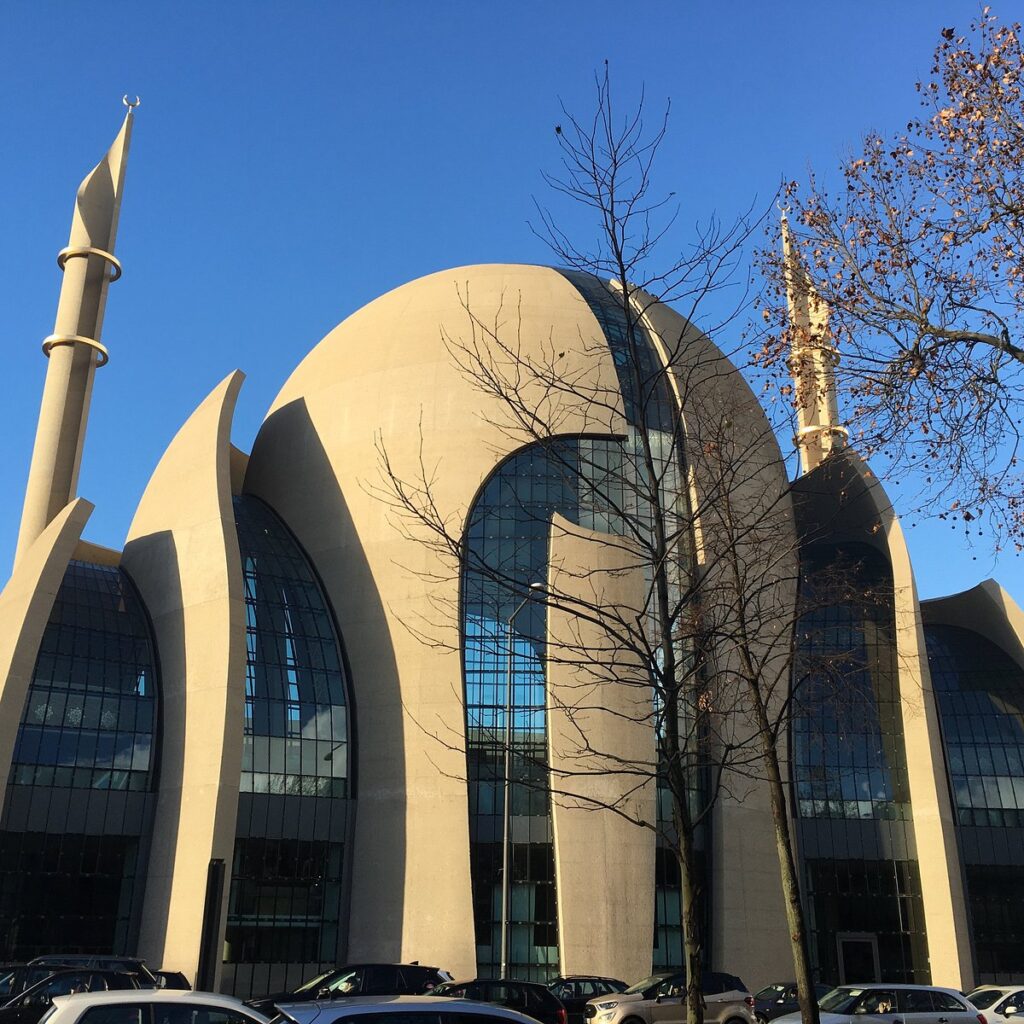
The Cologne Central Mosque is the kind of building
that looks soft — and is engineered hard.
Its architecture seems effortless at first glance:
a dome blooming outward,
minarets uncoiling like calligraphic strokes,
glass petals opening toward the city.
But the structural reality is extraordinary.
A Dome That Doesn’t Behave Like Stone
Unlike Gothic domes,
this one is not stacked brick or heavy masonry.
It is a 20th-century thin-shell concrete dome,
where thickness is reduced
and strength comes from curvature, not mass.
Engineers designed it using:
- membrane action (forces flow along the surface)
- zero bending idealization (shell carries loads without heavy reinforcement)
- variable thickness (thicker at the base, thinner at the crown)
- double curvature (greater stiffness with less material)
The dome acts like an eggshell:
thin, strong, and efficient.
The Minarets Are Not Towers — They Are Curved Cantilevers
Most minarets rise as straight cylinders.
Cologne’s minarets lean outward in elegant arcs.
Structurally, this is difficult.
Each minaret is a curved, reinforced concrete cantilever,
designed to resist:
- bending from wind loads
- torsion due to curvature
- thermal stresses from sun exposure
- lateral sway at the tip
Hidden inside are:
- vertical reinforcement bars
- spiral stirrups
- a stiffened base ring to resist overturning
The form looks spiritual.
The engineering is surgical.
Light, Not Mass, Carries the Interior
The prayer hall is huge —
yet supported by minimal visible columns.
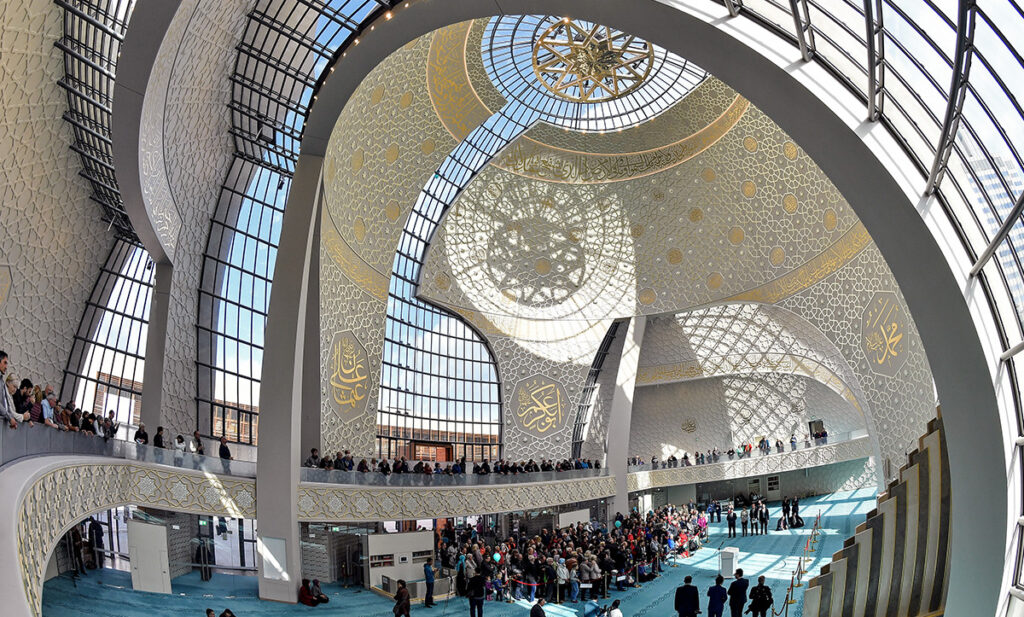
This is achieved through:
- hidden reinforced concrete frames
- perimeter load-bearing walls
- ribbed slabs disguised in ornament
- large-span beams integrated into the dome ribs
- glass curtain walls transferring load to concealed trusses
The building looks weightless,
but that weightlessness was engineered
deliberately.
And that’s why this line is true:
It is Turkish in inspiration,
German in precision,
and Islamic in essence.
III. The Cathedral That Defined Height Before Steel Existed
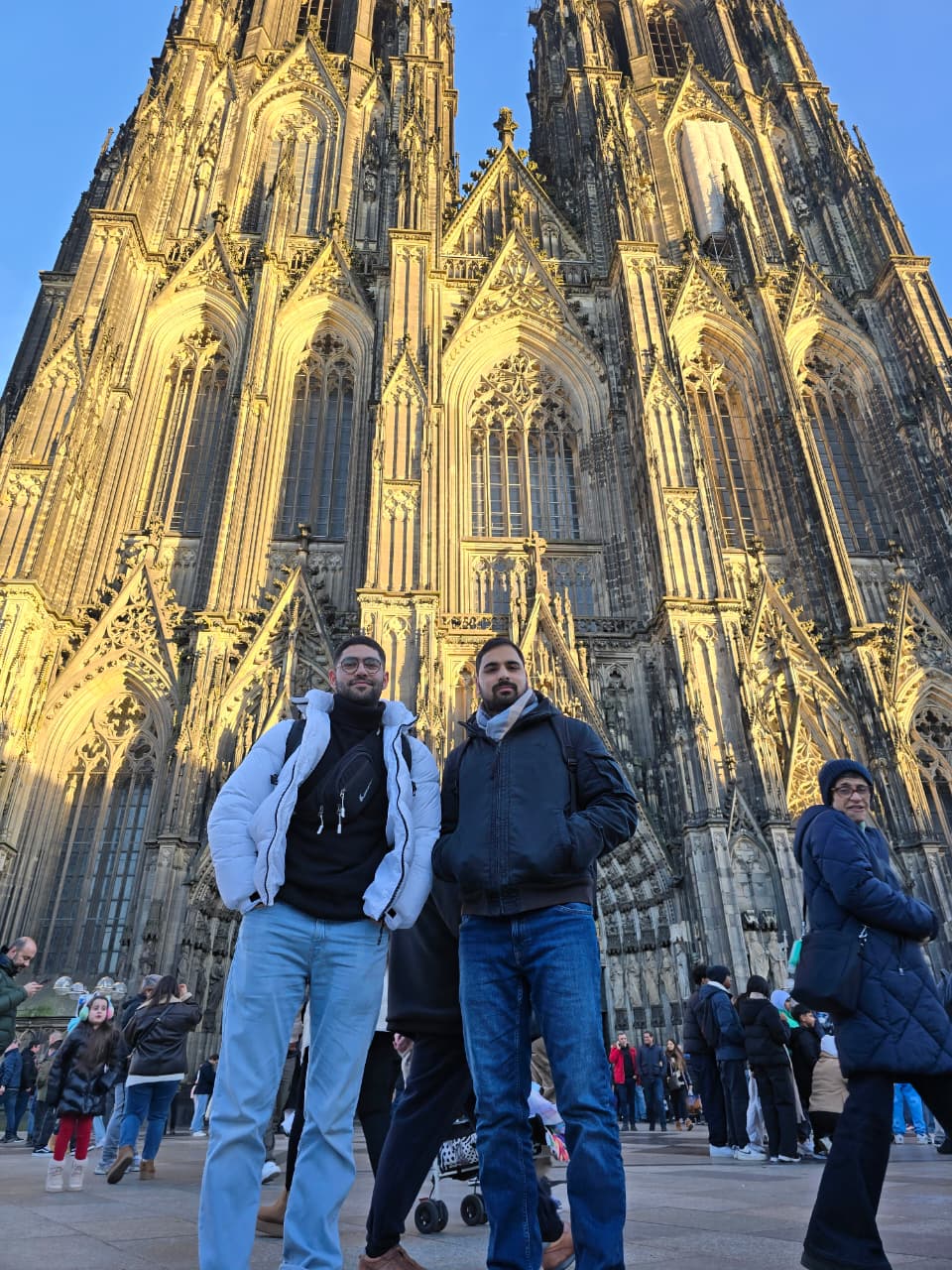
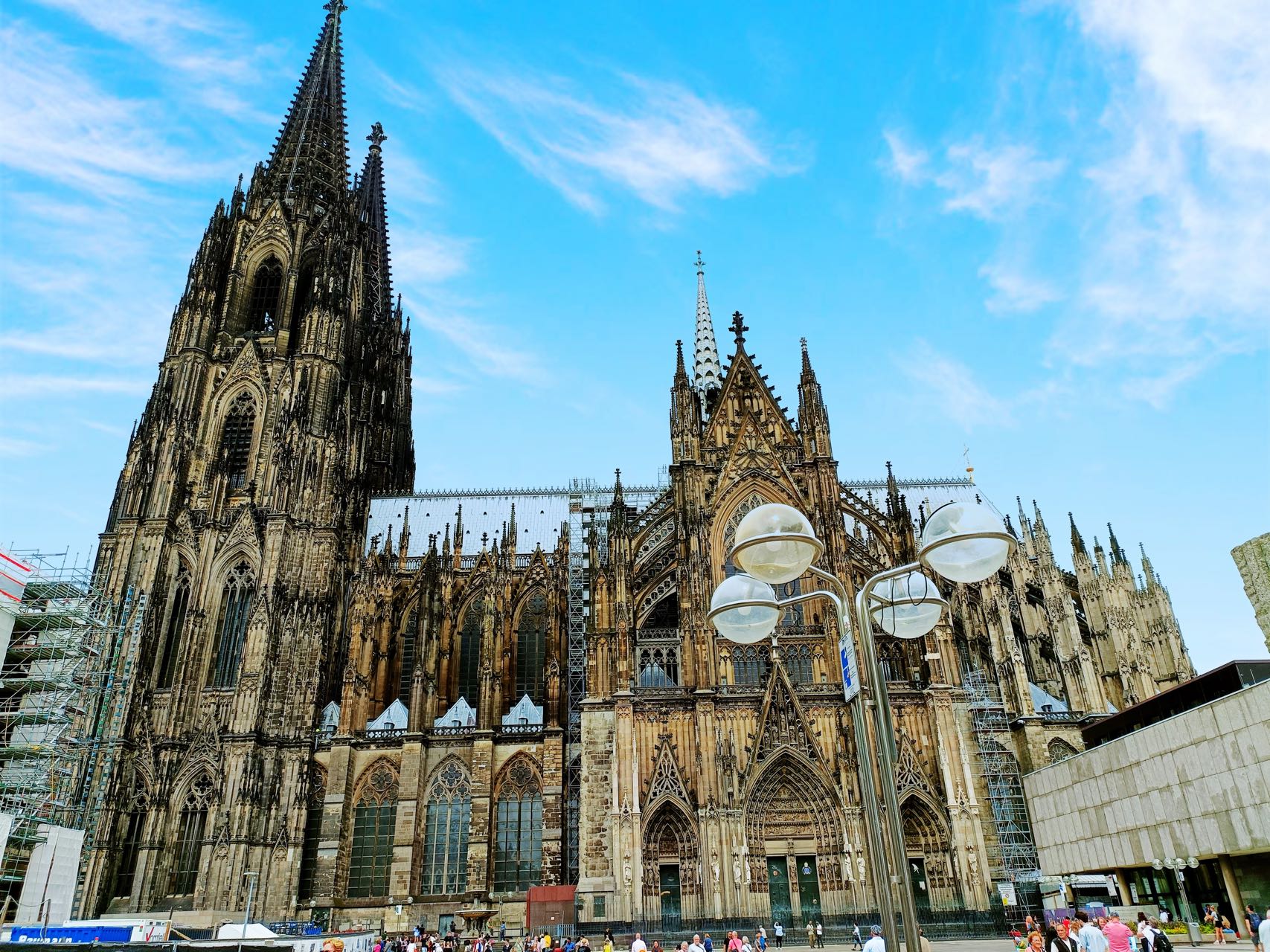
When we reached Cologne Cathedral at golden hour,
its façade looked like a mountain made by humans.
But what amazed me most
was how medieval engineers solved problems
we still discuss today.
The Cathedral That Took 600 Years
Construction began in 1248
and finished in 1880—
over six centuries of ambition, interruption, war, poverty, and obsession.
What Makes Its Engineering Extraordinary
1. The Height
At 157 meters, the cathedral was once
the tallest building on Earth.
How?
Through the Gothic secret:
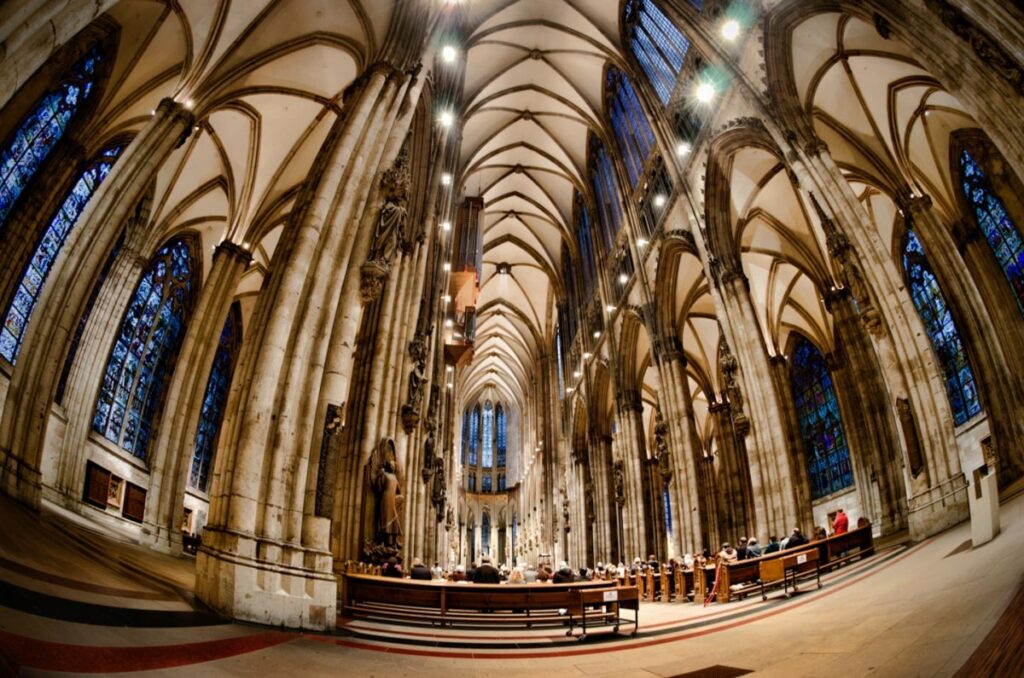
1. Gothic Load Paths Are Structural Genius
In Gothic architecture,
load is not carried by walls.
Walls are just weather protection.
The real structure is:
- ribbed vaults (three-dimensional trusses in stone)
- flying buttresses (external tension chains in compression)
- pointed arches (vertical force resolution)
- clustered columns (multiple load paths instead of one)
This allows the cathedral to be tall
without being thick.
2. The Buttress System Is a Stress Network
Flying buttresses are not decorative arcs.
They are:
- diagonal compression struts
- transferring lateral thrust
- from vaults
- to outer buttress piers
- which carry it vertically to the ground
It is a perfect chain of forces:
Vault → Buttress → Pier → Foundation.
No computers.
No rebar.
Just geometry and intuition.
3. The Twin Spires Were Once the Tallest Structures on Earth
Before steel towers existed,
stone ruled the sky.
To prevent buckling, engineers used:
- internal stair shafts as stiffening cores
- thickened walls at the base
- progressive weight reduction as you go up
- pinnacles acting as counterweights on the buttresses
They understood stability
better than their age should have allowed.
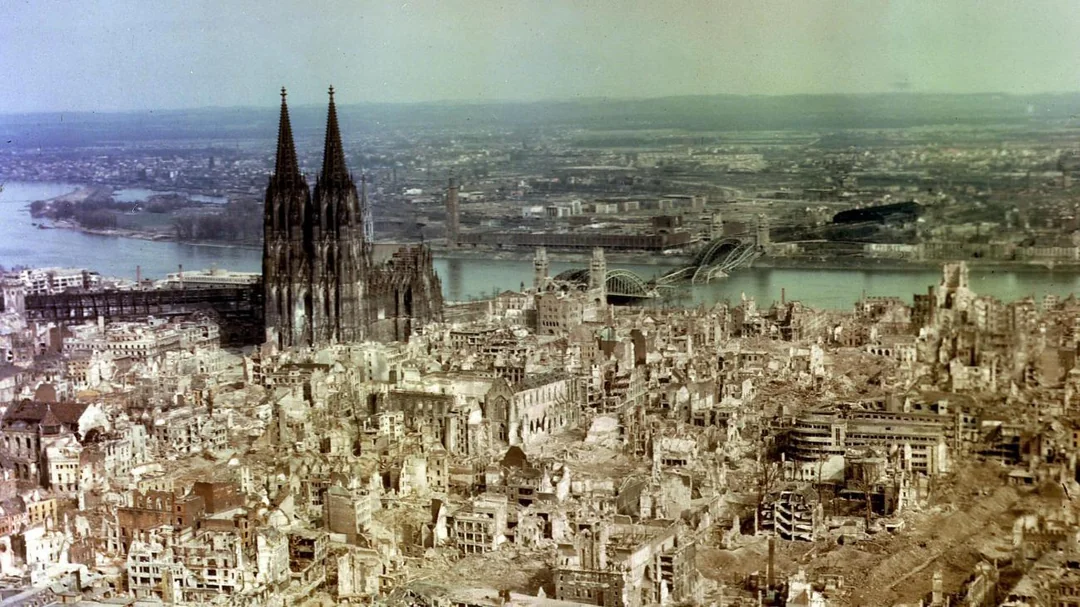
4. The Cathedral Survived WWII Because of Redundancy
During the war, nearby buildings collapsed.
The cathedral did not.
Not because bombs missed.
But because Gothic engineering is redundant:
- if one rib fails,
load moves to the next - if one buttress is damaged,
the system redistributes forces - its foundation is massive,
resisting differential settlement
This is resilience —
not luck.
IV. Two Buildings, One Lesson
Leaving the cathedral,
I realized something rare:
Cologne is not just a city
with a mosque and a cathedral.
It is a city
where the oldest form of structural expression
and one of the newest
stand within the same urban breath.
- One built through vertical ambition,
lifting weight by dividing it. - The other built through horizontal calm,
distributing weight through curvature. - One dark, dense, skeletal.
- One light, fluid, shell-like.
Different materials.
Different mathematics.
Different centuries.
Same truth:
“Great architecture begins
where structure stops being hidden
and starts becoming meaning”
V. The Engineer Who Walked Between Two Worlds
Cologne taught me something I didn’t expect:
You can travel through 800 years of engineering evolution
in a 20-minute walk.
From the Gothic ribs that tame stone
to the concrete shells that tame light.
From flying buttresses
to thin-shell domes.
From medieval compression logic
to modern tension flow.
And I realized—
Germany didn’t just preserve these structures.
It preserved the engineering questions they represent.
Questions every structural engineer must answer:
- How do you build lightness from heaviness?
- How do you make curves stable?
- How do you make height survive time?
- How do you let light in without weakening form?
Cologne doesn’t answer these questions.
It demonstrates the answers.
In stone.
In concrete.
In faith.
In geometry.
Two buildings taught me how geometry becomes faith.
Cologne taught me the rest.
Kousain simply carried the lesson home.