I. A City Entered Lightly, a Structure That Refused to Be Understood Quickly
Budapest was never part of the plan.
On 21st May, a cheap flight from Bologna appeared on the screen,
and without a second thought, my friend Owais and I booked it.
Only later, seated inside the aircraft, did we realize something amusing —
many passengers were heading to Budapest for the exact same reason.
No agenda.
No expectations.
Just momentum.
We landed, dropped our bags at the hostel,
and walked straight toward the river.
Budapest greeted us calmly.
Almost indifferently.
As if it knew something we didn’t.
II. Crossing the River Where Cities Reveal Themselves
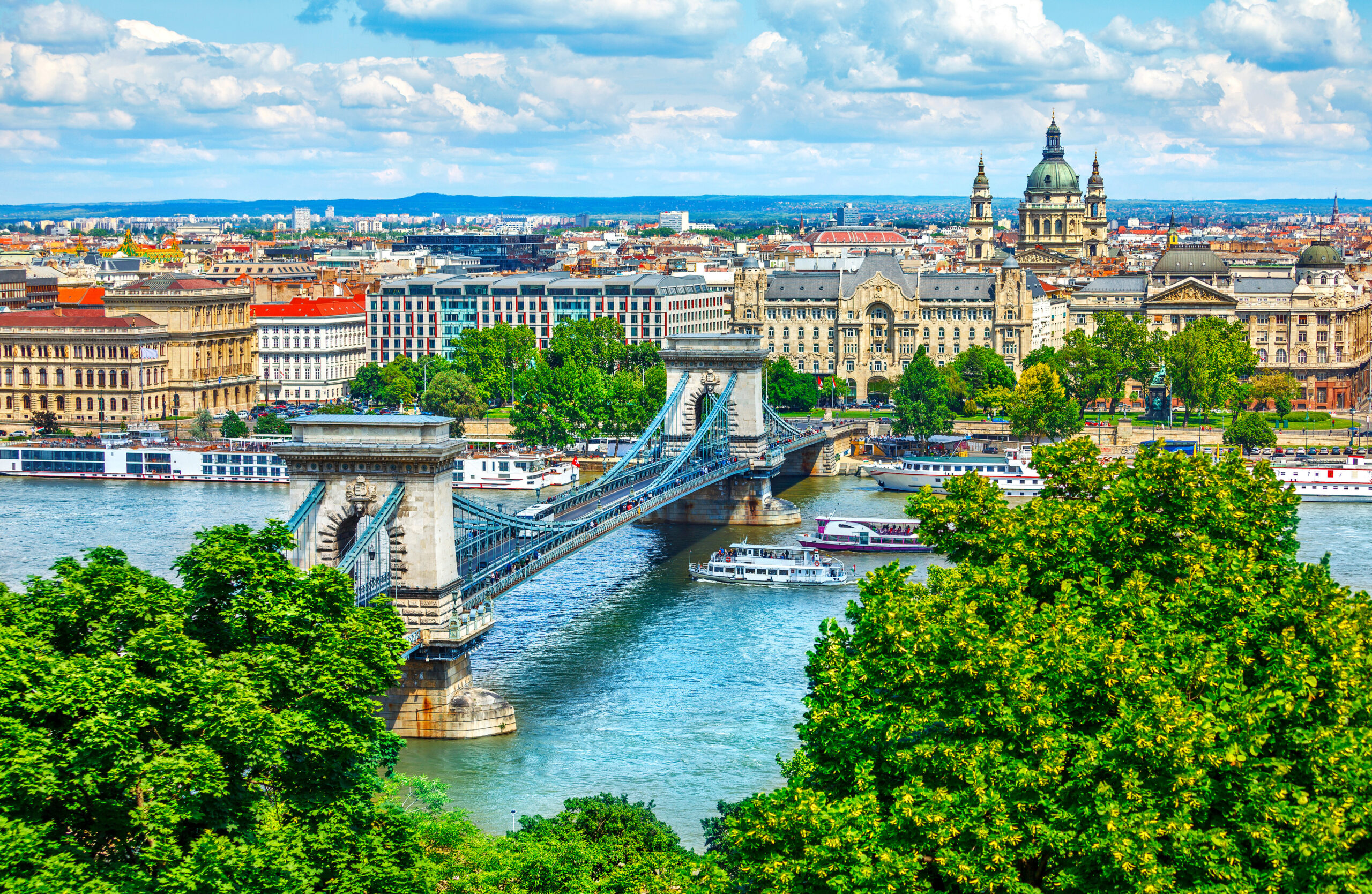
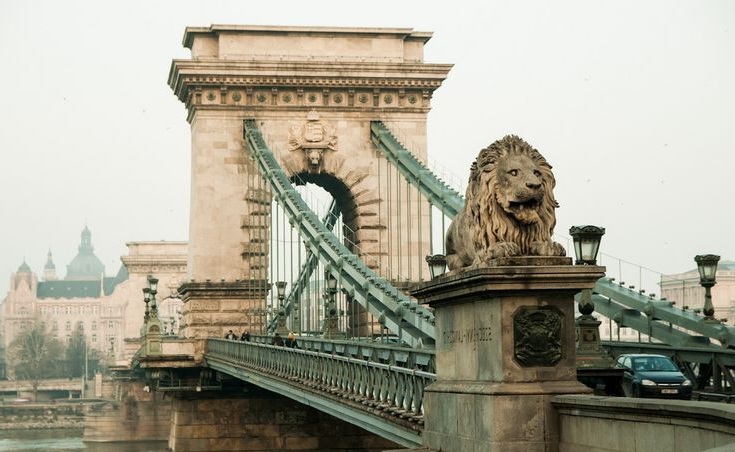
Our first real encounter with the city happened on the Széchenyi Lánchíd.
Stone beneath our feet.
Iron above our heads.
The Danube moving without concern.
Bridges are always honest structures —
they don’t decorate intent, they expose it.
From the bridge, the city felt balanced.
Buda on one side.
Pest on the other.
And somewhere ahead, waiting quietly,
stood the Parliament.
III. Seeing It in Daylight, Understanding It at Night
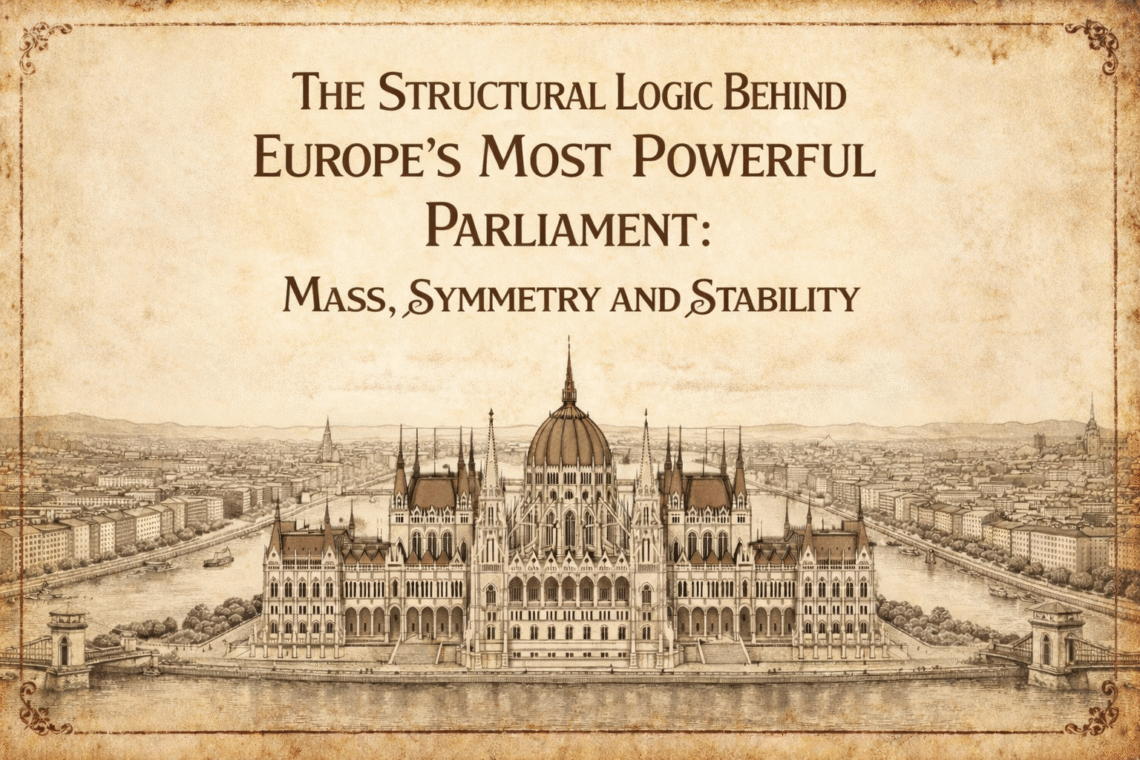
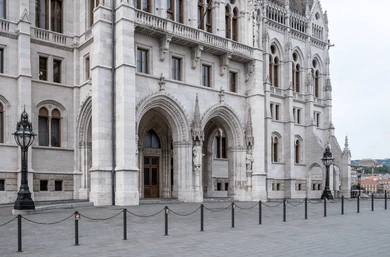
In daylight, Budapest’s Parliament is impressive — but restrained.
Up close, you notice its scale before its meaning.
The stone feels heavy, the ornament dense, the façade repetitive.
It looks like what it is: a massive Neo-Gothic building, firmly planted beside a river.
During the day, it almost feels static.
Authoritative, yes — but emotionally distant.
And then night arrives.
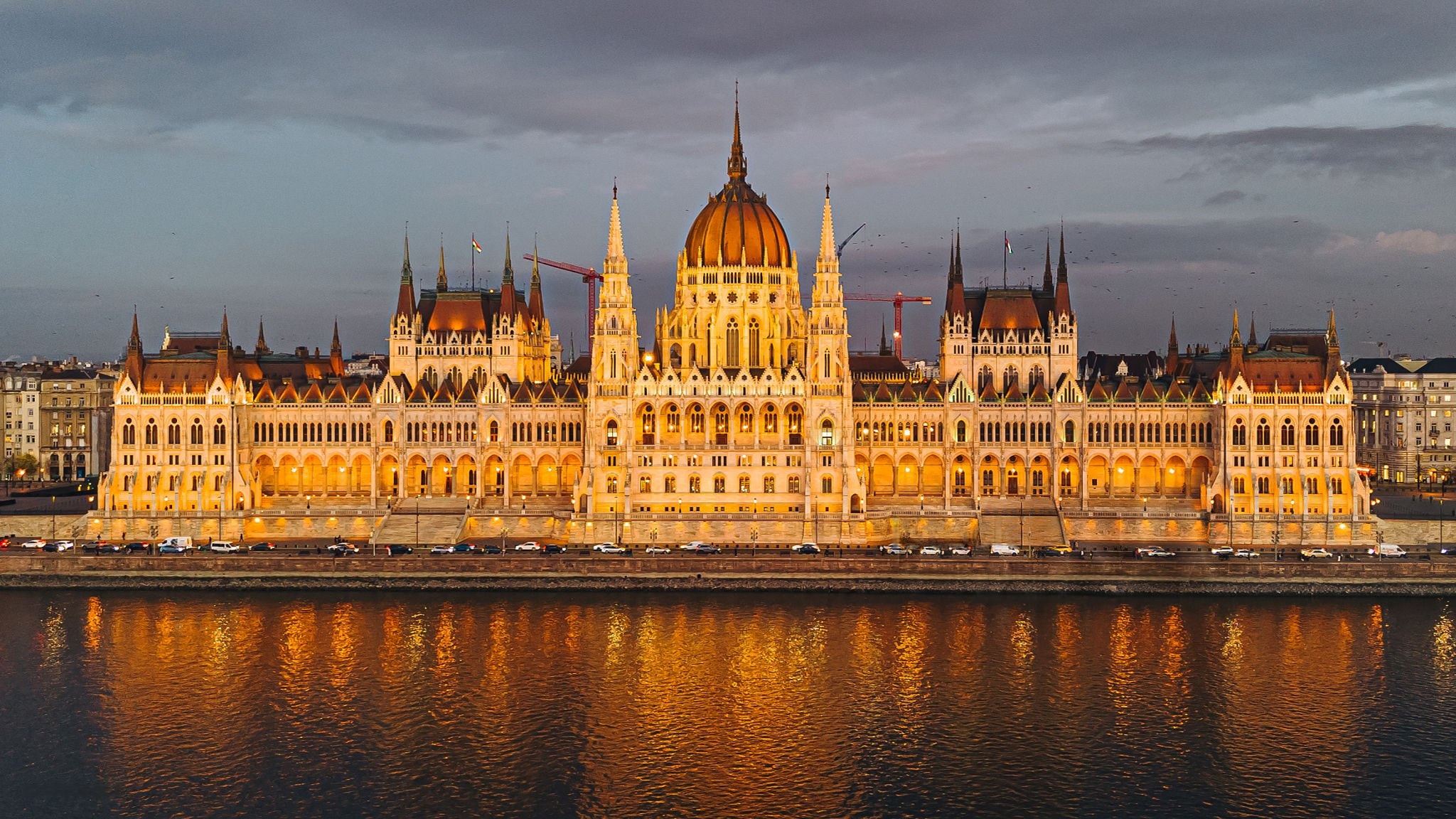
As the city dims and artificial light takes control,
the Parliament sheds its ornament and reveals its structure.
Details dissolve.
Mass remains.
Symmetry becomes unavoidable.
Reflections in the Danube double the building’s presence,
turning one structure into two —
one physical, one mirrored.
It reminded me immediately of the Eiffel Tower.
By day, the Eiffel Tower is just steel —
an exposed lattice, honest but ordinary.
By night, when light replaces detail,
it becomes intention.
Some structures are designed to be read in sunlight.
Others are designed to be understood in silence.
Budapest’s Parliament belongs to the second kind.
And once you begin to read it structurally,
its ambition becomes undeniable.
IV. Numbers That Anchor Its Authority
Budapest’s Parliament was completed in 1904,
at a time when Hungary was still part of the Austro-Hungarian Empire.
This was not just a building.
It was a political statement cast in stone.
Some numbers anchor its ambition:
- Length: ~268 meters
- Width: ~123 meters
- Height: 96 meters
(symbolic — marking the year 896, the founding of Hungary) - Rooms: nearly 700
- Staircases: 29
- Courtyards: 10
This is one of the largest parliamentary buildings in the world.
But size is not the real message.
Control is.
V. Absolute Symmetry — By Design, Not Coincidence
The Parliament is perfectly symmetrical about its central axis.
Why does this matter structurally?
Because symmetry:
- balances dead and live loads
- simplifies force redistribution
- reduces torsional demand
At the center rises the dome —
the geometric, structural, and symbolic heart of the building.
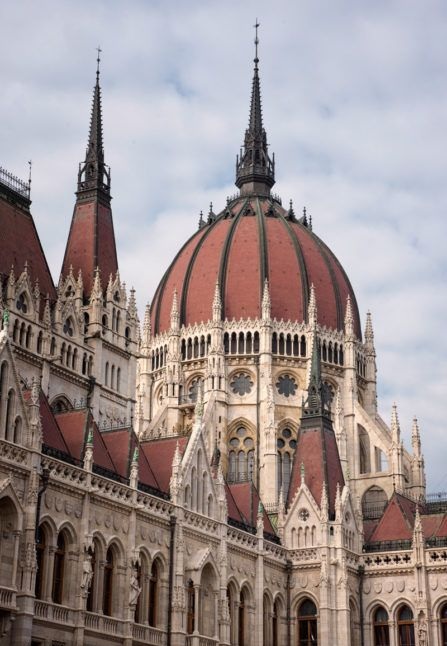
Every wing, corridor, and chamber
radiates outward from this point.
This isn’t just architectural order.
It is structural predictability.
Loads behave.
Settlements remain uniform.
Forces know exactly where to go.
Power, here, is not just symbolic —
it is mechanically stable.
VI. Building on a River That Refuses to Be Trusted
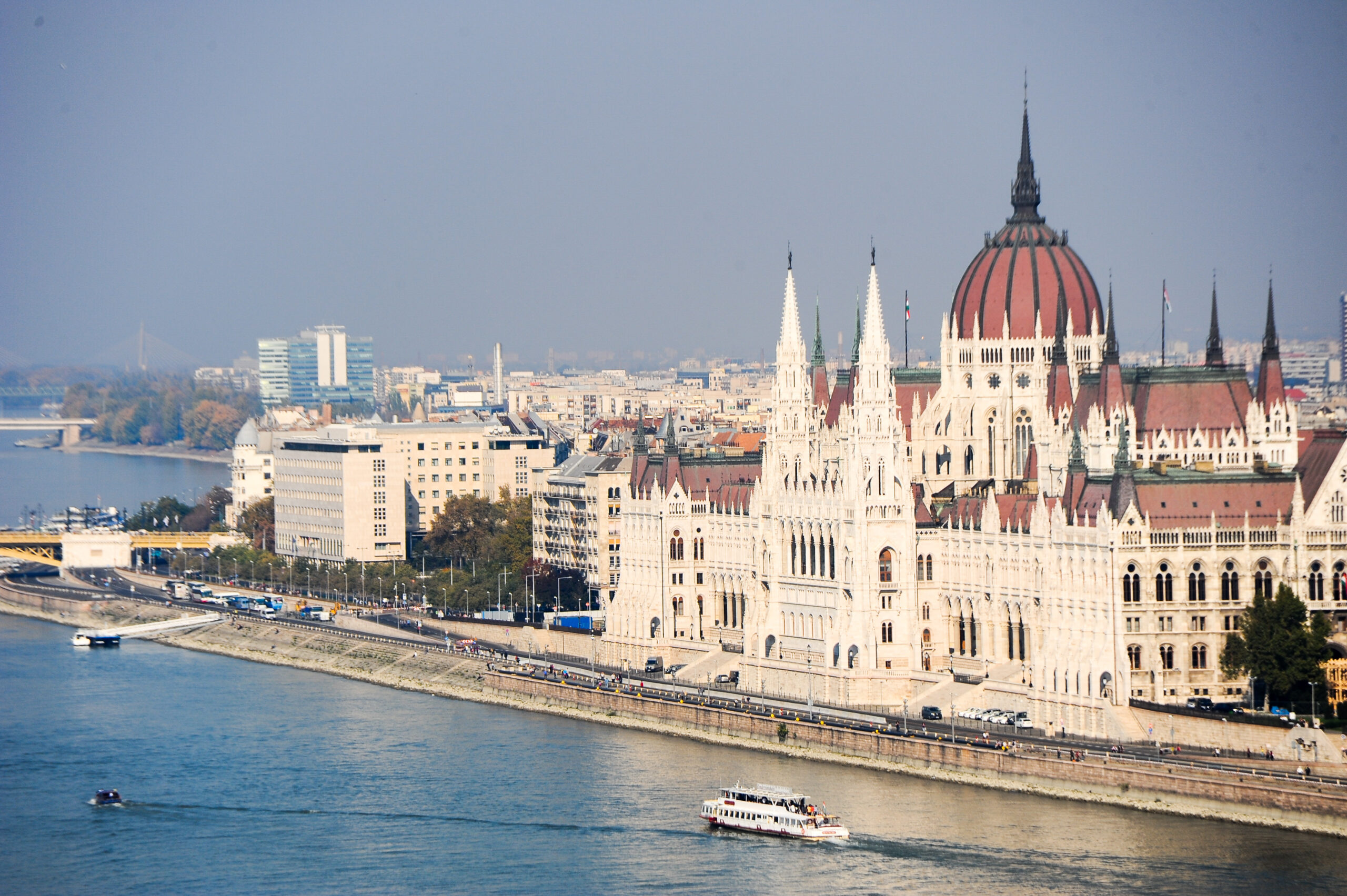
There is something quietly unsettling about the Parliament’s location.
It doesn’t sit near the Danube.
It sits on it.
The riverbank consists of alluvial soils,
high groundwater levels,
and centuries of sediment —
conditions engineers usually treat with suspicion.
The solution was not elegance.
It was mass and redundancy.
- deep masonry foundations
- enormous load dispersion
- thick structural walls
- repetition instead of optimization
The Parliament does not negotiate lightly with the ground.
It overwhelms it.
The Danube moves.
The building presses down.
And the equilibrium holds.
VII. Neo-Gothic Skin, Conservative Engineering Core
The Parliament wears Neo-Gothic architecture,
but its structural behavior is conservative to the core.
- pointed arches reduce horizontal thrust
- vaults channel compression downward
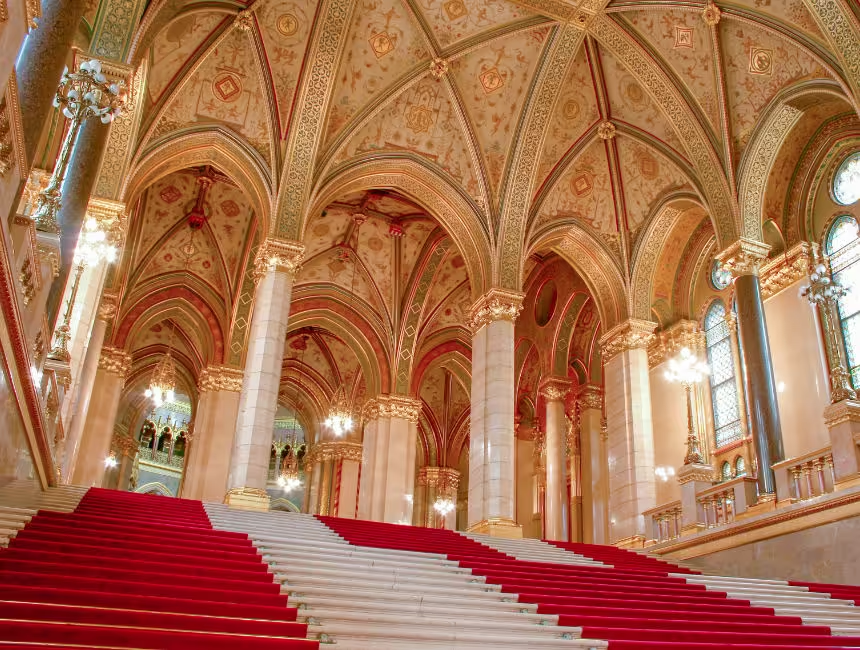
- spans remain controlled
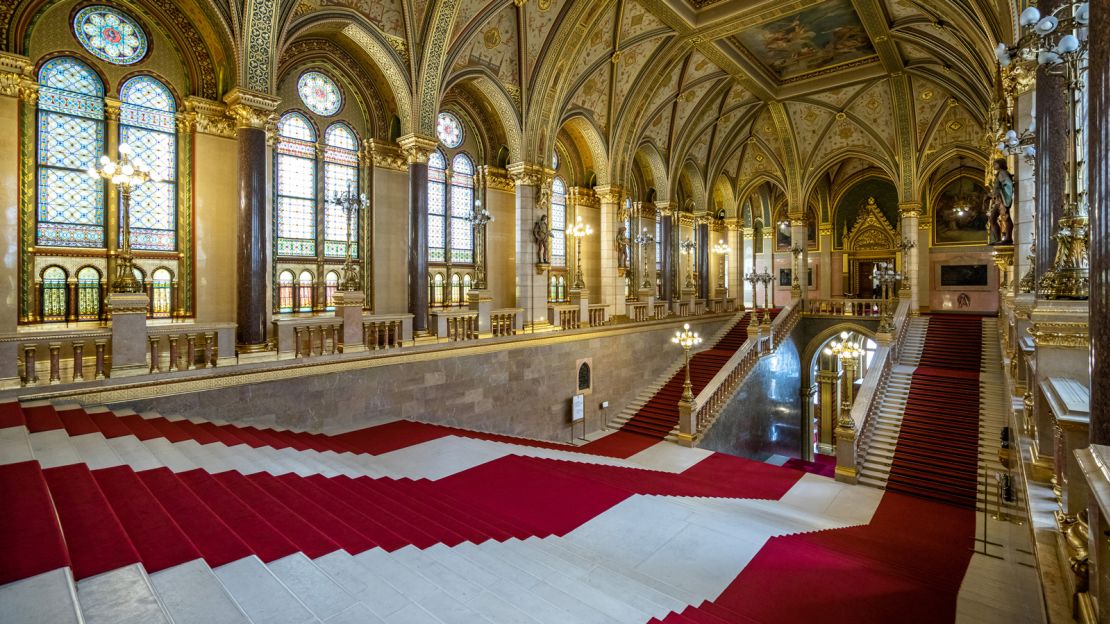
- wall thickness absorbs uncertainty
There is no flirtation with slenderness.
No structural risk-taking.
This is engineering designed to last,
disguised as ornament.
A fortress wearing ceremonial clothing.
VIII. What Budapest’s Parliament Taught Me as an Engineer
This building didn’t teach me innovation.
It taught me judgment.
It showed me that:
- not every structure must chase lightness
- sometimes mass is the safest strategy
- symmetry is not boring — it is stabilizing
- restraint often outlives brilliance
- authority in structures comes from predictability
At Kousain, this lesson matters deeply.
Because not every project needs to impress immediately.
Some need to endure quietly —
waiting for the city, the client, or the time of day
to finally understand them.