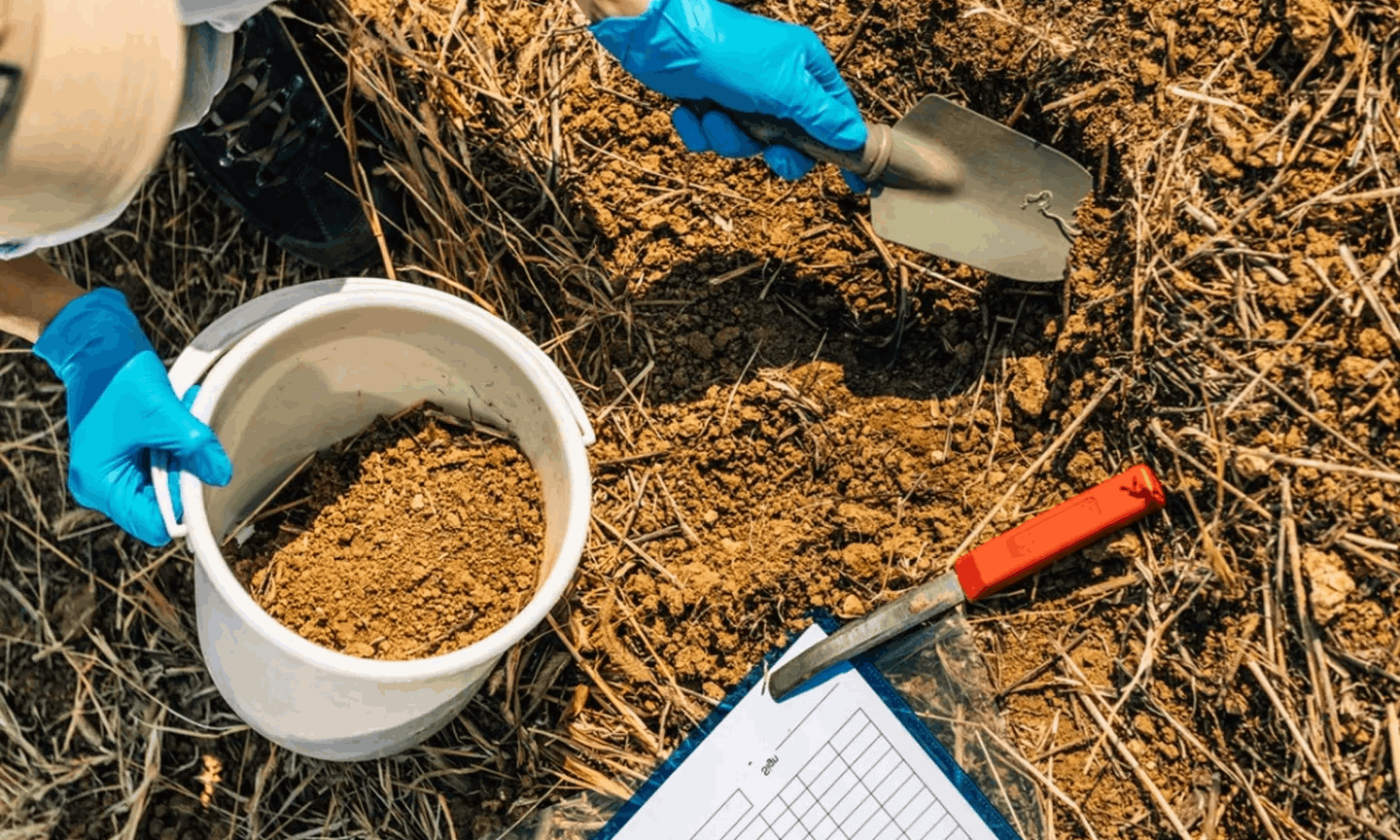
Structural Soil Testing
The Geotechnical Division of Kousain Engineering provides comprehensive soil testing and analysis services essential for determining the strength, stability, and suitability of the ground prior to construction.
Our team of qualified geotechnical engineers and technicians perform laboratory and field investigations to evaluate soil behavior under various loading and environmental conditions.
A thorough understanding of soil characteristics allows us to design safe, economical, and durable foundations while ensuring long-term structural stability.
Our Core Geotechnical Capabilities
1) Soil Bearing Capacity Evaluation
We conduct complete bearing capacity studies to determine whether the subsoil can safely sustain the loads imposed by the structure. This includes in-situ and laboratory testing, analysis of settlement behavior, and preparation of geotechnical reports for foundation design.
2) Water Content Determination
Water content is one of the most critical factors affecting the engineering behavior of cohesive soils.
Our laboratory determines it using the following standardized methods:
Oven Drying Method
Pycnometer Method
Calcium Carbide Method
Sand-Bath Method
Torsion Balance Method
Alcohol Method
Radiation Balance Method
3) Specific Gravity of Soil
The specific gravity of soil solids is determined primarily using the Pycnometer Method, which is essential for classifying soils and computing void ratios, degree of saturation, and other physical properties.
4) Bulk Unit Weight
Bulk (or total) unit weight of soil is evaluated using both field and laboratory methods, including:
Core Cutter Method
Sand Replacement Method
Water Replacement Method
Water Balloon Method
This helps in assessing the in-situ density and estimating the compaction and stability characteristics of the site.
5) Consistency and Atterberg Limits
Consistency testing determines the degree of firmness and plasticity of fine-grained soils.
The three Atterberg limits evaluated are:
Liquid Limit
Plastic Limit
Shrinkage Limit
These parameters are vital for soil classification and assessing volume change potential with moisture variation.
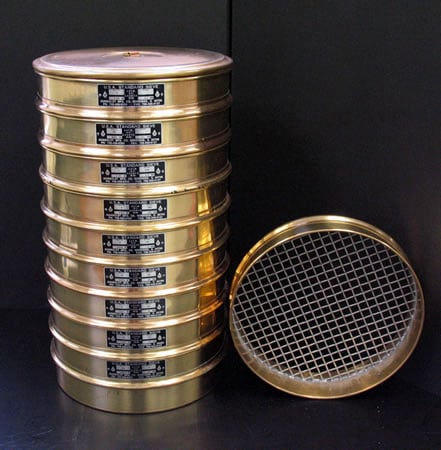
6) Sieve Analysis
Sieve analysis is conducted to determine the particle-size distribution and fineness of the soil, enabling classification as per IS:2720 (Part 4).
This test forms the foundation for identifying soil gradation, permeability, and compaction characteristics.

Ready to move forward with your project? Request assistance by filling out the form below, and we'll connect you with our top soil testing services.

Drag & Drop Website Builder